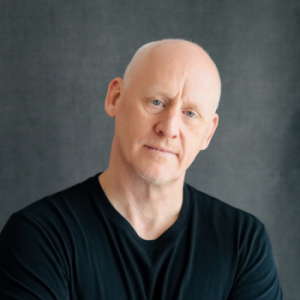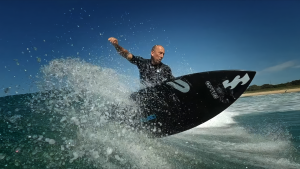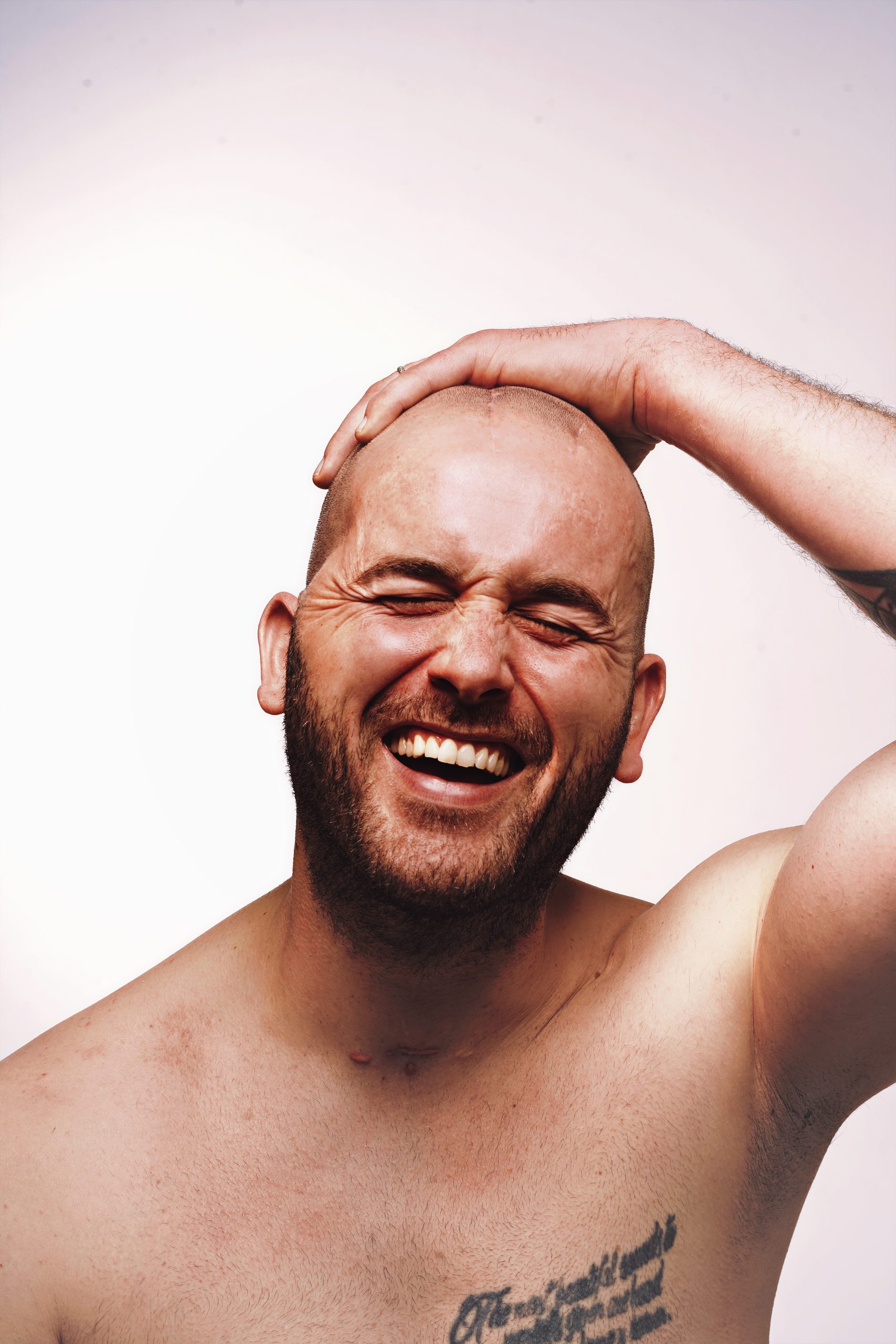
About Vincent Van den Broeck
Vincent Van den Broeck is a Brussels-based entrepreneur, restaurateur, and survivor of a near-fatal car accident that changed his life forever.
On October 11th, 2024, he was struck whilst riding a scooter in a collision at 55 km/h in a 30 zone. The impact left him with multiple fractures and major brain trauma. Doctors gave little hope with most injuries of this severity having only a 10% survival rate.
He spent weeks in a coma and three months in intensive rehabilitation, but recovery didn’t stop there — it became a daily mission. Against all odds, he not only regained his strength but came back stronger than before: working out 7 times a week, running a business, and building new creative projects.
Today, Vincent shares his story as living proof that resilience, mindset, and community can make the impossible possible.
So if you’re going through something difficult right now, or searching for something more, this book is for you. Because everything feels impossible, until it’s done Everything Feels Impossible Until It’s Done is more than a memoir. It’s a testimony of survival, perseverance, and hope — told with raw honesty and humility.
Episode Notes
00:00 Vincent Van den Broeck-You don’t find yourself. You build yourself
04:50 Lesson 1: Health Is the Foundation of Everything
06:43 Lesson 2: Everything Feels Impossible Until It’s Done
09:41 Lesson 3: You Don’t Find Yourself, You Build Yourself
12:17 Lesson 4: Time Is Your Only Nonrenewable Asset
15:17 Lesson 5: Financial Freedom Creates Choices
20:01 Lesson 6: The People Around You Shape the Person You Become
22:50 Lesson 7: Consistency Beats Intensity
24:31 Lesson 8: Perspective Changes Everything
27:29 Lesson 9: Purpose Grows from Service
30:30 Lesson 10: Build the Life You Actually Want
Vincent Van den Broeck-You don’t find yourself. You build yourself.
Siebe Vanderzee: Hello, and welcome to our podcast, 10 Lessons Learned, where we talk to interesting people from all over the world to uncover the lessons that have shaped their lives, their careers, and perhaps their business. My name is Siebe Vanderzee, and I’m your host. Our guest today is Vincent Van den Broeck.
Vincent lives in Brussels in Belgium. He’s an entrepreneur and a restaurateur, but he’s also a survivor of a near-fatal car accident that changed his life forever. Less than two years ago, in October 2024, Vincent got into a collision with a car that was driving nearly at twice the speed limit while he was riding a scooter.
The impact of this horrific crash left Vincent with multiple fractures and major brain trauma. Doctors gave him little hope, as most injuries of this [00:01:00] severity only s- have a 10% survival rate. He spent weeks in a coma and three months in intensive rehabilitation, but recovery didn’t stop there. It became a daily mission, and that is exactly what we are talking about here today.
Hello, Vincent. Thank you for joining us.
Vincent Van den Broeck: Thank Siebe, and I always find it so mind-blowing the way, in this case, you introduce me, and I’m like, “Am I that special? Diana is all mine.” thank you for having me. Thank you for having this con- for taking the time to have this conversation.
I’m absolutely looking forward to all of this.
Siebe Vanderzee: Yeah, and thank you for sharing your lessons, right? Because you have learned a lot of things, and that’s what we’re going to be talking about. But how are you doing today in terms of your recovery? How are things going for you?
Vincent Van den Broeck: I think I look decent.
I think I am… No, I’m, I’m just, as [00:02:00] always, loving life. I’m having this, conversation, from Antwerp, my, my literally my home city because I’m meeting some friends later. I’m just, I’m loving life. I’m lo- I’m loving everything about it. I’m loving this conversation. I’m loving everything I went through, everything, that is going to happen.
There is just love. There is passion. There is looking forward. There is reminiscing all at the same time, and So I’m, I’m doing great.
Siebe Vanderzee: Yeah. I w- I was also wondering how your family is doing because, of course, you went through all of this, but no doubt your family and close friends and stuff, they suffered as well.
How are they doing?
Vincent Van den Broeck: Oh, Siebe, let me make one thing clear. They went through the worst. I was only sleeping for three weeks. They had the n- the narrative back when I was in coma was like your husband, your brother, your cousin is not going to survive. He or probably not going to [00:03:00] survive. He, start preparing the funeral.
So I was, I was cool, and- Wow … and for them, those three weeks were, horrific. They were terrible, but at the same time, because I progress, I recovered the way I did, they’re doing great. literally a couple of days ago was my aunt’s birthday. We had a great time. I’m spending, I’m having dinner with my wife almost every evening by now, which became a non-negotiable.
So, they’re j- they’re doing amazing. Honestly, they’re doing amazing.
Siebe Vanderzee: Good. uh, good to hear. I appreciate that. Now, of course, realize that, can you make the impossible possible? That’s a phrase that you have used, right? To make the impossible- Yeah … possible. You also wrote a book, Everything Feels Impossible Until It’s Done.
Can you share a little bit of information about your book?
Vincent Van den Broeck: Oh, it is exactly everything I’m preaching, on Instagram, everything I will, preach in this conversation. It [00:04:00] is my legacy to the world. I genuinely on a daily basis want people around me to win, and the book has become a means to an end.
It is… When someone would read it, it is for them to ask the question, “Hey, why not me?” instead of, “Why me?” victimizing and the world is against me, society is against me, family is against me. instead of all that, because that’s the easy way, why not me? Everything you’re chasing, why not?
Siebe Vanderzee: Yeah.
Vincent Van den Broeck: Why not you?
Siebe Vanderzee: Yeah. That’s a good point. and for our listeners, you can find a lot more information about Vincent Van Den Broek on our website, 10lessonslearned.com. But let’s take a look at your lessons. Lesson number one,
Lesson 1: Health Is the Foundation of Everything
Siebe Vanderzee: health is the foundation of everything. What are your thoughts on that one?
Vincent Van den Broeck: Oh. Even that, and that is pretty [00:05:00] simple, right?
And when you’re healthy, like everything is going your way. There’s a thousand problems. There’s A, there’s B, there’s C. But when you’re not, and I can speak from experience, there’s only one, getting back your health. It’s, it is the foundation of everything. if you’re out of the game, there is no game to play.
You need; you absolutely need to take care of your health. And when the worst happens, yeah, okay, y- it is your job to get it back and do better, which happened to me.
Siebe Vanderzee: What did you do to get it back? Because it’s, it sounds good, but it takes perhaps work and pain and suffering to get back to where you were or where you are today.
Vincent Van den Broeck: Oh, Siebe, it, it took a lot. it wasn’t one thing. It was perspective. It was, of course, basic rehab, learning to [00:06:00] talk again, learn to walk again, learn to eat by myself again, learning to put on my clothes by myself again. it was gratitude. it was a lot of things and it’s- Not always, but m- often a mindset kind of game.
you just, there, for me at least, there was no surviving was the bare minimum, and then there was no plan B. It was all about me becoming even better than the version I was before the accident. That simple. That simple.
Siebe Vanderzee: Yeah. No, it’s a good point, and I was going to ask you a question, but it kind of fits with the lesson number two.
Lesson number two,
Lesson 2: Everything Feels Impossible Until It’s Done
Siebe Vanderzee: everything feels impossible until it’s done. I can imagine that while you were dealing with these incredible injuries and inabilities to, like you said, to take care of yourself, there must be many moments that you say, [00:07:00] “That’s not going to happen. I’m not able to be able to stand up. I’m not able to,” like you said earlier, “to get, to dress myself.
It’s not going to happen.” Sure. what was it that convinced you to say, “I will survive. I will come back to who I was”?
Vincent Van den Broeck: for me personally, and this is really a personal, Yeah … question. It was the Vincent from before the accident. But what is more interesting is there’s two important words in the title, feels, done.
Feels is always related to the result, which is a thing you will never be able to control. Yeah. But results always follow. And then the second most important word, done, is related to doing. The only thing you can control is you do; you do. You might make mistakes, you might fall down, but you get up, you do better.
You learn, and then you do better. You learn, you do better. and we [00:08:00] as human beings get so caught up about the results w- while it’s something you cannot control. The only thing you can control is the doing part, the doing part. You just do.
Siebe Vanderzee: and, I have to ask you because it’s of course as we like to say, between your ears, that you- your mind says, “Hey, I got to do this.”
But again, the people around you, were they helpful? Were they able to encourage you or was it really inside your brain that you said, “No matter what, I have to do this. I have to do that”? Or was it somewhat, let’s say, influenced by people around you, your family members that said, “Come on, Vincent, you got to do this.
You got to do that. Come on, do this.” What was that for you, that, that experience?
Vincent Van den Broeck: It’s always about this thing called life. You’re not, as human beings, we’re not supposed to and we’re not able to do it alone. And you might be someone, as I have been for the [00:09:00] past 10 to 15 years, I’ve always been someone that is independent and that doesn’t need…
No, that is able to do things by himself. But at the, I was at my lowest. I was in a bad place, and I had friends, family, my wife around me that weren’t afraid to hold me accountable, that weren’t afraid to tell me the things I needed to hear- Ah … not that I wanted to hear. Of course, it was all of them. This is, and I’ve said this many times, this is our victory.
This has never just been my victory.
Siebe Vanderzee: it is a great, lead to lesson number three.
Lesson 3: You Don’t Find Yourself, You Build Yourself
Siebe Vanderzee: You don’t find yourself; you build yourself Please explain thank…
Vincent Van den Broeck: again, it’s an easy thing. You let life happen to you. While for me, if you really want to get the most out of it, you make life happen.
You just [00:10:00] try, you do, you fall down, you get back up, you make mistakes, you learn from them. You make more mistakes, you learn from them again. and it’s something you build, like life doesn’t just happen to you. Okay, let’s say when we were kids, okay. Till a certain age, okay.
But from that age, you just…
It starts when, if I can remember, it starts with your first student job, and then your second student job, and then your third student job, and then you, secondary school, and then you go to high school, and then you go to… You just build your life Hoping for the best, but being prepared, sorry for the worst.
Siebe Vanderzee: Yeah, and I can see perhaps, for people and maybe not suffering the incredible pain and devastation that you physically and mentally had to go through, but people that deal with setbacks.
Let’s say they have a job, it’s going well, [00:11:00] and suddenly because of whatever reason, they get fired, and oh my gosh. But many times, people learn from that experience. Yeah, it’s bad, it’s negative, but you learn, and perhaps that person becomes a stronger person. And with that, and that’s I know what you’re doing as well, you feel the need to share your lessons, your experience with other people so they can learn from what you learned, and indeed they can build themselves, but also learn from others and, and experiences.
Is that… You feel that way? Is that part of the reason why you wrote your book, for example?
Vincent Van den Broeck: I try to heal literally, and there is no hidden agenda. There is no pretending. There’s no lying. I genuinely want people around me to win, to get the most out of life. So, I will [00:12:00] hold people accountable even if they don’t ask me.
I will hold them accountable because there’s only one way to voice all that, and that is going all in, all in. That’s, and that’s difficult, that stuff, but that’s the only way.
Siebe Vanderzee: That’s a good lesson. I like it. Your lesson number four,
Lesson 4: Time Is Your Only Non-renewable Asset
Siebe Vanderzee: time is your only non-renewable asset. I kind of like it, but I like to understand what your thoughts are.
Vincent Van den Broeck: and this is something that happened to me two to three weeks ago. I’ve always been someone that in the morning already thinks about the evening, in the afternoon thinks about the day after, in the evening thinks about the week after. And decide or at least I told myself, “Stop doing that.” and, and, and it’s an internal conversation.
It is not an easy game. Again, it’s never easy for no one. And I started doing that, like, when I would think about the evening, I [00:13:00] would be like give myself back, “Boom, okay, be present. Be more present, be more…” Life all of a sudden change because it is, even this conversation, okay, it will be cool for 30 minutes, but we will never, ever be able to relive it again.
Siebe Vanderzee: Yeah.
Vincent Van den Broeck: The true conversation, yeah, okay, we can listen to it online. We can look back to the memories through pictures, through video, through reels and all that, but the, the real moment in itself happens right now. There is no five minutes ago. There is no 10 minutes from now. It’s only now.
Siebe Vanderzee: Is that something that you learned because of what you experienced with your near fatal accident, or is that something that your brain was already used to?
Just don’t worry about it, it’ll work out.
Vincent Van den Broeck: Oh, and I told you this already, like the accident in itself didn’t teach me in [00:14:00] itself anything. And I knew that time is something vague. Time is there and Especially when you’re building something big and you’re building something bigger than yourself, you have to be convinced of the future, not knowing if the future even exists, but you just do it.
And it might not work out, but at least you… And for me, for real, the past two to three weeks, I started enjoying life more. it’s a learning process. I’m only- Yeah … 24.
Siebe Vanderzee: Yeah.
Vincent Van den Broeck: So, it’s a learning process, and you try to do better, and you try to be more present while thinking about the future, while building at least towards the future, while…
I’m a big, I’m an emotional guy. I reminisce a lot about the past, which is not a bad thing neither in my perspective. And so, you can think about the past, and you [00:15:00] can work towards the future while being present in this moment. And it is indeed, by definition, by the way, the only non-renewable asset.
Make the most out of it.
Siebe Vanderzee: Yeah. Yeah, well said. Good point.
Lesson 5: Financial Freedom Creates Choices
Siebe Vanderzee: lesson number five, financial freedom creates choices. I think I agree with that. I think most people can agree with that. But first of all, your thoughts, and I’m also thinking, Vincent, there are so many people that have a lot of money- millions and millions of euros or dollars or whatever currency, and yet they are still focused on making more money. How much money- Yeah … can you spend in a lifetime? that’s a silly question to ask, but please explain your thoughts about financial freedom creates choices. What are your thoughts?
Vincent Van den Broeck: I’ll make it real simple again. I love making things simple, and financial freedom is never about how [00:16:00] much money you make, but always about how you manage the money you make.
Siebe Vanderzee: Yeah.
Vincent Van den Broeck: Oh, you could be making two, 2K a month and be, and feeling financially free, and you could be making 10K a month while not feeling financially free.
It’s always about how you manage the money you make. It’s about what kind of lifestyle did you build or do you want to build for yourself. What does that match, to in terms of finances? And work towards, work your way toward it. That simple again.
Siebe Vanderzee: Right. Now, how much money is enough? I don’t need to know an exact number from you, but, if you look at your life, your family’s life- You want to, I assume, help out family members if they are- Yep.
in a difficult situation. so how do you determine a [00:17:00] goal, or do you determine a goal and say, “No, as long as I’m happy, it doesn’t matter. I’ll, I’ll make more money next year,” whatever. How do you look at that?
Vincent Van den Broeck: Oh, again, let me make one thing really clear. Happiness is always tied to your finances, or often.
So, for me, it has always been if I’m able to do whatever I want to do, I’m good. I’m financially free. If I’m able to help whoever I want to help, I’m financially free. And today, that might look different than five years ago, and that will look different five years from now. Sure. It is something that changes throughout time, and there is no definition to it.
There is no amount. but again, it’s a, it’s an easy, calculation to do. okay, for me, it’s important to live in the city center of Brussels. Okay, average rent is, 1,300 to [00:18:00] 1,400 euros a month, okay? On top of that, I want to travel three to four times a year. On top of that, I want to go to a restaurant once a week, okay?
That makes… let’s… I’m inventing a number. let’s say that makes 4,000 a month, okay? Let me make 4K a month. Because if the finances are not aligned with the lifestyle you want for yourself, you’re going to live life pretty sad and pretty dep- and pretty frustrated. So, it’s always about how you manage what kind of lifestyle do you truly want How do you manage the money you’re making?
And if you need to earn more, like especially with Gen Z coming up, and I’m going to finish on this, with Gen Z- Yeah … coming up, you have a generation coming up that thinks, and I’ve been working with Gen Z for c- for a lot of years right now. You have a generation coming up that thinks that making, in Europe, making 3K a month [00:19:00] net is the bare minimum.
And I’m like, “Yeah, no it’s not.” So, you have a whole generation of frustration coming… Because for example, in Belgium, average, average net salary for working 38 hours a week is only two, .2K.
Siebe Vanderzee: Yeah.
Vincent Van den Broeck: If you want to make 3K, okay. Again, that, if you need to make 3K, okay, that’s good. Take a second job or work at least 40 to 50 hours a week.
You can’t have it.
Siebe Vanderzee: Our guest today is Vincent Van Den Broeck, an entrepreneur and restaurateur, and a survivor of a near-fatal car accident that changed his life forever, sharing his 10 lessons learned.
Before we move on, here is a quick message to our listeners. We really appreciate your support. Please subscribe to our podcast so that you never miss a lesson that could impact your life and perhaps your career. Moving on, my friend, [00:20:00] lesson number six,
Lesson 6: The People Around You Shape the Person You Become
Siebe Vanderzee: the people around you shape the person you become. We kind of talked about some of those elements, but please, what are your thoughts on that one?
Vincent Van den Broeck: It is a, it, it is again a cliche thing, show me your friends, I’ll tell you who you are. But it’s a real thing. And again, I make it really simple. If you’re around people- long enough that complain all the time, that do the bare minimum, life is always too much. It’s always someone else’s fault. I can guarantee you, you’ll wake up one day with so much regret.
But at the same time, you’re surrounded with people that are all the time positive, and they encourage you, and they push your limits, and they make you believe, because they do it themselves, that there is a bigger future waiting for you. Life all of a sudden becomes more sunny. [00:21:00] Even though it’s raining, it becomes more sunny.
It is that… It is… Your brain can either be your greatest enemy or- your greatest ally. And if you, if your brain hears all the time the negative, it starts to believe that negative is the baseline. But if it at the same time hears all the time positive, the positive becomes the baseline. I-
Siebe Vanderzee: is that something, again, while you were recovering from your horrific accident, that you had to, as we say sometimes, had to train your brain?
That you had to put your thoughts together and say, “Okay, I don’t want to go into this direction with my thinking right now about the negatives, but I really need to focus on my survival and how I become stronger and, and whatever way,” whatever went through your mind. Is that something where you were able, again, to use the phrase train your brain?
Vincent Van den Broeck: It was already trained. Unfortunately for the podcast because an epiphany sells [00:22:00] better, but it was already trained. Yeah. I was lucky enough that the accident happened when I was 32 already.
Siebe Vanderzee: Lucky enough,
Vincent Van den Broeck: you say. I had
Siebe Vanderzee: the- You say lucky.
Vincent Van den Broeck: enough. Yeah, lucky, lucky enough because it was me training my brain for the past, before the accident, 10 to 15 years already.
I had been training my brain for a very long time.
Siebe Vanderzee: Okay.
Vincent Van den Broeck: So, I just had to squeeze everything out of it to make the best out of it.
Siebe Vanderzee: Yeah. I understand. it, you were not expecting what happened to you, but- Yeah … when it happened, you were very rational it sounds like. Very rational about dealing with the adversity and the pain and the, the recovery and the fact that you were in a coma for quite a while.
Vincent Van den Broeck: Lesson number seven,
Lesson 7: Consistency Beats Intensity
Siebe Vanderzee: Consistency beats intensity.
Please explain.
Vincent Van den Broeck: I’ll make it simple again. To win the game, to win [00:23:00] a race, you just need to do one step more than the person next to you. That is consistency. it’s that simple. That is winning the game. Yeah. You just need to go on longer than the business next to you.
Siebe Vanderzee: But if you’re in a race, let’s say you’re running, and that’s your mindset- that competitor may have the same thought and say, “I got to be one step faster than Vincent.”
Vincent Van den Broeck: Okay. Show… Please show me.
Siebe Vanderzee: Yeah.
Vincent Van den Broeck: I’m like that. Please show me. Yeah. Because there’s v- I always make a separation between 99% of world population and 1%.
Most of us, 99% of us as human beings are not like that. We’re the ones, we’re the one that start the race, quick, quick. let’s go.” Because it’s cool. It sells better. It’s cool when people are applauding, “Oh, yeah. let’s go.” [00:24:00] It’s less cool for the 1% that are, like, easy.” But they know it’s a long time to go.
It’s a long way uphill.
Siebe Vanderzee: And I guess if you run a marathon, right? That doesn’t mean- Exactly … okay, from here to there, now you made it. Yep … you have to go through that whole process and where are you running up the hill and down the hill and all of that. So, you got to be prepared. but, uh, I think it’s a good lesson.
con- consistency beats intensity. All the time … lesson number eight.
Lesson 8: Perspective Changes Everything
Siebe Vanderzee: perspective changes everything. What are your thoughts on that one? Yeah.
Vincent Van den Broeck: Perspective is the… Again, the simple explanation is how you see things. That is perspective.
I’m going to make it even easier. It started a couple of days ago. It was beautiful. We had a beautiful summer here in Belgium. It started raining again. It- we started getting Belgium weather again, a couple of days ago.
Walk outside, hear left, [00:25:00] “Oh my God, it’s raining again.” Perspective A. Perspective B, me- Yeah … walk into the season, I said, “Oh my God, amazing. We finally have Belgium weather again.” and that is perspective. The way you see things will impact the way you do things, will impact the rest of your day, the rest of your week.
Perspective is always everything. Perspective, by the way, is a sign of intelligence.
Siebe Vanderzee: Sure. Sure. but, like you explain, it can also be that people are prepared and, they wake up and they want to work out, and it’s raining, and they say, “Oh, no,” I, I don’t want to run outside and go through the rain.”
and, and-
Vincent Van den Broeck: “I just don’t think I’m going to go work out today.” And then tomorrow it rains again. “Oh, no, I’m not going to…” there is that element where you say, it’s raining, but I got to work out. I got to figure it out.” Yeah. If I… how do you look at that, All lessons-
Siebe Vanderzee: Yeah
Vincent Van den Broeck: all lessons are connected. It’s not just one lesson and the second and third. [00:26:00] Support system, again, when you’re around people long enough that convince you, that make you believe that Circumstances don’t matter. You cannot control them.
Siebe Vanderzee: Erase? Okay. Good. Go for a workout again, and again, and again.
Vincent Van den Broeck: Yeah. It all, it is all, it is always all connected every time.
Siebe Vanderzee: but then there is, a mindset that when people are very disciplined, they say, “No, I have to do it. I have to do it.”
Yeah. Do you see yourself as being very disciplined? Is that something that you have, embraced also in your recovery process, to be disciplined about it?
Vincent Van den Broeck: Myself, 1,000%. it is… For me, non-negotiables, I talk about non-negotiables. Non-negotiables are n- are non-negotiables. Working out is non-negotiable.
It rains, I might feel off. No, I’ll go. [00:27:00] Because when you open the door for excuses, it stays open. It will be easier to cancel the second time, the third time, the fourth time, and all of a sudden, it becomes a new habit. No, it’s non-negotiable.
Siebe Vanderzee: Yeah. I agree as an individual, but I also understand and respect when people are, let’s say, wired differently.
But it’s a good point. It’s a good lesson. And, if I look at, lesson number nine, I’m very curious about that.
Lesson 9: Purpose Grows from Service
Siebe Vanderzee: Purpose grows from service. Purpose grows from service. how do you interpret that? it, it seems very valuable, but I’m curious about your thoughts and your experience on that.
Vincent Van den Broeck: And again, I speak from a 34-year-old experience, and I always wanted for, as long as I can remember, I always wanted people to – around me to win.
I want people to get [00:28:00] the most out of life. And I’m talking literally, I’m talk- I’m talking about stranger, I’m talking about family, I’m talking about my wife, I’m talking about friends. service to people around you-
Siebe Vanderzee: is literally every- There is not a greater feeling, in my opinion. There… No, you know what?
Vincent Van den Broeck: And I like people to prove to me if there is, because there’s not. if you’re just kind to people around you and you just, you genuinely want people to win, you genuinely give without wanting something in return, all of a sudden life starts to look sunny. Even though it rains, it is sunny. It starts to look beautiful, and life starts to feel more easy.
Service is literally everything. doing something. Service is, again, a simple definition, is doing something for someone. that is service. [00:29:00] What greater is there in my… You know what? I’ll generally, to anyone listening, answer in the comments. I’m curious because to me there is none.
Service is the greatest purpose there exists in everyone. Service to your wife, service to your colleagues, service to your boss, service to your family, service to your friends. It is Greatest purpose.
Siebe Vanderzee: Yeah, I agree, Vincent. I think it’s very important. But I also recognize, and you do as well, that there are quite a few people who have a different thought about that.
Vincent Van den Broeck: Yep.
Siebe Vanderzee: take care of myself, take care of my family- … and I’m not responsible for all those other people. And I say it crudely, but That is quite common. and you cannot be held responsible for every person in your surroundings. so, there is, for some there is a balance, and for others they say, “I don’t care.
I only care about my family and my- [00:30:00] myself.” And then there are people like you that say, “Look, you got to look around. You got to help people.” And-
Vincent Van den Broeck: Yep …
Siebe Vanderzee: yeah, I tend to feel the same way as you do, but I also recognize there are many other people that say, “Nah, you’re wasting your time. Why do you do that?”
Vincent Van den Broeck: G- good for them. Good for them.
Siebe Vanderzee: Great answer. Great answer. it kind of leads to the final lesson here, lesson number 10, and I’m really interested in your thoughts here. Lesson number 10:
Lesson 10: Build the Life You Actually Want
Siebe Vanderzee: build the life you actually want. great lesson.
Vincent Van den Broeck: Don’t get me started. again, I’ll try to make it simple, not too long. We’ve been taught from… and yeah, I know you’re from a different generation than mine, but we’ve both been taught and we’ve always been taught from a very young age to adjust our goals and dreams to [00:31:00] our current situation.
Yeah. while I encourage everyone to do exactly the opposite. Adjust your current situation to your goals and dreams. Because there’s one thing we can all agree on. By the way, everyone worldwide- Realizing a dream, achieving a goal will always leave you satisfied. But all of a sudden, we for- we forgot about it, and it goes back to what we talked about a bit earlier about the, the financial freedom- Yeah.
and building a lifestyle that you can afford. remember when we were kids, w- and we would wake up in the morning, and we would be excited about our days. “Mom, dad, let’s wake up. I have this, we have this, this, and this plan. let’s go.”
And then at the end of the day was enough. You were ready to hop into bed. And then the same again the day after. And all of a sudden, we forgot to be kids. we got [00:32:00] caught up in adult life. And adult life, okay, adult responsibility, it’s a thing too. You grow up. But when did we forget to be kids or have that kid’s kind of mindset?
build yourself the life-
Siebe Vanderzee: Yeah …
Vincent Van den Broeck: where you’re excited to wake up in the morning, and the day at the end of the day was enough. and then it comes. “Yeah, but Vincent, it’s not that easy. Yeah, but Vincent,” and we all love those two words, “yeah, but.” And I will n- and you will never hear me say it’s easy. You know what?
It’s supposed to be difficult building a life you really want. Like you’re able to look at yourself in the mirror and tell yourself, “Oh my God, I’m so happy.” It is supposed to be difficult. Listen, it is supposed to… And this is a reality we all need to accept [00:33:00] as soon as possible. It is supposed to be difficult, but it is possible.
Siebe, literally today, so I went for a… I woke up, I went for a workout, then went, working in the restaurant. From the restaurant, took the train. Okay. The train was late. Went to Antwerp because I’m having dinner with my best friends later on. I had the po- had this conversation planned and then train was late, so I was stressed like, “Oh, am I going to make it?”
The, took the bike. Now I’m coming from a park and it’s all good because everything I decided to do from the very early morning was aligned with what I want. It is possible, and it might not look… Because even this conversation was planned to happen somewhere else, it might not look the way you want it to look, and that’s okay.
But if it’s aligned with what you want, all of a sudden life becomes pretty [00:34:00] beautiful. Build a life you actually want. Not your parents’ life, not what society tells you to do. Not your friend’s life, not your pa- you by yourself.
Siebe Vanderzee: I completely agree with you, and I really l- like your energy, your dynamics when I watch you talk about these things.
It’s from the heart, and it’s, it’s- Thank you … it really is impressive. I want to throw out a question to you that you and I hadn’t talked about before. But is there… And you’re early in your life, in your career, always relatively speaking, right? But is there a lesson that you have learned in your life where you decided later, perhaps in recent years, that you said, I got to change this.
It’s not the way I used to do it. I got to make a change”? Is there a lesson like that? And I put you on the spot, Vincent, but perhaps there’s a thought you have.
Vincent Van den Broeck: Let me think really quickly.
Siebe Vanderzee: [00:35:00] Anything that you decided to do different compared to what you used to do.
Vincent Van den Broeck: That
Success, and this is really on the spot, but that success is linked or matched to the output and never to the input.
Siebe Vanderzee: Explain that please.
Vincent Van den Broeck: Input is the only thing you can control. if you’re giving it 100% input, you’re already successful. While before the output mattered, the output made you, as in me, successful, which is never the case.
So- It’s always about the input …
Siebe Vanderzee: it’s do your best, be your best.
Vincent Van den Broeck: Oh, always.
Siebe Vanderzee: Yeah.
Vincent Van den Broeck: That’s the only thing you can control. Literally be your best every… Go… Never half-ass things. Always go all in. That’s the- Whatever you [00:36:00] do, might be, might be you’re just cooking dinner, at home, you’re doing the dishes, you’re, waiting ta- in my case, you’re waiting tables.
You’re going for dinner with the boys. Just go all in. Be 100% present. Give it your all, all the time. That is what is important. The input is important.
Siebe Vanderzee: I really like it. and Vincent, I want to thank you for joining us today and for sharing your 10 lessons to make the impossible possible. I really like that phrase, because that’s what you use also in your book.
Yeah. And I think it’s very helpful for our global audience, so thank you for that. In closing, you’ve been listening to our international podcast, 10 Lessons Learned. This episode is produced by Robert Hossary, and as always, we are supported by the Professional Development Forum. I also want to give our, thanks to the amazing team that we have, Yi Wang, our marketing and social media manager, Codie Comeau and Birdem [00:37:00] Oz, our episode editors.
Our guest today, Vincent Van Den Broek, an entrepreneur and restaurateur and survivor of a near-fatal car accident that changed his life forever, sharing his 10 lessons learned. And to our audience, don’t forget to subscribe so that you never miss a lesson that could change your life and perhaps your career.
Thank you for tuning in to 10 Lessons Learned, where we are making the world a little wiser one lesson at a time. Thank you and stay safe.
Thanks to our 10 Lessons team that make our show possible: Our Episode Editor Codie Comeau, Marketing and social media managed by Yi Wang, and our Producer Robert Hossary. Sponsored as always by Professional Development Forum. You can find the www.professionaldevelopmentforum.org.
You’ve heard from us we’d like to hear from you. Email us it’s podcast@10lessonslearned.com.
Remember, this is the podcast the only podcast. That’s makes the world wiser lesson by lesson.