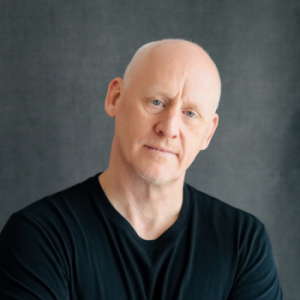
Shani Raja – Stop Trying to Fix People
Shani was a journalist who has written and edited for The Economist, Bloomberg News and the Wall Street Journal.
Since leaving journalism a decade ago, Shani has gone on to become an instructor on LinkedIn Learning and Udemy, where his online writing courses have attracted more than 1 million students worldwide.
Shani has also in coached TEDx speakers, taught journalism at UTS and edited copy for the likes of Microsoft, IBM, and PwC.
Shani is currently writing a book that explains the craft of writing to non-specialists, and he is also working on a memoir sharing how he healed himself from terminal cancer, which he was diagnosed with four years ago.
Shani recently launched The Alchemy of Writing Podcast on Spotify in which he explores the art of good communication with experts in writing, sales and public speaking.
Episode Notes
02:52 Lesson 1: Thinking is Overrated and Often
22:02 Lesson 2: You Are One of One
25:47 Lesson 3: Life is an Opportunity to be Blissful
30:46 Lesson 4: Live in the Sunlight
34:46 Lesson 5 : Stop Trying to Fix People
39:04 Lesson 6: Don’t Try to Squeeze Your Life into Roles
42:19 Lesson 7: Don’t Trust Your Doubts Over Tangible Feelings
44:49 Lesson 8: Focus on Expressing Rather than Acquiring
54:14 Lesson 9: False Hope is Better than False Hopelessness
57:34 Lesson 10: Follow Your Excitement
Shani Raja – Stop Trying to Fix People
[00:00:08] Jeffery Wang: Hello and welcome to 10 Lessons Learned, the podcast where we talk to ordinary people doing extraordinary things to learn the lessons that shape their career, business, and lives. Our goal is simple, to make the world a little wiser, lesson by lesson.
[00:00:24] Jeffery Wang: I’m Jeffery Wang, I’m thrilled to be your host for today’s episode.
[00:00:27] Jeffery Wang: I’m the founder of the Sydney Professional Development Forum, a basketball tragic, and a proud father of my two gorgeous boys. Now let’s meet our very special guest today, Mr. Shani Raja.
[00:00:40] Shani Raja: Hi Jeff.
[00:00:41] Jeffery Wang: So, Shani is a journalist for over 20 years, having worked for The Economist, The Wall Street Journal, and also Bloomberg.
[00:00:51] Jeffery Wang: Now, when I met Shani, he was still working as a journalist, but, through a twist of fate, he’s actually gone on and, changed his careers, became an instructor online to teach people how to write. And as, as fate would have it, he became one of the most popular from around the globe with over a million students worldwide.
[00:01:10] Jeffery Wang: you’ve also coached, TEDx speakers. You taught journalism at UTS. edited copies or the likes of the joint corporations like IBM, Microsoft, pwc, you’ve launched a podcast, the Alchemy of Writing, which explores the art of good communication with experts in writing, sales, and public speaking.
[00:01:30] Jeffery Wang: well known fact, but Shani is also working on a memoir, sharing how he healed himself from terminal cancer, which he was diagnosed with, four years ago. That’s quite a, it’s quite a journey. That’s it. Welcome to the show. \
[00:01:45] Shani Raja: Thank you. Thank you for that lovely introduction. Thanks, Jeff.
[00:01:48] Jeffery Wang: as I’ve been looking forward to this conversation for a long time because you’ve been a dear friend who had a profound impact on my life. And how I approached and understood, the art of writing communications in general. but, on top of that, I just feel like you, you have so much depth as a human being in terms of how you approach your life.
[00:02:08] Jeffery Wang: and especially with your recent struggles, around, your healing, journey on cancer. so yeah, I’d like to explore your life lessons and hopefully we can share that. around the world.
[00:02:17] Shani Raja: Thank you. Thanks, Jeffery. And, yeah, I have to say you are a big part of my healing journey as well, right from the very beginning, the way that you, brought me and made sure I wasn’t left out, and kept me, active in a way that I’m really grateful for. Thank you.
[00:02:32] Jeffery Wang: Oh, thanks. It’s nice to know that. So, all right. Well, as you know, uh, 10 Lessons podcast, we, jump straight into the lessons and, hopefully, what we’ll do is unpack some of your life stories through the lessons that you’ve shared now. And you have, I really delivered on that, so I love the lessons that you sent me.
Lesson 1: Thinking is Overrated and Often
[00:02:52] Jeffery Wang: Let’s just dive straight into it then. Lesson number one. Thinking is overrated and often unnecessary.
[00:02:59] Shani Raja: Yeah, I think that’ll be surprising to a lot of people because we hear about overthinking being a problem and everyone recognizes overthinking as being a problem. few people view thinking itself as a problem.
[00:03:13] Shani Raja: Now I’m not saying it’s always a problem or it’s necessarily a problem, but there’s so much that we can accomplish without thinking. And that’s what I mean by it’s overrated. And sometimes it can even interfere with your ability to accomplish things.
[00:03:28] Jeffery Wang: do you mean by without thinking?
[00:03:31] Shani Raja: So, I distinguish now between kind of two types of thinking.
[00:03:35] Shani Raja: One is where you’re constantly trying to figure stuff out. And that kind of thinking feels almost like pushing a boulder up a hill. It has that quality to it where it’s like a strain and a struggle. And yeah, okay, there may be some instances where that’s necessary, but we tend to do it with every aspect of our life, figure it out, figure it out, figure it out.
[00:03:58] Shani Raja: And that leads to thinking, thinking, and a trust in thinking. as the way through and out of crises and problems. And what I’ve found is that there is a more powerful intelligence, if you like, an intuitive intelligence, which guides you, very well, towards fulfilling whatever purpose and intention you have without the need for this excessive struggle of figuring.
[00:04:26] Shani Raja: And what I’ve discovered in my own life and my experience is that it’s only by dropping the active thinking, the kind of, element where you’re trying to figure everything out. It’s only by dropping that compulsion that the natural intuitive intelligence can finally achieve. come up within you and guide you better towards the fulfillment of your desire.
[00:04:52] Shani Raja: So, it’s been a big lesson for me, especially in terms of manifesting the things that you want in life. So, the way that’s worked for me, for example, in my health, as you said, I was diagnosed four years ago with terminal cancer, bowel cancer, stage four. you know, and I went through all the operations and chemotherapy and all of that.
[00:05:09] Shani Raja: and I also started my own, healing journey where I just wanted to manifest my own healing. And to be able to do that effectively, it wasn’t about just thinking a lot. It was about allowing the thinking to diminish and cease, and in that silence finding a more tangible sense of intuition that then guided me towards the things I needed to do and felt actually, tangibly felt I needed to do in order to heal myself.
[00:05:39] Shani Raja: So that’s how I used it in, in, in the most recent, part of my life. But then when I look back, as you mentioned, I was a journalist, and I decided to create online courses because I wanted to get like a passive income and start a passive income business. And I wanted to manifest that.
[00:05:56] Shani Raja: And even there, there was just a clear intention, a desire to achieve this. And then, I didn’t know how I was going to do it at the time, but my intention was fixed, and my will was there. My commitment was there. And then the opportunity started to present themselves to my intuition, which I then acted upon.
[00:06:15] Shani Raja: and you could, I can’t prove any of this, but I can say that where I have Relied more on that part of myself, I’ve made better and more longer lasting, powerful, and rewarding decisions. and it’s a question worth asking yourself, anybody who’s listening is think of all the decisions or the things you’ve done that have been the best for you and had the best impact on your life and how much of that was due to figuring it out versus just knowing that this was That’s what you needed to do, and just beginning that process, that’s what meditation has often been about, is about silencing the mind, switching off the thinking, so that you can access this higher intelligence, and I’m just at that place where I felt that, and I’m more trusting of that, so if you think when people are trying to, deal with an issue, a problem, a crisis, they’ve got this choice, either they can think it through.
[00:07:08] Shani Raja: Or they can allow their intuition to guide them and feel their way through it. And whereas before I used to trust 100 percent in the thinking it through part of it, more and more I’m trusting in the, okay, in the other part of it. And it’s something to experiment with.
[00:07:21] Jeffery Wang: So if we pick that apart just a little bit, I think I know what you’re getting at in terms of trusting your intuition in that, there is a, a subconscious mind that’s probably developed over millions and millions of years of evolutionary biology that.
[00:07:35] Jeffery Wang: you know, or the sixth sense, if you will, that you have, that I suppose in a way helps you, guide you, you can even call it listening to your heart. so, is it a case of trusting your intuition or is it a case of not actively engaged in the active thinking and let your subconscious?
[00:07:56] Jeffery Wang: do the work for you.
[00:07:58] Shani Raja: without getting into whether it’s subconscious or higher consciousness or whatever, cause there’s different ways of looking at that.
[00:08:04] Shani Raja: But I think the two things are absolutely related. It’s only by switching off the analytical side that the other side can even present itself now. And it can be quite difficult. It’s a journey because it’s not always easy to discern.
[00:08:19] Shani Raja: whether it is intuition or not, because sometimes you might be acting on an emotional response to something, fear based, based on actually your thinking about it.
[00:08:29] Shani Raja: So, it takes a bit of discernment to know what intuition is because I found in my experience, pure intuition is not attached to emotion.
[00:08:41] Jeffery Wang: So, it’s not impulses.
[00:08:42] Shani Raja: It’s not the same. That’s why we have to be careful. It’s a. It’s a bit of a tricky terrain, but as I’ve explored it, I’ve found that, yes, pure intuition that seems to come from higher consciousness is not what I now associate with lower consciousness.
[00:08:57] Shani Raja: My own lower consciousness is the world of emotion and reaction and, more the impulsive side of it, which isn’t necessarily intuition, but it has a different quality. It’s almost like a tangible sense of knowing. So, a lot of people say, oh, I did this out of intuition, but sometimes it’s when you dig a bit deeper, they did it out of fear or vanity or some other kind of ego mind type, obsessive action.
[00:09:22] Shani Raja: So, we have to be kept to use this, power, we have to really explore it within ourselves. and the closest I got to being able to, with the help of others to be able to define this is it in terms of this tangible. quality of knowing. In other words, what you might call faith.
[00:09:37] Jeffery Wang: Yeah, faith.
[00:09:38] Shani Raja: As distinct from belief, because belief is I believe it, I choose to believe it, rather than not. But faith, in the way I’m using it, is more of a tangible knowledge. Something that comes up as a kind of a knowing within you. And then we’re faced as human beings with this notion.
[00:09:55] Shani Raja: with this thing of, do we trust.
[00:09:57] Shani Raja: and I found that in my healing journey, especially, that was something I explored and more and more in my life, I moved towards that tangible knowing as a way of guiding at the GPS that navigates my life now.
[00:10:11] Jeffery Wang: that kind of makes sense. I suppose for our audience, The more layman’s terms I could think of that kind of illustrates this is, I’m just thinking of Star Wars and Luke was using the targeting computer, which is this, this kind of like your active thinking.
[00:10:25] Jeffery Wang: And then he turned that off because he realized that wasn’t going to get the job done. And he trusted the force, which is his intuition. Yeah. So that’s a way of describing.
[00:10:33] Shani Raja: That is a really useful way of looking at it. Yeah. yeah. It is like that. yeah. your intuition will guide you how to stop, someone attacking you.
[00:10:43] Shani Raja: Particularly intuition, I found, is powerful in determining intentions. Because the thinking mind is very limited. The analytical mind is can only refer to the past and make a judgment and an analysis based on what we’ve seen before. The intuition is its live action, right? And it’s processing things in a way that is very powerful if we allow it to take effect.
[00:11:08] Shani Raja: So now to return to the question of thinking. So, I talked about thinking as in one way, as we understand, it’s like pushing a boulder up a hill, trying to figure stuff out. Now the other type of thinking it’s like a stream flowing down from a mountaintop.
[00:11:22] Shani Raja: So, you may have thoughts, say you have an intention and a desire to achieve something, better health, passive income, whatever it is, doesn’t matter. But now, once that intention is set, the thoughts come in to guide you towards the fulfilment of that intention. So now we’re using our mind in a different way.
[00:11:42] Shani Raja: Instead of pushing this boulder up a hill and starting from thinking, which in my understanding now is way downstream from what you truly want. So, we do it the other way around. We say the desire and the intention are the highest energetic forces of this universe, right?
[00:11:56] Shani Raja: Once you are set in that, then you allow the thoughts that are needed to make that happen.
[00:12:03] Shani Raja: So, then it becomes like a GPS system, which says turn left here, turn right there. And now, so you’re using your mind in a completely different way okay. So, let’s take a practical example. Someone thinks, okay, I want it. I want to, pursue my desire, my, my dream job or whatever.
[00:12:18] Shani Raja: And then you’re trying to think up what that dream job is. Now you’re not starting from your tangible desire.
[00:12:23] Jeffery Wang: That’s right.
[00:12:24] Shani Raja: And so, you’re going to keep, chances are, you’re going to keep like finding things and being dissatisfied with them. Until you do that thing of just letting it go to the top of the mountain.
[00:12:34] Shani Raja: What’s my desire? And then, okay, that’s what I want. And then it’s fulfillment almost becomes natural as the thoughts guide you.
[00:12:42] Shani Raja: As to how, and those ideas that come to you intuitively are often much better than what your limited thinking mind, which is past based, will just throw up ideas that’s what’s happened before.
[00:12:56] Shani Raja: So, you actually can’t imagine something completely new. So, it’s a different way of doing life. And so that’s why I do it. I picked that, thinking is overrated.
[00:13:06] Jeffery Wang: So the
[00:13:06] Jeffery Wang: challenge for most people, I think, will be to try, and have, it’s similar to what you said, it’s more like a faith, right?
[00:13:12] Jeffery Wang: But it’s not easy, it’s not as simple as saying, oh, just have faith, trust your intuition, right?
[00:13:18] Jeffery Wang: Yes, it’s not. how do you know, like, how do you, surely, it’s take, it’s a bit of a journey to let go. And trust your intuition.
[00:13:27] Shani Raja: Yeah. Yeah. As I said, it’s not, it’s not that easy to just trust your intuition. I’ll give you an example of how I learned this. I had a teacher when I was going almost like a mentor when I was going through my healing journey and he once, told me, and he was a guy who had healed himself from paraplegia, intentionally.
[00:13:49] Shani Raja: And he told me, he said, mantras can be quite good. so, like a healing mantra. And, and just urged me to try one out. and the mantra I chose was like, I am healed. I would just repeat to myself that I am healed. And this was during the time when I really didn’t think I was, I didn’t think I was.
[00:14:07] Jeffery Wang: So just by telling yourself that.
[00:14:09] Shani Raja: But that’s not enough. this is not this way. This is a very complex.
[00:14:14] Shani Raja: There’s a lot of nuances to it, but I’ll just show you how it played out for me. So, I went away, and I said, okay, I knew that there was some power in, in, in mantras. so, I just began to repeat to myself in a meditation posture, I am healed.
[00:14:28] Shani Raja: I am healed. I am healed. I am healed. I am healed. And I just start to repeat it. Now, obviously my brain, my ego, my mind is going, why are you saying this? You don’t know. So, it’s saying, you’re saying something you don’t know to be true. So, you start having this fight. But because I trusted the guy, I just kept going, okay, try to ignore that voice and just say, look, I’m healed.
[00:14:51] Shani Raja: I’m healed. It doesn’t matter. I’m healed. I’m healed. And still, it’s so powerful. It’s just that rational voice that just says, you do not know if you’re healed or not. Why are you saying it? This is doesn’t make sense. Then to silence that part of me, I had to argue with it. And I said, listen,
[00:15:07] Shani Raja: I’m not making a statement of fact. I am healed. I’m issuing a command.
[00:15:12] Shani Raja: that was just to quieten that voice down now I could say I am healed with a bit more like without that disturbance. I am healed. It’s a command. I am healed I was just putting a present tense Command, and the present tense is important too in this.
[00:15:25] Shani Raja: So, I just start to repeat that now interesting things starts to happen as I’m repeating.
[00:15:30] Shani Raja: I am healed I’m here for the first time since I was diagnosed. I Just have this thought that, what if I was? It’s like a little mischievous thought because I never dared to consider that before. And I thought, what if I was, like, like that? And then I thought, it was a fun thought to have, wow, it was a real kind of, oh, it’s, oh, yeah, but obviously I don’t know, I don’t know, right?
[00:15:50] Shani Raja: Back to that doubt. And then I repeat it. I am healed; I’m healed. And after doing it a bit longer, I start to experience that, how do I know I’m not? How do I know?
[00:16:01] Shani Raja: And because now the rational mind is going, oh, but it’s always giving you the negative version. It’s saying, you don’t know that you are, right? you don’t know that you’re not. So that’s why the mantra starts to stir the pot. It’s very interesting, but you see how this pernicious thinking.
[00:16:18] Shani Raja: can
[00:16:19] Shani Raja: derail you from your intention.
[00:16:21] Shani Raja: okay, I am healed. I’m healed. And now suddenly I’m doing it more and more. And then I think, okay, and the thought comes to mind, say, okay. Maybe I am. okay, let me just enjoy this anyway. And then I started to feel that I am healed. So that kind of now moves into a different So it’s a tangible feeling.
[00:16:38] Shani Raja: Now it becomes a tangible feeling without, wait a minute,
[00:16:40] Shani Raja: I’m not ill, am I? I’m okay. I’m fine. I’m, I feel well. I’m not ill. I was, my mind was saying I’m not well.
[00:16:47] Shani Raja: is a very interesting experiment. and Then I completed that after about half an hour, and I felt better than I’d felt for three years, or two years, whatever, how long this whole, these surgeries and everything was going on.
[00:16:59] Shani Raja: And then I thought to myself, oh wow, that was a really interesting experience. Okay. But then finally it’s all over. And the mind comes back and says, look, the thinking comes back and goes, yeah, okay. It felt good and everything, but you don’t really know, do you? So don’t get carried away. Now this is where it got interesting. So, I call up the guy the next day. Then I say, this is what happened. and I related that whole experience, and I said, yeah, it felt good, but in the end, I don’t know, how can I possibly know? How can I possibly know?
[00:17:28] Shani Raja: And then he leans into the zoom camera, and he says, so let me get this straight. You’re telling me, Shani, that you had the tangible experience that you are actually healed and then you doubted it.
[00:17:43] Shani Raja: why do you trust the doubt more than you trust the tangible feeling that you’re healed?
[00:17:49] Shani Raja: And that got me. Why do I? Wait, so am I discounting and dismissing? again, you can keep doubting.
[00:17:57] Jeffery Wang: What is the doubt based on?
[00:18:00] Shani Raja: What is it based on? But is it more reliable? That’s the other question.
[00:18:04] Jeffery Wang: Because to you, the healing was more real than the doubt.
[00:18:09] Shani Raja: But our training is to trust the doubt.
[00:18:13] Shani Raja: now that’s not to say, can you trust, it opens up a whole can of worms, can you trust any tangible feeling that you have? Well, maybe, it’s something worth exploring. And that’s how my healing journey went because I began to trust. And for me, it was life and death. So, I couldn’t mess around here.
[00:18:30] Shani Raja: when I got diagnosed, I thought there’s no chance I’m going to heal from this because the statistics are so bad, average lifespan 18 months of people with my metastasized bowel cancer was the official statistic. and I remember signing, having to try and get my life insurance and all of that because it was, that was it did my will.
[00:18:49] Shani Raja: And here now I’m at a completely different place. Now, so it ties back to this question of the thinking, the doubting mind, the speculation, and all that is one pathway, but we put all our trust in that. We even say critical thinking. That’s the whole, that’s the be all and end all. Now I’m just throwing a different perspective out there that says there’s something else as well.
[00:19:11] Shani Raja: Let’s not discount that. Let’s explore that. And I think that understanding has yet to reach, the mainstream.
[00:19:18] Jeffery Wang: Oh, a hundred percent.
[00:19:19] Jeffery Wang: And the reality is that it takes humility to see that there are things that we cannot possibly fathom or comprehend, with our thinking mind. it, for us to say that we are thinking beings could possibly comprehend the complexities of the universe.
[00:19:35] Shani Raja: There’s that.
[00:19:36] Jeffery Wang: Yeah.
[00:19:37] Shani Raja: But on the other hand, there’s also the idea is that do we really know how powerful we are in terms of our impact, our ability to intend for things?
[00:19:46] Shani Raja: And that was what I began to explore, with this particular journey. and one of the first things this mentor of mine, told me, because when I first went to him and said, look, I was sure I was ill.
[00:19:57] Shani Raja: I’m sure I was going to die. Even eventually I’m like, I’m fighting this losing battle here. And he just didn’t see it that way at all. Cause he’s helped lots of people.
[00:20:03] Shani Raja: And,
[00:20:04] Shani Raja: I said, look, I can see that some people get well, they tend to be the ones who believe they’re going to recover, even in these kinds of extreme cases of terminal illness.
[00:20:13] Shani Raja: And he’s, the very first thing he said to me was, Shani, this is important for you to understand. Very important. Fundamental. there is a huge difference between belief and faith. And I remember thinking. I was there? what’s the difference? I thought they were interchangeable.
[00:20:29] Shani Raja: That’s how I’d been using those two words. And he said, no, they’re the polar opposites. And then, I was like, whoa, really? What do you mean? And this gets us towards this understanding. Belief is very disempowering. And it refers to something that’s outside of you that you cannot possibly know. So, if you were to say, Is there a heaven, for example?
[00:20:50] Shani Raja: Most people wouldn’t claim to know, to directly see it or anything like that. But they might believe, choose to believe in it. So, he would say that’s a kind of belief is by its nature disempowering because it’s just speculation. You don’t know. But faith is something different because it is a tangible knowing.
[00:21:10] Shani Raja: And to get to the tangible knowing, you have to let go of the belief. You have to let go of the mind that just tries to think and speculate. And that’s interesting for me because it brought up this whole dimension of, isn’t this what meditation or prayer even, is about silencing the thinking mind.
[00:21:29] Shani Raja: And what that reveals to you, if you have that kind of understanding of oh, where this is going, you’re not just being silent. You’re opening up a whole new dimension of yourself. That can lead to all kinds of possibilities, and that’s how I see it now.
[00:21:45] Jeffery Wang: Wow.
[00:21:46] Jeffery Wang: thinking is overrated and often unnecessary.
[00:21:49] Jeffery Wang: That makes more sense now, right? That’s right, yeah. Quite a rabbit hole we went down, but I love it.
[00:21:53] Shani Raja: Sorry.
[00:21:54] Jeffery Wang: I’m sure now we will go explore every one of these, because I think, where there’s that, there’s wisdom, I love that.
Lesson 2: You Are One of One
[00:22:02] Jeffery Wang: Lesson number two. You are one of one.
[00:22:06] Shani Raja: /You are one of one.
[00:22:07] Shani Raja: Yes.
[00:22:08] Shani Raja: Yeah. Why is it important to understand that you are one of one as a statistic? When I found out the statistics of my condition, okay, there were, there was a wide range of wide variety, with bowel cancer. there’s a very good chance. If it’s just bowel cancer, there’s a very high chance that you’ll get, you’ll recover completely.
[00:22:27] Shani Raja: Yeah, if you take the initial steps.
[00:22:30] Shani Raja: There is a great survival rate for that, that’s my understanding.
[00:22:33] Shani Raja: But when it comes to metastasized bowel cancer, which mine eventually turned out to be, it starts to, there are some statistics online, I shouldn’t really go for Dr.
[00:22:41] Shani Raja: Google, but I did at the beginning, and there was some as low as, 15 percent chance of, survival.
[00:22:45] Shani Raja: I
[00:22:46] Shani Raja: don’t think the doctors would say like the average lifespan was between one and a half and two years. But the rates of even recovery from metastasized bowel cancer are higher now according to my oncologist, The point was, when I first got it, I was obsessed with the statistics, what are my chances of dying? So, it was a data analysis, right? I haven’t got a chance in, oh man, this is.
[00:23:10] Jeffery Wang: Imagine being told,
[00:23:11] Shani Raja: yeah.
[00:23:11] Shani Raja: Yeah, to their credit, they didn’t want you to obsess over the statistics. But if you asked them, they would tell you. But. I was getting obsessed, and I was scared to ask them because I didn’t want it confirmed. I was like hoping maybe I was reading something wrong, but in myself, I was like, I was feeling so terrible.
[00:23:30] Shani Raja: Like for the longest time I was just so sure. And so, I kept looking at the statistics about it and then, I had this friend in London who was like this kind of tough guy. For some reason I was drawn to him. I needed someone tough to and he himself had healed himself of heart disease or something like 15 years earlier.
[00:23:48] Shani Raja: So, he was like, unconventional. He had taken an unconventional approach. And I needed unconventional because the conventional approach wasn’t showing me much hope. I was just like, whatever else. But I didn’t really believe that there was anything possible. But one thing he told me was, that When I started going, I was so depressed and saying Oh, I kept coming back to this thing.
[00:24:08] Shani Raja: Yeah, but there’s no chance. look at the statistics here. And I kept talking about the statistics. And one day he just said on the phone, he said, can you stop talking about statistics? And he said, there’s only one statistic that matters here right now. And that is that you are one of one. And you are committed to healing yourself.
[00:24:26] Shani Raja: So, for me, that was a such a huge shift. And you can apply this to different things.
[00:24:31] Shani Raja: Because
[00:24:32] Shani Raja: getting a passive income, not many people have a kind of a good passive income that they can live on for 10 years without having to work if, unless they want to. But if you ask most people, is that possible?
[00:24:42] Shani Raja: It’s most people don’t really see. a way of doing that, right? Because look, the statistics will show you that this is a very rare,
[00:24:49] Shani Raja: almost impossible.
[00:24:50] Jeffery Wang: Four out of five businesses fail, right?
[00:24:52] Shani Raja: Right, right. So, it’s not a helpful attitude to take. It’s a far more helpful attitude. It’s this is what I want, and I’m going to strive for the thing that I care for most. And let the world show me whether it’s possible or not. So, I find that’s a really great mindset to have. Now you’re invincible because even if what you’re trying to achieve doesn’t work or end up happening, you can still be satisfied that you went after the thing that you wanted instead of just, oh, look at the statistics, okay, that’s statistics, fine.
[00:25:24] Shani Raja: But there’s reasons why those statistics are those statistics there. And they’re statistics that reflect a certain pathway that people have followed. It doesn’t, may not necessarily be the pathway that you choose.
[00:25:34] Shani Raja: the only statistic that matters is you. So, you’re one of one.
[00:25:39] Shani Raja: So, you are one of one. That’s why it’s such an important life lesson. You start to see yourself as one of one and it changes your entire approach to life.
Lesson 3: Life is an Opportunity to be Blissful.
[00:25:47] Jeffery Wang: Indeed. Lesson number three, life is an opportunity to be blissful.
[00:25:53] Shani Raja: Life is an opportunity to be blissful. Yes. So, this is something that came up quite recently because, my, my partner was, I woke up one morning, my partner was like washing.
[00:26:05] Shani Raja: you know, these days I’m feeling like I’m well, I don’t really feel like I’m ill, I don’t feel like I have cancer, I’m open to, I’m not complacent about it, but I don’t see any reason to assume that I have.
[00:26:17] Shani Raja: I don’t feel like I have, and I take, annual scan results and they’ve been good for the last couple of years. But yeah, my partner was washing, drying the dishes and she just out of the blue asked me this question. what is life, Shani? What is life? And I was like, she doesn’t normally ask those type of questions.
[00:26:35] Shani Raja: So, I was a bit surprised. Like, why is she asking this? What is life? And I was going to joke, make a joke about it. And then I saw she’s very serious, no, what is life? I’m serious.
[00:26:45] Shani Raja: So, I began to think about it spontaneously, right there, like what is life, what does that even mean? And I started to figure out what, and then, from within me, the answer came.
[00:26:55] Shani Raja: Life is an opportunity to be blissful. That was just the spontaneous thought that popped into my head. because it was just in that moment of silence, just feeling into that tangible feeling. Life is an opportunity to be blissful. And she challenged me and said, you should have been sceptical with that answer.
[00:27:12] Shani Raja: So, she said, what life isn’t always blissful. And I said, I didn’t say it was always blissful. I said, it’s always an opportunity to be blissful. And as I said that the first thing was, wow, have I come this far?
[00:27:28] Shani Raja: Because even before getting cancer. If you’d asked me what is life, I would have said it’s a challenge.
[00:27:35] Shani Raja: It’s unfair sometimes, especially when I’ve got cancers, it’s unfair. Even if it’s a tragedy. So, you can have all these definitions. And here I was saying, no, it’s an opportunity to be blissful. And then I thought, is that just because I feel I’ve gotten over the disease? not necessarily. Whatever you’re going through, it’s still an opportunity to be blissful.
[00:27:57] Shani Raja: It’s just knowing and finding a way to be so. and that understanding takes you out of the victim mindset, which I think a lot of people are taught to have. And they build a story, often not through a fault of their own, but it’s just a habit, and I was the same. if you’re the victim of something, but as soon as you switch it around saying it’s an opportunity to be blissful, then whatever the story is, there’s a door that’s, that can be opened.
[00:28:23] Shani Raja: okay. I’m going through a divorce. Still, life is an opportunity to be blissful. Okay. I’ve, I’m sick. Still, life is an opportunity to be blissful. And so, it’s a great fundamental starting point.
[00:28:36] Shani Raja: And it keeps you rooted in the present of saying; I’m not stuck in a story about the past. I am noticing that whatever my circumstances are, there’s an opportunity to be blissful. And I now am going to seek, the way to do that.
[00:28:51] Jeffery Wang: Yeah. So is it, I guess the way I relate to that is, is seeing the cup of as, as half full rather than cup half empty. it’s about, it’s a mindset shift, to understand that even, even when things are bad, you can always choose to see the positive
[00:29:08] Shani Raja: Correct.
[00:29:09] Jeffery Wang: In everything.
[00:29:10] Shani Raja: There’s another way of framing that as well, which I think is more inspiring, is that We assume that it’s just a way of seeing things without really touching into that it’s true.
[00:29:21] Shani Raja: Like when I say life is an opportunity to be blissful, that’s true. It’s actually true. It’s not just a flip of a switch. But you’re right, it is a flip of a switch. It’s not just a flip of the switch. It’s actually true and embracing and recognizing the full fullness of that truth.
[00:29:37] Shani Raja: Actually, can change your whole energetic makeup because it’s not just seen it this way, you’ll see it that way.
[00:29:43] Shani Raja: Feel into the truth of this.
[00:29:45] Shani Raja: Yep.
[00:29:46] Shani Raja: that, that changes your life.
[00:29:48] Shani Raja: Now think of the power of the mind. It, and so we assume the negative is true. Okay, this is bad, but I can try and kind of frame it in a way, this is to your point earlier, in a way that kind of makes me able to tolerate it better. But really, it’s a bad experience.
[00:30:04] Jeffery Wang: Yeah. But this is about redefining. Or even controlling how you feel about it.
[00:30:08] Shani Raja: for me, it’s about seeing the truth of something. It’s not like a, it’s not just a brainwashing. It is a brainwashing.
[00:30:17] Jeffery Wang: So, you’re not deluding yourself.
[00:30:18] Shani Raja: You’re not deluding yourself. And then having to
[00:30:19] Jeffery Wang: You’re redefining yourself.
[00:30:20] Shani Raja: That’s right. Because you’re seeing something that you didn’t see before. But people assume, if you say it’s awesome, then you’re lying. You’re just like trying to positive thinking You haven’t seen the truth that is that it is awesome.
[00:30:34] Shani Raja: So, this is why positive thinking often falls down because deep down the person thinks it’s just positive thinking.
[00:30:39] Shani Raja: and
[00:30:40] Shani Raja: therefore, I don’t really believe in what I’m saying. I’m just trying to convince myself that this is true.
Lesson 4: Live in the Sunlight
[00:30:46] Jeffery Wang: There’s definitely a lot of depth in that. Lesson number four, speaking of it, live in the sunlight. great weather today that we have here right here in Sydney.
[00:30:58] Shani Raja: What does it mean to you? What do you think?
[00:31:00] Jeffery Wang: I just, I love summer. I love long days. I love sunlight. I love how it makes me feel. Yeah, I like the warmth. I like, the fact that it doesn’t get dark.
[00:31:09] Shani Raja: Yeah. to be honest, like you’re a guy I feel lives in the sunlight. Okay. And what I mean by that is that you don’t sit there with dark interpretations of everything, even though I’m not saying everything is rosy and there are no dark interpretations.
[00:31:26] Shani Raja: In fact, you’re aware, we have some dark interpretation. We’ve talked about those, like about things that going on, which is sinister and stuff. It’s not being in denial of those things, but living in the sunlight is. is actually just a choice that you make. You acknowledge that there are dangers, there are things happening, but I don’t live in darkness.
[00:31:48] Shani Raja: And I first heard this phrase, it’s not my own, I heard this phrase it’s from Benjamin Franklin actually, a long time ago, like decades ago. When I was in a situation where there was room for a lot of paranoia,
[00:32:03] Shani Raja: especially good, phrase for situations where you feel paranoid. it might be a workplace where you think everyone’s against you, talking behind your back, a family situation, gossip.
[00:32:16] Shani Raja: And it may be that some people are. In my general experience, we tend to overthink these things. But
[00:32:24] Shani Raja: I remember at a time when I was facing that, that situation, I read on the internet that Benjamin Franklin, a quote where he said, don’t anticipate trouble or worry about something that might not happen. Live in the sunlight.
[00:32:40] Shani Raja: and this was a person, remember, who is in the depths of
[00:32:43] Shani Raja: The American Revolution, plots, espionage, what people really are, backstabbing and secret agents and everything around you. And I thought to myself, if this guy can say this, it’s such a strong attitude to have, a great mindset to have.
[00:33:03] Shani Raja: Live in the sunlight, means I don’t, I’m aware of danger, I’m not blind, I’m not stupid. But I still live in the sunlight. I don’t assume that everything’s going to go wrong. And for me, this was a really powerful understanding that has saved me from a lot of paranoia. It’s another thing I do is give people the benefit of the doubt until you can’t prove it.
[00:33:27] Shani Raja: And you and I, we mentor young people and I’ve seen this situation come up again and again where they be like, everyone’s against me. These people are thinking this. And I say it’s, I’m not saying you’re not right. Maybe they are. There’s an aspect where you might also be contributing to that sometimes, by the paranoia itself.
[00:33:46] Shani Raja:
[00:33:46] Jeffery Wang: If you only focus on that, then ultimately that becomes your reality, whether or not it’s real or not.
[00:33:52] Jeffery Wang: Another term I probably use to say, live in the sunlight is to choose hope. Yeah.
[00:33:58] Jeffery Wang: Because of course we know things, bad things could happen. Of course there are evil in the world, but they’re also good. Oh, yeah. But hope is something that gives you, I suppose a reason to believe that the good will ultimately triumph.
[00:34:13] Jeffery Wang: And I think, that’s another way to look at it, knowing that, but you choose hope.
[00:34:18] Shani Raja: Yeah.
[00:34:18] Shani Raja: but as far as like mentoring young people is, I see that as my role when I’m talking to someone or coaching someone, whatever is, to bring them into the sunlight so that they can live there.
[00:34:31] Shani Raja: Because rather than in this tunnel and this kind of like dark place, and I think that’s one of the most valuable things you can teach people. So just remind yourself of the sunlight, you’re in the sunlight, you don’t have to have all these dark visions.
Lesson 5: Stop Trying to Fix People
[00:34:46] Shani Raja: Lesson number five. It’s an interesting segue. Stop trying to fix people.
[00:34:52] Shani Raja: Stop trying to fix.
[00:34:53] Shani Raja: people? Yeah, because
[00:34:54] Shani Raja: For people in our kind of line, this is a really important distinction to make. Which is, because we care so much about the people that we deal with, whether it’s family or just friends or just people who come to us for help. I used to have the idea that I’m fixing, I have to fix them.
[00:35:13] Shani Raja: I’ve got this problem; I have to fix them. But that opens the door to all kinds of vanity to come in, because now you’re the fixer, you’re the saviour of these people, right? And that can blind you to what really, they need and what needs to be done. So, there’s a healthy distance between saying, I’m not here to fix you.
[00:35:34] Shani Raja: The shift that I made was I’m not here to fix you. I’m here to just be a light to you if you wish to travel in this direction. Like you might think of a lighthouse in a storm. You’re not going out there to rescue, because not everyone wants to be rescued. Some people want to have the adventure.
[00:35:52] Shani Raja: For some people, the storm is necessary for some other purpose. So, it’s presumptive to go and try and help everybody. And then when it came to family, I was very guilty of this with my family. constantly trying to help. trying to fix them and when they would respond in this negative way to my fixing because I think I’m coming from helping them,
[00:36:11] Shani Raja: I couldn’t understand it and then you know one of my mentors said don’t try to fix people that is your ego.
[00:36:22] Shani Raja: How do you know what they’re supposed to experience? So it’s very Then, and that, and then when I stopped trying to do that, and I still fall into it now and again, but when I stopped trying to do that with my mom or other people in my life, it’s actually a great relief for you and them.
[00:36:38] Shani Raja: Yeah. And it is okay, I don’t need to fix you, so what I find more useful is to show people how to be free in themselves and how to overcome the limitations in their own life. Then you become an inspiration to them, and they go.
[00:36:52] Shani Raja: Tell me how that’s done. And those people who are coming to you to learn that are the ones who truly want to know how many times you sat there with somebody like, yeah, getting all frustrated because they’re not listening.
[00:37:01] Shani Raja: They’re not learning what you think they need to learn. But again, look at the vanity of that. Why are we getting uptight? Maybe they don’t want to, maybe it’s not the time.
[00:37:10] Jeffery Wang: Yeah.
[00:37:11] Shani Raja: and therefore, you just be a light. I found it much more useful And kinder, because then you just allow your generosity to flow as needed, without the, so you know, in a lot of the things I do now, I try to distinguish between this kind of thinking, what I refer to as the kind of the ego mind identity, which is this kind of vain thing that’s motivated by all these kind of lower purposes.
[00:37:38] Shani Raja: Including like trying to fix people. I now put that into that bucket. Oh yeah. So, I’m not going to, I’m not going to try and fix people. And I’m not going to try and see myself as a saviour. I’m just going to learn to be free myself. And delete all these kinds of programs that are, interfering with my happiness.
[00:37:58] Shani Raja: And then if other people like what they see, then maybe they’ll speak.
[00:38:02] Jeffery Wang: Yeah,
[00:38:02] Jeffery Wang: and I think there’s a whole lot of wisdom in that because I see a whole lot of people out there. yeah, and I think vanity is the right word. they seem to have this moral vanity. Yeah. trying to fix the world. yeah.
[00:38:14] Jeffery Wang: as a validation to themselves more so than anything else. And you can, you almost have pains to see them do that because you can see that this is motivated out of all the wrong things and ultimately the results are nothing short of disastrous. I’m thinking, I’m sure there are plenty of examples you can see.
[00:38:32] Shani Raja: Oh,
[00:38:32] Shani Raja: myself included in my younger days. I was all about that. Now I look back and it’s distasteful to me. Like I can see the vanity in it now.
[00:38:41] Jeffery Wang: But it takes, again, it takes humility, it takes introspection, it takes wisdom to be able to recognize that in yourself.
[00:38:48] Shani Raja: Absolutely, yeah.
[00:38:49] Jeffery Wang: And certainly, I don’t think, I think I’m not immune to that either, and it’s, plenty of people have the best of intentions, but at the same time if you can’t let go of your ego self, you’re not going to have the impact that you desire.
[00:39:04] Shani Raja:
Lesson 6: Don’t Try to Squeeze Your Life into Roles
[00:39:04] Jeffery Wang: All right. that’s great. Segue, lesson number six. Don’t try to squeeze your life into roles. So, the very act of trying to play these roles, or take you away from actually performing these roles. if you try to be a good father, actually by trying to be that good father, you’re saying it’s going to take you away from being a good father.
[00:39:25] Shani Raja: It can, right? If it becomes a concept and an ideal, it’s a very difficult line to walk because I’m not saying that ideals are useless.
[00:39:35] Shani Raja: And like I said, they can become a good as a turning point for someone to go from being. Negligent and completely deadbeat to going, okay, I have some ideals, but I’m saying there’s a, you can go higher than that in my understanding.
[00:39:47] Jeffery Wang: But it’s a pursuit of
[00:39:48] Jeffery Wang: that higher.
[00:39:49] Jeffery Wang: Yeah. so, by making your motivation more pure, you would attain a better result.
[00:39:54] Shani Raja: it becomes at some point a limitation because there’s still vanity in it.
[00:39:59] Shani Raja: So
[00:39:59] Shani Raja: it’s better than being a deadbeat, as you might say, but there comes a point where it starts to become a limitation to the outflow of your love because you’re trying to squeeze this love now through a toothpaste tube of a role.
[00:40:12] Shani Raja: And I’m saying in my life, and I do this myself because I’m still identifying with certain roles, but I’m less and every time I remove myself from those identifications, I find I’m more loving because I’m not now trying to perform. I’m just. Okay, I’m just having a loving presence.
[00:40:30] Shani Raja: So, I, that’s the kind of way that I might prefer to look at it. Let’s say I’m talking to my mom and I’m going, and I still get into arguments because I keep falling into these roles. these are long time habits, but I try to keep being mindful and remind myself, oh wait a minute, don’t have to be her son in a kind of formal sense.
[00:40:47] Shani Raja: Just be a loving presence. And when I take that approach with people in my life. And I fail a lot. Please don’t get me wrong. I’m not a saint.
[00:40:56] Jeffery Wang: We’re all a work in progress.
[00:40:57] Shani Raja: yeah. But I’m getting better at it, which is that I now just say, just remind myself, just be a loving presence to this person. And then whatever needs to be said is said without that filter of vanity that says I’m trying to be a good person.
[00:41:15] Jeffery Wang: So
[00:41:16] Jeffery Wang: another way I could interpret that, and it just reminds me of the Matrix where you know Morpheus says stop trying to hit me and hit me. So, it’s saying stop trying to be a father and be a father.
[00:41:25] Shani Raja: yeah. Yeah, that’s a good analogy.
[00:41:27] Jeffery Wang: Yeah. so, once you take away that judgment, pretension, that vanity, that, the sense of self, then you actually perform better at what you intend.
[00:41:36] Jeffery Wang: to do in the first place.
[00:41:37] Shani Raja: And look at what lies behind this idea is the idea that you’re not broken in that sense we all got things that we can improve about, but you don’t have to sink into this self-judgmental, remorseful type of existence. While being humble enough to say, okay, I could have done that better.
[00:41:55] Shani Raja: And then I learned from that and I, I try and do things differently the next time. Let’s not, we’re not in denial that you do things which are not great, right? But it’s just a different frame which allows you to keep being, loving.
[00:42:09] Jeffery Wang: And also, by feeling guilty, you’re not being the best version of yourself either.
[00:42:13] Jeffery Wang: And sometimes, and that, that comes at an expense. So yeah, a hundred percent.
Lesson 7: Don’t Trust Your Doubts Over Tangible Feelings
[00:42:19] Jeffery Wang: Now, I feel like we’ve already covered this lesson. lesson number seven, don’t trust your doubts over your tangible feelings.
[00:42:25] Shani Raja: Yes, we have. Yeah. I think we covered that in depth. So yeah, just a brief reinforcement of that.
[00:42:30] Shani Raja: Yeah. I think that there’s a lot of scope for exploring this, experimenting with that. Going deeper into what is the tangible feelings that you have. What are they? What are they telling you and using that as a kind of navigation system? Maybe if it feels too much to just trust it, it might be like swimming or riding a bike Where you go, okay, let me just try it a little bit and see what happens and if I can ride Oh, I can swim.
[00:42:55] Shani Raja: it’s fine and very rarely will people just jump in and say look I have faith in the intuitive mind.
[00:43:02] Jeffery Wang: I’ve
[00:43:02] Jeffery Wang: got a question for you though, just to dig a little bit deeper in that. What’s the difference between intuition and your feelings?
[00:43:09] Shani Raja: Yeah. So, I was touched on this a little bit before with that.
[00:43:14] Shani Raja: for me, I’m using it in a way that intuition and feelings are closer to what I mean, tangible feeling, tangible knowing.
[00:43:23] Shani Raja: Give you an example of this intuitive ability.
[00:43:26] Shani Raja: You do, we do trust it under certain circumstances. Someone looks shifty and you start moving away and then they stop freaking out later and you go, okay. Or my, my female friends have told me a lot that, you know, if you’re in a bar and you’re getting chatted up by someone, you’re not necessarily just listening and thinking about what they’re saying. You also sensing their vibe because, there’s, there could be danger involved.
[00:43:47] Shani Raja: and. And there you’re like 100 percent trusting your vibe, so we do this.
[00:43:52] Shani Raja:
[00:43:52] Jeffery Wang: You can almost call intuition a bit of a six sense, can’t you?
[00:43:55] Shani Raja: You can. You can.
[00:43:57] Jeffery Wang: you know it’s there. And it’s worked for you. Obviously, it’s something we developed over millions of years of evolution. You genuinely have a good idea or good vibe as to whether someone means you harm or not. But it’s learning to trust that.
[00:44:15] Shani Raja: And it’s harder because
[00:44:17] Shani Raja: we’re given this framework that it’s outside the realm of rationality. And we put down anything that’s not in the realm of rationality.
[00:44:25] Shani Raja: And
[00:44:25] Shani Raja: we say it because it’s not. There’s no kind of reason. It’s just a feeling. It’s just a feeling. Now, the difficulty is that in some cases things which feel a certain way might not be accurate.
[00:44:37] Shani Raja: That’s how you get the scientific mindset. It’s like saying we can’t just trust everything. But I’m distinguishing between emotion and tangible, pure knowing is the thing that I would say is worth exploring at least.
Lesson 8: Focus On Expressing Rather than Acquiring.
[00:44:49] Jeffery Wang: All right, moving on. Lesson number eight. Focus on expressing rather than acquiring.
[00:44:57] Jeffery Wang: What do you mean by that?
[00:44:59] Shani Raja: So, it feeds back into this idea that there’s a part of you that is almost, I don’t like to use the word too often, but programmed in the sense with desires, demands, expectations of roles and everything. And I put all that now into this kind of category of the ego mind identity.
[00:45:17] Shani Raja: That’s me. If you want to go further, some people refer to this as like the matrix, really. This kind of programmed reality that we’re trained to have, right? So that part of your mind which is programmed, let’s say, is very much focused on.
[00:45:35] Shani Raja: getting things. And that’s why like status, objects, and that’s what we refer to as the sort of the rat race. That’s to me now, that’s all like the lower consciousness or the matrix or whatever you want to call it, right? when we follow that part of ourselves, we are interested in getting things, controlling others, right?
[00:45:57] Shani Raja: And our life becomes you can almost feel the energetic quality of those things, and it’s that’s where we’re manipulated into, competing with others, being better, having higher status. That’s when you’re completely driven and we know some people who are just completely driven by that, and very sensitive to Oh, that person’s got a new car or a new watch or whatever.
[00:46:19] Shani Raja: I need to get that too. We know that aspect of us and we’ve been there. We’re still, susceptible to that. I distinguish the other side of us. Let’s call it the higher consciousness side of us. Everything here is actually really related. That tends to, for me now, it, that tends to be a, something that comes from wanting to express something, not to get something.
[00:46:42] Shani Raja: So, what I found really powerful with this is when I talk to people and say you are assuming that you need to get all these things because you are unfulfilled, So you have bought into the idea that you’re unfulfilled and now you’re vulnerable to the behaviour that says, I must now. Seek fulfillment from all these things outside of me that other people are telling me I need in order to be fulfilled.
[00:47:09] Shani Raja: I need to get a house. I need to get a wife. I need to get this. I need to get that money. Status. And now you’re now fully in that world. now that’s how it plays out when you feel that you are unfulfilled. Or you’ve bought into the belief, I say bought into the belief that you’re not fulfilled.
[00:47:28] Shani Raja: So sometimes what I get people to consider is, what if you are fulfilled? What if you are fulfilled and you just want to express your fulfillment by getting those things?
[00:47:41] Jeffery Wang: Oh yeah.
[00:47:42] Shani Raja: That’s a huge reframe. And like I said, with all these other things, what if that was true? What if you only thought that you were unfulfilled and now you’ve been taken down this path of wanting to control, acquire those things.
[00:47:55] Shani Raja: And I get you to just play around with that in your life and say, wait, what if you wanted a successful business? You’re an entrepreneur. You want to make a successful business. You go to any entrepreneur who’s trying to do it. Oh, I’m so stressed. Oh, it’s not succeeding, it has to do this, it’s all going wrong, it’s not failing.
[00:48:12] Shani Raja: the difference is freedom, isn’t it? Now, you, when I talk to entrepreneurs, I’ll try to coach them sometimes, on this stuff, it’s so I would say, so you’re seeking happiness, like we all are, right? But for you, you believe that in order to be happy, you need to be successful because that’s what you’re lacking.
[00:48:27] Shani Raja: So, you’ll be happy once you achieve the success that your business, you’re looking for your business, right? Yeah. So, then you dig a little deeper. Yeah, of course. that’s, of course, of course, what else is there? Yeah. so, there’s, yeah. So then, okay, so do you believe that happiness needs to be earned then by success?
[00:48:46] Shani Raja: You have to earn your happiness. You don’t have a right to that. You can only be happy once you’re successful.
[00:48:51] Shani Raja: And I go,
[00:48:53] Shani Raja: never looked at it like that. so, you believe that you can’t just have happiness. You have to earn it.
[00:48:58] Shani Raja: I guess so. But what do you think of that idea? Was that your idea? Did you come up with that? You know what? One day I woke up and said, you know what? Happiness should be earned. You can’t just have it.
[00:49:11] Shani Raja: And
[00:49:11] Shani Raja: they go, no, I didn’t come up with that. I don’t know where it came from. I said, okay, now that it’s conscious, do you accept, do you agree to this belief that happiness must be earned?
[00:49:21] Shani Raja: Otherwise, you have no right to it. In other words, somewhere along the line, we get turned into these slaves, right? Where it’s going you have to now earn your happiness because you don’t have a right to it, and you don’t have it already. Because look at that person. They’ve got this, they’ve got that.
[00:49:36] Shani Raja: And that’s what I mean by this life lesson is that the ones that make you want to acquire and control the desires, those are coming from the lower conscious, lower consciousness.
[00:49:46] Shani Raja: the kind of,
[00:49:47] Shani Raja: the other side of your consciousness, the higher conscious part is going, I just want to express myself. So, you could end up as an entrepreneur doing exactly the same thing, trying to have a successful business, but that’s because that’s what you wish to experience. And that’s how you choose to express your fulfillment and your happiness.
[00:50:05] Jeffery Wang: through having a successful.
[00:50:07] Shani Raja: Yeah, because
[00:50:08] Shani Raja: I’ve learned. And now you’re not torn up because you didn’t get it. Yeah. I just wanted to experience it. That’s right. So, I say, okay. The higher self wants to explore, experience, express and enjoy.
[00:50:19] Jeffery Wang: Yep.
[00:50:20] Jeffery Wang: And the lack of which is not going to tear you up.
[00:50:23] Shani Raja: The lack of which is not going to tear you up.
[00:50:24] Shani Raja: So why are you assuming that you’re not happy to begin with? See, when you were a child, you were running around happily expressing your desires.
[00:50:31] Jeffery Wang: That’s right. And somewhere down the line
[00:50:33] Shani Raja: Somewhere down the line I don’t know where somewhere down the line Someone or something happens and your happiness is taken outside, from inside, put outside and ahead of you. And now you’ve got to run towards it. now we say, you don’t have it. Now you, but now you agree to that idea. I don’t have it.
[00:50:50] Shani Raja: And now you have to earn it. And then You have to run towards it and keep chasing and now you have to prove that you could prove that you deserve it by being successful By having a good relationship by having more money than others or being as wealthy as others or whatever it is so learning to distinguish between the quality of these things of I Say the real you is the one that simply wants to express.
[00:51:15] Shani Raja: That’s the one that got.
[00:51:16] Jeffery Wang: And I think we have a way of picking up that signal from people as well Like the people who are ready who’s already fulfilled. They may not have the status or the money or anything like that, but yet you feel like they have. and I think we, we’ve, we become victims.
[00:51:31] Jeffery Wang: we become slaves, if we don’t, if we are in that mindset where we’re trying to acquire. Yeah. I think once you realize that when you’re, in, in your word, expressing. When you’re in that mindset, then you’re the other way around, you’re no longer under the control of people.
[00:51:49] Shani Raja: Exactly, and this is probably one of the most important things I’ll say, which is that, for me, the problem that most people are facing, and that I faced, was being out of alignment with yourself.
[00:52:01] Shani Raja: So what all this does is, all these ideas that are pumped into you, put you out of alignment with yourself, and it’s so related to The illnesses that we get, because once you are out of alignment and no longer expressing the things that you truly want to express, but now you’re trying to control and acquire and all this because that’s how you’ve been programmed to be suddenly now you start to experience disharmony within yourself.
[00:52:24] Shani Raja: So, when I coach people, it’s about, using my I intuition now to
[00:52:29] Shani Raja: To guide people back into alignment with who they truly are, what they truly seek to express. And you use your intuition to get back in touch with that, not your thinking. See how the whole thing is connected. This is now getting back to who you truly are, what you truly want to express, the love often that you truly want to express in your life.
[00:52:50] Shani Raja: And now it’s not filtered through all this other stuff of roles and ideals and all this kind of and rediscovering who you are and then saying, I’m a being. that seeks to and wishes to express itself moment to moment in the way it chooses. We don’t have to assume that’s going to be anything bad because generally you are love and loving.
[00:53:10] Shani Raja: So, you don’t have to worry that you’re going to suddenly just start doing all this crazy stuff. I don’t think so anyway. And now we’re moving from a paradigm shift from acquiring and controlling because that’s the energetic quality of the ego mind. to expressing, exploring, experiencing.
[00:53:29] Shani Raja: So, you start life from that perspective. What do I want to explore? What do I want to experience? What do I want to express? And what do I want to enjoy? when you approach life like that, it starts to take on a different meaning to you. Now you don’t have to worry about the rejection that you got from this because it means you’re worthless or any of those types of things.
[00:53:51] Jeffery Wang: Such a big mindset shift. And yet it’s so interesting that we start out life that way. And somewhere down the line, we all get lost. yeah, it actually reminds me of a, a movie speech by Sylvester Stallone. I think it was in, It’s the one about his, he was talking to his son, when he was born, you believed in yourself and somewhere down the line you let other people tell you that you’re worthless.
[00:54:13] Shani Raja: Exactly.
Lesson 9: False Hope is Better than False Hopelessness
[00:54:14] Shani Raja: Right. Lesson number nine, and I think we covered a bit of this, but false hope is better than false hopelessness.
[00:54:21] Shani Raja: So, this, yeah, coming back to what you were talking about before, I agree. It’s We tend to be, we tend to get seduced by this idea that we shouldn’t give false hope to people.
[00:54:32] Shani Raja: And
[00:54:32] Shani Raja: I agree, we shouldn’t give false hope to people. But what I think we end up doing is giving false hopelessness to people. And it happened in the case of my own illness, where you know, I found that at the beginning, I didn’t want to give myself false hope. So, what I try to do is assume that things would go wrong so that if you assume the worst, it’s a kind of like a superstition.
[00:54:57] Shani Raja: If you assume the worst, then you’ll be pleasantly surprised if you survive.
[00:55:02] Shani Raja: So, you’re looking for that satisfaction. So, you’ll spend your whole life being absolutely expecting the worst. Just for that little pleasure at the end, say, oh, oh, I’m pleasantly surprised on the converse side.
[00:55:14] Shani Raja: if you assume that like it’s a hopeless situation, you’re going to get the pleasant surprise. But if you get, if you assume that it’s going to, that you’re going to survive, then you feel, you fear the embarrassment, right?
[00:55:25] Shani Raja: I was wrong, right? And that’s also an ego mind thing. It’s Oh, I’m trying to avoid them. But see, cause how stupid will I look? I said I was going to live. I was fine. And then I died, oh, how embarrassing, and that’s how the way the ego mind operates, right?
[00:55:38] Shani Raja: It’s that pernicious. It’s that, yeah. So, you’ve got to be careful of this thing. Whereas you’ll be better. When you really look at it, you say, I’ll be better off thinking I’m going to get better anyway because the quality of my life will be better. Let’s just assume I’m going to, I’m going to do well, right?
[00:55:53] Shani Raja: Yeah.
[00:55:54] Shani Raja: Oh, no false hope,
[00:55:55] Shani Raja: no.
[00:55:56] Shani Raja: Let’s assume I’m going to do well and then if I don’t, then at least I lived a great life. Not only that, but I’ll also have a positive placebo effect of assuming I’m going to get well because placebo effect is real as well, rather than a negative self-fulfilling prophecy. So, all around you’re better off like having false hope than having false hopelessness.
[00:56:13] Shani Raja: So that’s why I say, I put it that way. It’s better to have false hope than to have false hopelessness.
[00:56:18] Jeffery Wang: I agree. And look, it may be a controversial opinion, but, Dr. Charlie Teo, as is a brain surgeon, but he’s famous for saying that there’s no such thing as false hope. And, yes, he’s not going to be able to save the patients in a hundred, a hundred percent of the cases.
[00:56:33] Jeffery Wang: Yeah. but he doesn’t believe in the harm of giving a go and giving people hope. and, um, I know it might be controversial in some circumstances, but I can see the utility.
[00:56:43] Jeffery Wang: in that.
[00:56:44] Shani Raja: Absolutely. And to put it for me, it’s a starting point because even having false hope, having hope, is the beginning of having commitment and intention.
[00:56:54] Shani Raja: Because if you don’t have any hope, if you have false hopelessness, you’re not going to get to a position of even having an intention. So that’s why, again, it goes back to this idea of statistics. Oh, you’ve hardly got any hope because, these are the statistics against you. All of that feeds into this whole negative self-fulfilling prophecy, in which
[00:57:18] Shani Raja: So, hope for me is a starting point for intention and commitment.
[00:57:25] Shani Raja: And now you say whatever happens. But this is my intention and I’m going to strive for it. Indeed. And let the world decide whether it works rather than my own thing.
Lesson 10: Follow Your Excitement
[00:57:34] Jeffery Wang: That’s right. Alright, last lesson. Follow your excitement.
[00:57:39] Shani Raja: Yeah, so this one is weird because on my Instagram, it’s like I was listening to all this kind of more spiritual, stuff and then occasionally you get stuff which is, really extreme or would have been really extreme for me.
[00:57:53] Shani Raja: And one of the people I listen to or get lots of stuff sent from is this guy who claims to be channelling an alien.
[00:58:04] Shani Raja: His name is Bashar. Now. Before I would not even have listened, and I claim no knowledge of whether he’s actually doing this or not. I have no idea. I just look at whether what’s being said is wise or useful.
[00:58:19] Shani Raja: And one of the ideas he bangs on about as he’s channelling this alien, supposedly, is that, follow your heart. true excitement is a really good navigation system.
[00:58:33] Jeffery Wang: Okay. As opposed to following your passion.
[00:58:36] Shani Raja: I think it’s the same thing. I think it’s the same thing, but it’s a little bit more tangible, I think, because it’s like a moment to moment feeling.
[00:58:42] Shani Raja: Passion, we tend to assume it’s Oh, some kind of goal, some kind of lofty goal.
[00:58:47] Jeffery Wang: Yep.
[00:58:47] Shani Raja: And he’s talking really literally moment to moment. Now where I use that tool is like saying, A navigation system for saying, you would say, even if you, do you want to eat this or do you want to eat that?
[00:58:58] Shani Raja: Which one is more exciting to you? Okay. Now I choose this. Okay. Now you’re using that as a tool rather than which one should I have this? That’s all this other kind of thinking around it. It’s just which one excites you? Okay, I’ll take this. As you do that, it opens up. The next step in the process, and it starts to take over time, it creates a path for you.
[00:59:17] Shani Raja: Now, don’t confuse excitement with being something that’s tawdry or just not, because you could be excited about meditating.
[00:59:24] Shani Raja: You could be excited about communion with God. You could be excited about, enlightenment. and some of your initial excitements might lead you to those things.
[00:59:34] Shani Raja: But the pathway of excitement, and again, this is not, I’m not advocating this because, some people resist that saying, okay, if you do that, then it’s going to lead to all this disaster and you’re just going to be hedonistic. And it’s not necessarily that, right? But for my own life, I feel that you can live in a very relaxed and happy way, when you seek to follow what excites you.
[00:59:54] Shani Raja: so even like meditate, sometimes that’s what excites me is to meditate. because even,
[01:00:00] Shani Raja: And people have this spiritual fiction, they’re like, oh, desire, you’ve got to eliminate desire, and that turns into another self-judgmental mess. Even the Buddha, desired to be enlightened, otherwise he wouldn’t have started the path.
[01:00:14] Shani Raja: So, all desire can’t be bad.
[01:00:15] Jeffery Wang: Yeah, was he excited about enlightenment?
[01:00:17] Shani Raja: Oh, I’m sure he was. Like, I’m sure he was. But yeah, I wasn’t there at the time. but I think excitement can open up a pathway. So, it’s one tool to try to see where it gets you without assuming that excitement is always about something that’s not good.
[01:00:32] Jeffery Wang: But I mean, so following excitement could be whatever gives you energy, right? So, excitement allows you to have energy to pursue whatever it is, right? And that could be a way of thinking about it. but is it, I challenge you that, that it’s a good strategy for, in all cases, it sounds like it might be a good strategy to follow your excitement if you’re already of the higher being, if you’re already at that level of consciousness.
[01:00:58] Jeffery Wang: But, what if you’re not ready? What if you’re still one of these that still, haven’t seen through to still acquire in that mindset of acquiring whatever excites you or the wrong thing.
[01:01:08] Shani Raja: And I think that’s the key distinction, right? Yes. That’s exactly what I’d say. If you’re still in that ego mindset of acquiring controlling, then your desires are going to be of that nature, right?
[01:01:19] Shani Raja: And they could be aggressive. They could be, malicious even. So, it’s all part of a shift. Like I said, that can become the part of a journey. but tapping into, yes, we were talking about people who have developed themselves to a certain extent where they go, my excitement, in my case, my excitement leads me to greater and greater compassion.
[01:01:38] Shani Raja: That’s its natural flow. As I begin to express myself more and more fully and freely, I have more love for others and want them to express themselves fully and freely. And that full and free self-expression is never about, controlling or acquiring or using or exploiting.
[01:01:57] Jeffery Wang: Yeah. Alright, and as
[01:01:58] Jeffery Wang: we do with all our guests at 10 Lessons, we like to throw a bit of a curveball. a question that we ask is, what have you unlearned? I think we might have covered some of this, something that you believe to be ironclad truth when you’re starting out in life, and then later learn through experience that it wasn’t the case at all.
[01:02:18] Jeffery Wang: just reflecting on your cancer journey, I’m sure there’s a few, Lessons unlearnt in that regard.
[01:02:23] Shani Raja: Yeah, it’s not one I like to talk about much, but it’s that I think, having too much faith in like expert opinion, which is not to say you shouldn’t consult. I have to be very careful how I say this because I don’t want it to be misunderstood, quite frankly, like I think if you’re diagnosed with something.
[01:02:48] Shani Raja: You must have the guidance of a trained professional and run your ideas past them every step of the way. that’s what I did. There is, however, there is a great capacity for us to know ourselves. It’s very unrelated to what we’ve been talking about.
[01:03:07] Jeffery Wang: Yep.
[01:03:08] Shani Raja: Sometimes, there were times when I did not follow the recommended treatment because I felt intuitively, I had developed my sense of intuition strong enough to be able to do this, so I wouldn’t recommend it for anybody, particularly if they’re not fully developed in this way, where I could confidently say, no, actually, chemo’s not going to work for me in that case because I don’t see that it would help me, my body could get weaker, so in that particular instance, I might choose not to do the treatment.
[01:03:40] Shani Raja: a particular treatment, whatever it was, a surgery or whatever.as again, it’s a journey of like real, so just trusting everything and you’re going to, it’s, there’s not a cookie cutter approach to health.
[01:03:54] Shani Raja: And I think where, that’s something I had to unlearn. I thought that you just follow the system, follow the protocols, which in some cases that may be the best thing.
[01:04:04] Jeffery Wang: So, you’re right in some, in that respect. if we take a zoom out in, civilization, what we know today, and this is the history, 2024, if we take a zoom out, you realize, and all we need to do is look back a thousand years, right? Whatever the biggest, I suppose the best experts in the year 1000 versus the year 2000, you can see how little the, even the best doctors in the year 1000 AD knew about medicine as they do today.
[01:04:36] Jeffery Wang: And so if we take a zoom out and say, okay, what about us now in 2024 compared to the year 3000 AD? how little we knew about the human condition, then there’s a sense of, humility in understanding the limitations of what these experts would possibly know.
[01:04:53] Shani Raja: Yeah, and look, there is a scientific aspect to it where you can say, things evolve, understanding evolves.
[01:05:02] Shani Raja: There’s also a business aspect to it that we can’t deny, there is that too. don’t want to overplay that or underplay that, but there is, one has to be recognized that the medicine is also a business.
[01:05:13] Jeffery Wang: And that could be corrupted. so, like any, I think in a way to look at it is that knowing the limitations of what the experts could possibly know, but also being aware of, the limitations of their integrity too, in that, we’re all human.
[01:05:28] Shani Raja: We’re all human. And also, you’ve got, sometimes, in every society and in every age there are cultural and other influences as well that might get you, for example, the difference between the whole model of acupuncture or Ayurvedic medicine is based on different assumptions and different ways of dealing with the world, like, not at the sort of subatomic level, molecular level.
[01:05:53] Shani Raja: That’s one way that sort of one type of science went. Other types of sciences went a different way where it was looking at the kind of the whole person, the organic nature of the being, and solutions then become connected to your basic paradigm. And then if that paradigm exists for A long time.
[01:06:12] Shani Raja: Then, you might just end up looking further and further at going deeper and deeper into the cell, for example, and trying to find solutions at the cellular level. rather than at the, the mind, body, spirit level. And I must say in my own healing journey, I found the mind, body, spirit paradigm was the thing that I talk about in my memoir, is basically, to put it, this was like alongside whatever conventional treatments I had, I figured there was a common sense approach that I could have to my healing, the physical, the body side, which was, which I got rid of processed food.
[01:06:48] Shani Raja: I got rid of, I detoxed. I got rid of all the physical, possible physical causes, to try and uninstall the cancer, if you like. So, I could treat it, but
[01:06:57] Jeffery Wang: Stop poisoning yourself was a good start.
[01:06:59] Shani Raja: so, you, so you stop poisoning it through your body. I was a smoker, stopped smoking. So, I changed my body chemistry to support me in my healing.
[01:07:07] Shani Raja: Detoxed, got rid of any poisons that were stuck in my body. Second, the mind. Toxicity can be created from the mind as well. If you have unprocessed trauma, if you have buried emotions, I did a lot of work around, just releasing things, and, therapies, even neuro emotional technique, tapping, all kinds of, everything I could do because I didn’t want emotional toxicity to be generating.
[01:07:32] Shani Raja: I didn’t know where it was coming from, so I wanted to remove all sources. And finally, the spirit side, which is what we’ve been touching on, which is getting back into alignment with who you truly are. So, there’s no disharmony between who you are and what you’ve been programmed to be. And once you find all that harmony, then you’ve eliminated three huge, like the three planes of your existence, body, mind, spirit.
[01:07:57] Shani Raja: So why wouldn’t you do that as a cancer patient? It’s common sense that alongside any treatments you have, you remove or uninstall it as best as you can. you can and that’s been my approach, and I think that’s the thing that I wanted to share most.
[01:08:12] Jeffery Wang: Wow, I appreciate that. So even the Lessons Unlearned, we’ve managed to delve into quite a bit of depth.
[01:08:21] Jeffery Wang: So really appreciate your time. We will finish on that note. A big thank you to our special guest, Shani Raja for sharing your incredible journey, insights, and lessons.
[01:08:35] Jeffery Wang: Thank you as well to our amazing team, Cody Como, our episode editor, Yi Wang, who manages our marketing and social media, and our producer, as always, Robert Hossary.
[01:08:46] Jeffery Wang: This podcast is supported by the Professional Development Forum and listeners like you. We’d love to hear your thoughts on today’s lessons. Drop us a line at podcast at 10lessonslearned. com. If you enjoyed this episode, don’t forget to subscribe and turn on notifications so you never miss a lesson that could change your life.
[01:09:03] Jeffery Wang: Thanks for tuning in to 10 Lessons Learned, where we’re making the world a little wiser, lesson by lesson.
Thanks to our 10 Lessons team that make our show possible: Our Episode Editor Codie Comeau, Marketing and social media managed by Yi Wang, and our Producer Robert Hossary. Sponsored as always by Professional Development Forum. You can find the www.professionaldevelopmentforum.org.
You’ve heard from us we’d like to hear from you. Email us it’s podcast@10lessonslearned.com.
Remember, this is the podcast the only podcast. That’s makes the world wiser lesson by lesson.