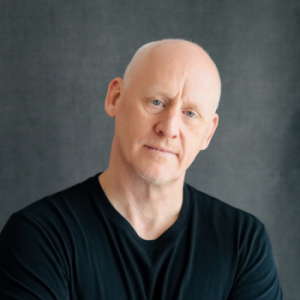
About Matthew Hill
With a career that spans corporate boardrooms, global classrooms, and stand-up comedy stages, Matthew Hill brings a rare blend of wit, warmth, and wisdom to the art of communication. As a leadership trainer, intercultural facilitator, and presentation coach, Matthew helps executives, emerging leaders, and teams unlock confidence, clarity, and impact—whether they’re pitching, presenting, or navigating high-stakes conversations.
Having trained teams from EY to GE Capital, and delivered workshops in more than 30 countries, Matthew is deeply versed in the real-world dynamics of cross-cultural communication and influence. His sessions are energising, applied, and always action-oriented. He’s especially skilled in flipping limiting beliefs—taking the “I could never” and transforming it into “watch me do it.”
Whether he’s guiding a nervous speaker through their first keynote, coaching a CEO on how not to bore their team, or mediating conflict with humour and empathy, Matthew knows how to meet people where they are—and move them forward.
He thrives in global settings, whether in-person or virtual, and has built a reputation for helping professionals of all stripes find their voice, sharpen their message, and lead with purpose. From webinars to live workshops, he’s equally at home behind the mic or in front of the room, and brings sharp insight and lively storytelling to every conversation.
Matthew’s book “Learn How to LEAD; Believe, Behave & Become” is available now.
Episode Notes
00:00 Intro
07:08 Lesson 1: Forgive Yourself
12:18 Lesson 2: Perfect Preparation Prevents Piss Poor Performance
17:22 Lesson 3: Do Your Best, No More, No Less
23:16 Lesson 4: Network Like a Crazy Person
31:42 Lesson 5: No Health, No Wealth
38:38 Lesson 6: Always Have a Story Ready to Tell
44:23 Lesson 7: Be Creative and Determined
49:11 Lesson 8: Have Three Answers to Every Problem
53:48 Lesson 9: Einstein’s Favorite Human Invention – Save Money Early
55:53 Lesson 10: Do the Other Side’s Work as Well
Matthew Hill – Forgive Yourself
Robert Hossary: Hello and welcome to 10 Lessons Learned, where we talk to sages and gurus, leaders and luminaries from all around the world to dispense their wisdom for your career, business and life in order to make the world a little wiser. Lesson by lesson.
My name is Robert Hossary and I’m your host for this episode.
Our guest today is Matthew Hill.
Matthew is a leadership trainer, an intercultural facilitator, and a presentation coach.
Matthew helps executives, emerging leaders and teams unlock confidence, clarity, and impact, whether they’re pitching, presenting, or navigating high stakes conversations.
He’s especially skilled in flipping limited beliefs, taking the I could never and transforming it into watch me do it.
Welcome, [00:01:00] Matthew. Thank you for being on the show today.
Matthew Hill: Thanks for the invitation, Robert. Lovely to be here.
Robert Hossary: Matthew, that was a brief intro, but tell us a little more about yourself
Matthew Hill: Okay, sure. It’s Matthew. It’s all fairly informal here. was in HQ and the field, the, the, uh, the global offices were getting all the resources. So, I was green-eyed with jealousy and realized I had to go out to get my career kickstarted. I had three choices, Lebanon, India, or the Czech Republic. The person who went to India was ethnically Indian and got very ill, so that could have been the end of me. with Lebanon, they wanted a French speaking woman. I had appealing curves, but my language wasn’t good enough, so I didn’t get that gig. I went to the Czech Republic; it was like a home from home.
It was like going in a time machine, going back to the 1950s. I knew a few people there. was a village. I met everybody, the Queen, prince, Philip, Margaret [00:02:00] Thatcher. We had a strange interaction, uh, every, uh, Czech Prime Minister anything and everything happened. It was the making of me. So that was my thing. I also, there interviewed thousands of people. I’m going to tell you a little bit more about that later. And that, uh, created the intercultural platform, which gave me a not really nice income stream over the last couple of decades. Also, I’d been a leader, and so I monetized that with leadership, coaching and training.
And one of the things in that package really stood out, which was presentation training. So now I do some funny stuff, intercultural presentation training. So, uh, just last month I was in Paris doing French English as, so we did some TV talent contest of who could be the most charismatic, surprisingly the French one. believe in stereotypes, but on that occasion, it, uh, it, it all worked. So that’s me. I love working [00:03:00] with lots of people, individuals, and teams, and bringing out the gold, the best, the potential in them and telling them it’s all going to be all right. That’s me.
Robert Hossary: That’s wonderful. I also noticed that you’ve been a standup comedian.
Matthew Hill: Yes. There’s a story I used to do that a million years ago with, and it was, and I had the completely, the wrong formula, which was, I would start I, it is a news, news, comedy. So, on Monday, blank sheet of paper, stressful week. By Friday, I would have some material and my misses, if she laughed, the audience would laugh, a very useful thing to have.
And if she didn’t laugh, I would cut it out because it was never going to work. And then Saturday I would perform it. Ridiculous formula. Totally stressful. Gave that up. And then more recently, my misses went on a comedy course and they, it was taught so badly, they had lots of dropouts and I thought, I’ve got the itch.
As she came back with her [00:04:00] homework every week, let’s have a go. So, we did it. so, uh, she did, she goes on first, then I go on second and we are doing a sort of minor tour the smaller venues in London and doing that. I did a sober gig. I was sober. They were sober. Rob, actually a quick, quick test. Is that going to be a tougher audience or an easier audience than a two pints down audience? What do you think?
Robert Hossary: I personally would say it would probably be a tougher audience.
Matthew Hill: Thank you. Before they were sober, their stories were size 11. So, when you tell your size seven story, they go, yeah. So, what been there, done that I, you know, I was, I was naked up a lamppost. So that’s difficult. Plus, the fact alcohol, dumbs down the, the, the censoring part of our brain.
You need that, you need that to get the laughs. So that was an interesting one. Yeah. So, we’re onwards and upwards [00:05:00] with comedy.
Robert Hossary: Matthew. we always start off with a question. So let me ask you,
with everything that you’ve learned, throughout your career and your life, what would you have wanted to tell your 20-year-old self?
Matthew Hill: I think my issue was conservatism. I’ve got over it, but it’s took me far too long. So, my punchline, I’d say I would shake myself gently by the shoulders, maybe slap myself one or two times around the face and say, mate, stop driving with the brakes on.
Go for it. What’s the worst that could happen? And I would say that rhetorically, because plenty of bad things can happen,
Robert Hossary: Yeah, but it’s a, it’s still a good lesson. That’s been something I’ve, I’ve said if you don’t ask, you don’t get. So, if you don’t try, you don’t get.
Now that’s a great lesson, to tell your 20-year-old self. I wish we could all go back in time and do it, but that’s why we have this question.
So, our listeners who are [00:06:00] in in the start of their career or early on in their career path, their life path. They can hear this and think, well, maybe, maybe if I said Go for it. I’d get somewhere. So, thank you for that.
Matthew Hill: that Well, just, just one, one quick. There’s a, there’s a weird thing that you can start with today. You, you, 23-year-old hesitant. I am now the king of complaint writing, which is sort of having a go and seeing what happens. And you’ll be surprised if you write a complaint letter, which is very factual and make a decent claim, which is the right magnitude.
Not too small, not too big. It works and it’s quite a good proof of on with it, go for it. It’s very safe. People can say, forget it. People can say, do. So, there’s a sort of test, there’s a pilot to the ‘go for it’ theory, a complaint letter. You, you become a strange old man before your time and a strange old woman before your time. But it’s quite a good experiment.
Robert Hossary: Yeah, look, I’ve, I’ve never written a complaint. I’ll [00:07:00] give it a go and see what it does for me.
Alright, let’s get onto your lessons. Yeah, let’s get on with, um, your 10 lessons today.
Lesson 1: Forgive Yourself
Robert Hossary: Lesson number one.
Which I think is very powerful personally.
Lesson number one. Forgive yourself, Matthew.
Matthew Hill: Yeah, we, we start with something fairly profound and this goes into Sigmund Freud, who I knew as a young man. What do we do when we are sentient children, age five, six, or seven?
We make some big thing matter far more than it would or should we do some sort of crime. I remember, here’s a, here’s a really silly one, which has literally just come to me. Remember going into the kitchen, my mother’s domain and licking my fingers and putting it into a tin of white powder and putting it into my mouth and feeling guilty and horrible for many years and going, I could have poisoned myself. Of course it was [00:08:00] powdered milk it, you know, just forget it. Give it up, give it up, give it up. So, we have this idea of we have, we get bullied or we have an accident, or we hurt ourselves, or we hurt someone else, or we do something.
Do the, I mean, a family member point poked out her sister’s eye with a stick. lot of forgiveness went on there, a lot of guilt went on there, a lot of anger and so forth. There’s no point in hanging onto these things. And what happens is you make that into something. No one loves me. I’m not good enough.
I shouldn’t, I mustn’t, I couldn’t. I’m a shut up. I’m a stop. And we get back to that conservatism, and you’re guaranteed that if you don’t, you don’t get the result. No input, no output, no garbage in, no garbage out, nothing in, nothing out. And there we go. So, forgiving yourself. It doesn’t matter.
It doesn’t matter. It doesn’t matter. Can be so liberating and freeing. So, dear listener, dear viewer, what have you got? Now? What have I just triggered from your early [00:09:00] years? Your brain started to work, not necessarily for you, and you’re still holding onto that nonsense. Can we shake it out? Let it go and live today as a free human.
Robert Hossary: Amen. I couldn’t agree more with that sentiment. It’s something that I have tried to pass on to my children. It’s something I’ve tried to pass on to young professionals that I work with.
It doesn’t matter. You know, you want to get, you want to jump into your time machine, you want to jump into your TARDIS, and, and go back in time.
Not possible, at least not yet, but it’s not possible. We, we do travel in time. We go forward one second each second. That’s the only direction we’re traveling at the moment. So, if you’re going to hold onto all of that crap, wanting to go back and fix it, it’s never going to happen. And you’re going to live, as Matthew says, with this guilt, with this [00:10:00] pain, with this crap going on, and it’s going to limit you.
Matthew Hill: Very good. Well just, I’m not contradicting you in the, in the physical Einsteinian I was in Paris with this guy Joseph McClendon, and he did a hypnotic regression, which I wouldn’t recommend because it can get horribly wrong. are all in Paris. And he goes, imagine, you know, just remember you came out of your hotel.
What did that street look like? said, okay, so you’re walking towards this venue, the Hilton is going, it’s going to feature a couple of times. And he said, imagine there’s a gap between the two and you go in there and you are feeling good and you don’t know why. this tiny character coming towards you and there’s something about something magical and very familiar about that person. And they’re coming closer and you are walking towards them as well. And you suddenly see the hair in the face and the, the jacket and you go, ah, it’s me. It’s the younger me. And you start to cry and everyone does [00:11:00] in the room and you walk towards and then Joseph facilitates and say, okay, are you going to say to them? Which is the exercise we’ve just And it’s going to be, you know, go for it or it’s going to be all right, this, this. And it’s so magical. And we cry and cry and cry.
And you come out and you do feel, you’ve gone with the editor’s pencil, and you have scrubbed out some utter nonsense which doesn’t serve you. And you come back and we all literally go out into the streets of Paris in the next break. And, and to maybe try and find that space, try and find that child. It’s quite sad. Because you, you go, the child’s gone. You, I think, I think we do a sort of wishful happy, have a nice life. And that’s, that’s a funny, you know, you are reintroducing some separation anxiety, but that’s an
Robert Hossary: Uh, it,
Matthew Hill: exercise.
Robert Hossary: it’s also a, a very, very powerful thing to learn.
Let it go. Just let it go.
One of our, hosts, Siebe Vanderzee, has got a lesson very [00:12:00] similar to that, which is Get over it.
Don’t create mental barriers for yourself and Siebe lives by that. and I, I tend to agree. Just get over it.
Forgive yourself, let it go.
Alright, that’s fantastic, Matthew. Let’s move on to lesson number two.
Lesson 2: Perfect Preparation Prevents Piss Poor Performance
Robert Hossary: I love alliteration, by the way. I think this is wonderful. So, everyone, lesson number two.
perfect Preparation prevents piss poor performance. Tell me all about that, Matthew, please.
Matthew Hill: There we go. I’m a trainer. it’s trains, planes, automobiles, hotels, equipment, wires. These days it’s adapters because you’ve got the, it used to be VGA and now it’s all, and if you haven’t got it, it all goes horribly wrong. So, if you, if you don’t prepare, it’s going to go horribly wrong. just a crazy example of that. I had a bad back and I had a massive [00:13:00] gig. I had to get myself to Prague. it was a hotel. They’d taken over the whole hotel, 550 people there. And it was a fairly onerous gig. I was doing, not a keynote speech, but a keynote training for two days. And it was the first hour of the morning. It was incredibly early and I’d had a bad back. It was actually my birthday in Paris. I’d come back; my back had collapsed. I’d spent my birthday in total agony, and then I had to get to another country. And luckily that worked, but I’d prepared quite a lot of things and that saved my bacon. They wanted me to jump onto the stage. I knew that was never going to happen. So, I found a place on the, on the stage where I could sort of hide and appear from. I had to announce myself from backstage before, but I didn’t do that. I got someone else to do that. And we were going to negotiate. With real money. So, 550 people, lots of real money. I was going to sort that out in the hotel room [00:14:00] by the way. I’d invited my son down from Berlin and that was a critical move, which saved the day as well. I delegated that to some poor member of the Hilton staff, and I was going to mic run, I was going to run around with charisma and go up to people and embarrass them with a microphone. My son was there, so he became the mic runner and, and all of this. So, all in all, we had a redundancy for absolutely everything.
So, it came to five o’clock in the morning of that show, tried to get out of bed, couldn’t. And I’m, I’ve got so far, I’ve got 99% of the way here. I can’t do it. What are we going to do? My wife had taught me an exercise, because she’d had a bad back years ago about sort of crawling up the wall and doing this thing and relaxing the spasm. And that worked. And I just about got on. I couldn’t dress myself. So, my, my son was there, getting my socks on. I don’t mind telling you this now. It’s fairly stressful. At the time I went down in the lift, I avoided all [00:15:00] staircases. We got on there, I went up there, and then suddenly the adrenaline kicked in. Those guys didn’t know this category of errors, this category of substitutions that was necessary to put on a good show. The adrenaline kicked in. I felt fantastic. I had a pretty decent day. And then we did the same again with a different, agenda the next day. And it was fantastic. And I thought, what was that about?
It was, what might go wrong? What could go wrong? What’s plan B? What we call it, redundancy. When the, you know, the first set circuit or system fails, you have something else and. What doesn’t kill makes you stronger. And I felt amazing. And I, I, and I do, you know, I’ve, I’ve done many other things as well. I got lost in Kyiv the first time I was there and actually rescued myself. You, you forget the machinery. And now I go, you are going to get credibility for a technical cockup your fault or not, and you just busk you; you fill in [00:16:00] and here we go. So, you get points for bravery or agility when stuff goes wrong, but really, it’s about prevention and or agility. And you can stop stressing it. You can say, everyone makes mistakes. We can get on with it and just enjoy yourself. I mean, just what’s, what do you and I want? It’s to just enjoy every day and not freak out and be distracted by the nonsense.
Robert Hossary: That’s true that that is so true, but perfect preparation. I have a bit of an issue with perfection because perfection is the enemy of good. Perfection is the enemy of advancement. You want everything to be perfect. Well, guess what people? Things are never going to be perfect. and I’m not saying just be good enough, prepare, sure.
But as Matthew said, things go wrong. So, they’re never, ever going to be perfect. And if they are, hallelujah. Enjoy it. [00:17:00]
Matthew Hill: Well, this
Robert Hossary: a great moment.
Matthew Hill: next lesson, but here’s a joke. is the only listener? Viewer? What’s the only place where you are perfect answer your manufactured cv.
Robert Hossary: Very true,
Matthew Hill: Your
Robert Hossary: true. Well let’s go to the next lesson, because you’re absolutely right.
Lesson 3: Do Your Best, No More, No Less
Robert Hossary: It feeds in very well to lesson number two. So, lesson number three, do your best. No more, no less. Talk to me about that.
Matthew Hill: So, perfection is my second point, but my first one is, you know, you do too little. You know, those types, the passive and you know, they might have some mental condition or something else, or just be, spoon-fed overprivileged people who don’t need to, need to work too hard. I remember working with one of those guys. He was the boss of a major oil company and I worked with him, and he got away with murder.
He just was lazy and cheeky and broke the rules. He [00:18:00] set off fire extinguishers. He hid in the storerooms. and you think, wow, wow, wow. Well, most of us cannot get away with underperformance. Underperformance is a brand diluter a credibility eraser. Remember, other people have your reputation in their minds and in their hearts, and you are feeding it or eroding it every single day.
So, underperforming. That is a career subpar guarantee. Totally with you, Robert. Perfection. There we go. So, here’s my story. I was working for a supermarket chain in, in, Slovenia. There was this Belgian woman. Her parents had both been utter workaholics. They ran a restaurant. You never finished doing the work in a restaurant. So she was, every, all these, uh, s slow beans were leaving at five o’clock. See you. Bye. She was staying till 10 and really stressed and really angry with them. And we talked about your thing. And a guy from Ford once told me, Matthew, if you [00:19:00] can’t do it in eight hours, you probably can’t do it at all. Very freeing idea, which is about effectiveness, not for the diminishing returns of purchasing perfection.
First hour, very powerful. The fifth hour. What is the point? Get away. Get away, refresh yourself, come back and have another go tomorrow. So, my level is little and often, and I’ll give you an example of that. In one of my many jobs, I used to interview thousands of people for an And so I started to steal five minutes from myself in Poland, Czech, Slovakia, and Why do you do that? What do you believe in? How do you manage? How do you live? What do you like? What do you hate? I built up a whole thesis. So, a little and often it wasn’t perfection, it wasn’t laziness. I built up a thesis, a whole philosophy, a whole model in terms of the intercultural piece of central Europe, and that has been a decent and very [00:20:00] stimulating income stream for multiple decades. So, pitching it somewhere, it’s the value, not the quality. Always. There is a minimum standard. People, flagellate on a minimum standard, yeah, that’s okay, but just diminishing returns is a bit of a waste of time. Bit of a waste of time. So, it’s optimal, optimal quality and sustainable effort.
Robert Hossary: So as far as doing your best, you need to understand what it is that you should be doing from what I understand. So, if you understand what you should be doing, then you can work the side gigs or whatever it is around that. So, you’re doing your best, you’re not doing any more than that, but you’re not doing any less.
And it’s not quiet, quitting. It’s not what we’re talking about. You still need to perform. You still need to be, as [00:21:00] Matthew said, your reputation still needs to be there. So, you do need to be a performer.
Matthew Hill: Yeah.
Robert Hossary: but if you overperform, if you overdeliver, then sometimes you don’t get that credit.
Matthew Hill: My wife has a story. She’s a keeny. She loves school. She loved pleasing the teacher. She was very extra and she worked a summer job in a factory. And so, she tried to do her best. Was she popular? We’ve got another pop quiz. Was she popular with the regular workers or unpopular? Robert, what do you think?
Robert Hossary: Well, I don’t know your wife, but I’m sure she’s lovely and wonderful, so she would be popular.
Matthew Hill: Okay. No, as okay. Her personality was a win, but she was making them all look bad.
Robert Hossary: Yeah.
Matthew Hill: She was making them all look bad, so they said, Susanna, please slow down. When you go, you get, you get a little A on your report card and we are left with, with painful labour.
Slow it down love. [00:22:00] And so that was a lesson. That was a
Robert Hossary: Back to do your best. No more, no less. My issue with that is those that you mentioned at the very, very beginning of this lesson. Those that do nothing would do much less than they should.
Matthew Hill: Yeah.
Robert Hossary: And that brings everybody down.
But doing more doesn’t lift everybody up.
Matthew Hill: Nice.
Robert Hossary: My takeaway from this, please correct me if I’m wrong, is don’t worry about anyone else. Just do your best, do the best you can do. Don’t worry about the people around you. Just do the best you can do.
Matthew Hill: Well, comparisons are odious, aren’t there? So, you will have people further down the road of experience, or, you know, some people’s brains can automate and just do [00:23:00] whatever task it is.
It could be excel processing it could be mechanical, it
Robert Hossary: Yep.
Matthew Hill: aerobic. Some people will be less than you. Some people will be more than you. I mean, comparing is just going to cause stress and anxiety. So don’t worry about it. Don’t worry about it. Do what you can.
Lesson 4: Network Like a Crazy Person
Robert Hossary: Agreed. Alright, let’s get on to lesson number four. Now, I, I don’t want to sound like a pedant here, but this is a very, very common lesson, but I am interested in your take on it because your, you are, you are saying network like a crazy person.
Matthew Hill: Interesting, emphasis on this. met a sort of busy person. It’s all good. Not, not an insane person, although I do, let, I’ll let we, why don’t we start with the punchline.
I was going to do this at the end of the story, but here we go. Uh, oh. I can’t, I mustn’t, I shouldn’t, I’m an introvert. I’m this, I’m, I’ve got, I’ve got this [00:24:00] diagnosis, blah, blah, blah. I said, I’ve got a really complicated networking sentence for you. It could take you a year to learn, but once you learn it, it’s really going to pay off.
So, you go in, I don’t know if you have Ferrero Roche, there’s an advert where you go into the ambassadorial room and there’s a pyramid of golden balls and there’s a really complicated phrase you can say. You go up to the person, you go, hello, you’re here for the networking That works. You’d be surprised. It’s quite American, but everyone just relaxes.
We don’t have to pretend and go, oh, what do you think about the bloody, bloody blah and play around. You can just do But here we are. So let me, get straight to the lessons. If everyone don’t get drunk on the cheap wine. That is a waste of time. Don’t be a wallflower.
Robert Hossary: And I’ll stop you there. I’ll, I’ll stop you there for a moment. Anybody listening who has networked, look in the mirror and, and tell yourself the truth and not one of us that hasn’t gotten drunk on the cheap [00:25:00] wine. Okay? So be honest with yourself. Sorry, Matthew.
Matthew Hill: Okay So don’t get drunk again. all that I don’t be a wallflower and go the only thing standing me and the collapse is this wall that doesn’t work.
And don’t befriend the other wallflower. Oh dear. You’re just doubling the misery. Misery loves company. Don’t do that. Don’t find the safe waffler who is nobody, and just go, I’m, I’m, I’m talking you’re sort of telling yourself this nonsense excuse. I’m, well, I’m talking, I’m doing something, I’m networking.
No, you’re not. No, you’re not. No, you’re not. You have to find the value. Don’t stay with the king or queen. So, you find the best person in life who probably can give you thousands of dollars, pounds, euros, whatever it is. That person you say, okay, you are an amazing networker. You are an amazing person.
I’m an amazing networker. I’m an amazing person. Let’s go do our stuff separate. I’ll call you tomorrow don’t do the lazy. So, on my, my personal idea [00:26:00] is five quality conversations per session. That could be a dinner party, a drinks party, a conference, a congress, a forum, a mixer or something that will normally do the job.
because you don’t know the other way. I’ve got to get 20 contacts. I’ve used to, in the old days, I’ve got to get 20 business cards. Waste of time. Waste of time. My misses is the queen of networking, so she will go, I am A, just met B, and later I’ve met C, B needs to meet C. So, she will bring them back together. A today gets nothing, but she gets reciprocity and gratitude. If you do that every time and you’ve connected lots of people, the love, the cash, the opportunity, the gratitude, the reciprocity will come back to you. Now she’s at this amazing level. People call her up from very real companies that you would know and go, we need you now what seems like nothing, [00:27:00] it wasn’t, that we have this idea.
The other idea is this psychology. I used to be a head-hunter for my sins, and I would phone up and I would say this silly phrase, which was an inoculation phrase. I know you are happy, busy, and successful, and you absolutely don’t need this call. So, I’ve lowered my value, I’ve lowered my threat, and I’ve opened them up and know, and anyone who’s stubborn is going to go, no, you’re wrong. And it so that it’s a reverse psychology. It’s all quite fun. You’ll, you’ll tell them an opportunity. you’re right. I am happy, busy and successful, so I don’t need it. Thank you very much. Cheers. Bye. You’d ring the same person 90 days, and it would be a totally different conversation.
Matthew, how you doing? And whatever you had, they’d go, sure, that’s me. So, some weird thing had happened between contact one and contact two. So, people, you just need contact one but a time and the real brave move. because we can all do it once. [00:28:00] By the way, I had a, a very interesting thing the other day, which is ethically, strange if you’re sort of cold calling. Change your name and then the rejection is not associated with your name. say Matthew, I call, hi, it’s Matt, which isn’t my regular name. So, it’s just easier to take. You’d be surprised. So that’s, that’s the biggest mistake I made in networking. I left the Czech Republic for an amazing opportunity in London, which was fantastic.
I left 4,000 warm to hot contacts. Two of those people are now in hundred million pound companies. I’m in touch with one, which is good for me, but I’m not in touch with the other one. And I’ve left hundreds of thousands of dollars, euros, on the table. So, the second part is servicing those relationships. You mentioned comedy. When I do a little, the story I’ve just told you, I put that in an email and I chuck it to, to one has [00:29:00] that particular round robin or email has got the biggest or deepest emotional response of any message I’ve ever told. So that works. And then I do other messages that, what’s the one recently? I’ve got a hypothesis. What if we could get everyone in your organization up to eight, out of 10 quality for communication and clarity? Well, it’s a no brainer. What would be the benefit? What would be the upsurge, what would be the uptick in top line sales, bottom line, profit, conflict, diminution engagement.
Bloody, but talent retention. And so, it is a, it is a fairly no-brainer, but it’s put in a fun way. I’m doing these courses; I’m doing power and confidence. Shall we sheep dip everyone in your organization for power and Surprisingly, some people come back, yes, let’s do it.
Robert Hossary: Not a big surprise, not a big surprise that they would come back.
But I, I want to pick up on, on a couple of points that you made. We recently [00:30:00] launched a, a second series called, Lessons to Advance Your Career.
And on the inaugural episode, we got together because we’d been around for a very long time and we, we spoke about it
I used to run the American Chamber of Commerce in Australia. So, you talk about networking, you talk about functions, you talk about events, been there, along with many other things in my career.
So, the one thing that I said, which is what your wife is doing is ‘be a connector’.
So, if you are a connector of people, you will be remembered, which also taps into, one of my other lessons a long time ago, which is it’s not who you know, it’s who knows you.
Matthew Hill: Yeah.
Robert Hossary: And there’s no better way to be known than to be that connector.
So, networking is incredibly important but as Matthew said. It’s [00:31:00] the quality of networking.
Being a wallflower, useless waste of time, waste of company money actually, if they’re paying for you to go waste of your money if you’re self-employed.
The whole mere fact of networking is to meet people, learn from them, learn what they want and see if you can provide it. If not, do what Susanna does. Go and find someone who can provide it and give it to them. So, a great lesson, Matthew.
Matthew Hill: It’s the Maya angels that, that connector, you feel good about them. They have given you value, you feel good. That’s it.
Lesson 5: No Health, No Wealth
Robert Hossary: Yep. Absolutely. Alright, your next lesson, lesson number five has got me scratching my head. Not really because I understand it, but why would this be an important lesson for you, Matthew? Lesson number five. No health, no [00:32:00] wealth.
Matthew Hill: Here we go. So, I had a fairly modest background, and I had some schoolies who had an even more modest background. A lot of them have made a big of money and they’ve, so cars, houses, and So that’s that. And they’ve, and we’ve had some issues. We are at a certain age now. In fact, we had a restaurant, uh, schooly get together where it was an hour of men’s health negativity, which made me feel ill. So, there we go. So that’s one point, like you want to avoid that particular conversation. So, you’ve got a car, you’ve got a $200,000 Euro pound Lamborghini, which is bright orange.
I saw one at the weekend. So, you drive up to one at a time to your 20 friends. What’s the first thing they say? Wow, you’ve got a bright orange Lamborghini. That’s incredible. What happens when you drive up the second time? Hello Matthew. So, you just paid 200,000 for 20 wows. What a waste of time. And you get to a certain age, [00:33:00] getting in those things is painful. Getting out has no dignity, so that’s why you shouldn’t bother with a car. Then we have the house. So, you have what we call a in a, in America, a McMansion, I literally have friends, someone moved from one of the greatest addresses in the whole of London, this enormous house, which features in films, the street features in films.
Paddington two was one and he moved to a flat. I said, surely, you know, everyone aspires to a house, and no one particularly wants to move from a house to a flat. They’re getting older. And he goes, yeah, sure. I didn’t, literally didn’t go in from one year to the next, to two of the floors. I think so.
You know, so just, just be careful what you wish for. And by the way, a lot of people do the old retire, rich, buy the dream house and it’s three floors, and then their mobility goes, which is another health thing. And so, this is a way, oh, there’s some exotic garden, which they can’t tend. So, there’s, there’s that sort [00:34:00] of idea. Then there’s money. So, if you’ve got 5 million, good for you’. If you’ve got 20 million, does anyone know the difference? And, you know, what have you done to get there? And all that sort of stuff. So that’s that. If you can’t get upstairs, if you are having some hideous pain, if you can’t get to sleep, because your skeleton is not your friend. So, isn’t it a good idea? And this is what people don’t to do it before you need it. To do it before you need it. Insurance. I mean, I, I have many views about insurance. Insurance does not. Change the event, but it certainly changes the, the, the consequence, the negative consequences around the event.
Your house will still burn down, but you can afford another one. So, since I’ve been doing Pilates, I haven’t had a recurrence of the back collapse since I have started spin [00:35:00] cycling. Very two very macho activities. I, I know Michael, he’s the real deal. He is Mr. Testosterone, spin Cycling and Pilates surrounded by women in Lycra. Hey, may, maybe you can see the benefit now. It’s all good. It’s all good. Uh, I haven’t, I, my, you know, number of times I get a cold or flu or this or that, man flu, which is brutal, guys. Man, flu is real. you know, my, my health is so much better and I’m thinking this is brilliant.
This is brilliant. Invest before you have to in your health, whatever it is. A brisk walk is the easiest way to start. Golf. Cycling. Tennis is a good one. You’ve got some social, compatibility and some, uh, leverage there. Do what you can, people do what you can. You’ll be so grateful. Another quick story. I do a lot of work in Paris. I go around near the posh hotels on the, Champs-Élysées, the George Han, or wherever it is, or you go to the Allen Ducast restaurant. You see these people, tons of money but they are [00:36:00] knackered in terms of the health. The woman will normally be a bit younger and healthier.
This is an American couple. Say the guy, his balance will have gone, his legs will have gone. Uh, he can hardly breathe. You’re thinking, are you enjoying Paris? Which is pretty, you know, cobbled streets and many kilometres, many miles. Have you left it too late? Have you not invested in your health? You’ve got the money.
This is the trip of a lifetime. Are you really enjoying it? You probably have to sit down every 10 minutes or you’re going, I can’t wait to get back home.
Robert Hossary: This is something that people don’t talk about, don’t think about. So, thank you for bringing it up, and you’re right. I’m a great believer in gratitude. I, I think gratitude helps you, later in life and you, once you develop that, that skill of being grateful, you stop chasing these things that you don’t need, because you’re only chasing them for your ego.
I’m not going to get [00:37:00] on my soapbox about this, but. Health is incredibly important, incredibly important. I, I remember losing 25 kilos, that’s close to what, about 50 pounds ish because my doctor said to me, the two conditions that I have will eventually but heads when I’m in my seventies and it will be difficult for me and I want to play with my grandchildren.
Matthew Hill: Yeah.
Robert Hossary: So, I did what I had to do and I shed 25 kilos. If you go back to the, some of the older episodes, you’ll see a big fat faced Robert. But you know, I didn’t do it to lose weight. I did it because I want to be healthy. I want to have the experience of playing with my grandchildren, having more memories with my family.
So, Matthew, thank you for that lesson. It is incredibly important and I don’t think we talk about it enough.
we are talking today with Matthew Hill, an international [00:38:00] presentation trainer who’s sharing his 10 lessons with us. So, to our audience, 10 lessons will always be free to listen to, but it’s not free to make. So, if you want to support us, please go ahead and leave us a review, write a comment, share this episode with someone else in your life.
It helps the algorithms and gets more eyeballs on us, and it helps us be able to provide more of these episodes for you.
You can also help by visiting our affiliate partner, audible. The links will all be in the show notes.
Lesson 6: Always Have a Story Ready to Tell
Robert Hossary: So, Matthew, thank you for those five lessons. Let’s get onto lesson number six, which I found interesting and I’m really looking forward to hearing what you have to say. Lesson number six. Always have a story ready to tell. It’s the ready to tell part that got me.
Matthew Hill: Well, what do we do? Almost real [00:39:00] time. Yesterday I was up in town, and we had this get together. there’s this guy I meet, every six months, these dues, and I sat down and said, hello, mate, how’s it going? And he was like, like, it was a bit of a nothing. I go, all right, what’s happening with you? Nothing new. And you, I’m, I’m instantly irritated. If, you know, go, this is a continuation of our network. We’re going, mm, yeah, I’m be could at done better than that. You know, if, if, if you were a student in my class, I would be giving a bit of a hard time now. And it, and it was this passivity. It was, and I thought, oh, so again, are you a radiator? Are you a drain? Alright mate, you’re being a drain. Would it kill anybody to have a few ready mades. So, you are going to the sporties. Why don’t we have a sporty story? You are going to the business. Why don’t we have a client interaction?
You are amongst trainers. I love; I’m amongst Interculturalists. I’ve got a gig with Interculturalists next week. I will tell one of my silly stories. I was doing the Socratic method [00:40:00] with Spanish people and we were talking about feminism. So, I will tell my Spanish feminism story next week to a bunch of interculturalists.
They will, it’s, it’s material for It’s fascinating. I know I will get their attention. They will appreciate just the content. But also, I will tell it in my own Matthew way, and they’ll go, oh, he is doing it again, isn’t he? He, he’s doing Matthew’s brand. So, I’m on brand and I have to. I’ve prepared it to me is polite.
You know, you, you bring a bottle of wine to a dinner party, you bring a story to something else that but having it ready to go and it’s not about you. You go through life having these your job is like a journalist, is to grab what is important not for you. because that’s bias of which we have far too much at the moment, but it’s for the audience.
What do the audience need to know? So, I think there’s a profound truth that we can find from any story that we, we come across. So [00:41:00] that’s my style. And so, you know, I’ll, I’ll make, I’ll meet with my schoolies who have a different need. So, there’s a funny thing. I have a stalker in my Pilates class. How do I know I’m being stalked? I hear you ask when, especially when you look at me. Viewers, not listeners.
Robert Hossary: How, how do you, how do you know you are being stalked, Matthew?
Matthew Hill: So, we’re upstairs from the studio and the lovely Ellie, who is our Pilates instructor and guru Says to this woman, why are you here for Pilates? Is it for your muscular health and balance?
And this woman says, no, it’s for the men’s buttocks. Since I was the only man present, I drew a conclusion, then later she would accidentally touch me with various extremities and apologize in a flirty tone. I knew I had a stalker. Let me update that story. [00:42:00] She’s now taken one of those, weight loss drugs.
She didn’t need to, but she’s, she’s gone from normal term, very thin and knew a new wardrobe and a new this, and a knew that she’s not an entirely unattractive person, but I don’t need the grief. She’s moved on and she’s now chasing a vicar. it’s all good. Everyone’s happy. So, and you know, that’s the story.
Robert Hossary: Let me just go back to this for a minute now. It’s okay for people like you and I have travelled the world, worked overseas, have all of this experience, but what if I’ve never left you know, this is my first, second job and I’m still, a junior executive.
what stories do I possibly have to tell?
Matthew Hill: Good. Okay. Well, we go, we go back. A level you, I mean, it goes back to some of these other life lessons, isn’t it? Just sort of, you
Yeah.
Play harder, try harder, network. Go into room, connect people. One of the byproducts of that is conversations and the content of the conversation is the story.
This person said [00:43:00] the other way to do it is just to have an opinion. So, you know, everyone says, don’t talk about sex, uh, religion, age, politics, anything interesting should not be talked in the UK right now, I don’t think it’s going to change, anytime soon is you are allowed to talk about the car crash, which is British politics, right, left and centre.
It’s all horrible and dysfunctional. So, you are allowed to talk about that. So, you are just, you are just watching and processing it through your own mind. And I think that’s the key. It’s not the actual story; it’s your take on it. It’s your retelling of it, which is factual or dramatic or humorous, or just your two. It’s adding. And the easiest thing to do is just to change the point of view. So just have an opinion but try and have counterpoint to your audiences and bring that to the show.
And you won’t be boring. Don’t offend them or don’t [00:44:00] make them wrong, but you will provoke them
Robert Hossary: Don’t offend them.
Don’t back down if that is your true belief. but don’t be dogmatic about it.
You know, Have a conversation, have a story, and a, a good story has a purpose. What is the purpose of your story?
No, I love it.
Lesson 7: Be Creative and Determined
Robert Hossary: the next lesson, sort of, again, all your lessons feed into each other. But the next lesson I think also feeds into have a story. So, lesson number seven, be creative and determined.
Matthew Hill: Yes, exactly. So, I did a gig yesterday, which is a sort of management year with these wonderful people, and it was creativity. So, these people are in the construction industry. So, think about this construction industry. Matthew turns up and goes; we’re going to do creativity today. Uh, you know, you might expect a bit of resistance or pushback as they expect to get out the paintings and the [00:45:00] big
Robert Hossary: Yep.
Matthew Hill: if they’re in junior school. So, it’s creativity. mean that in terms of worker arounds and solutions and clever new ways of marketing, selling, mending, building, making the technology of a podcast work. Whatever it is. So, my laptop is in a pile of books. It’s creativity. My vanity light is, is only on 700 watts, whatever it is, you know, how can, how can I get more power in my vanity light? It’s creativity. It is creativity. of the, and one of my favourites is very much human nature. So, dear listener, dear viewer, whoever you are a bit pessimistic, uh, you see the negative before the positive. I’ve got a technique, which is wonderful, and which is just designed specifically for you. Let me give an example.
So, you take a piece of paper and you, on the left hand side, you say, what did I not do? So, it’s [00:46:00] a, it’s a forward time, total failure. Matthew didn’t sell any books, and you do a whinge list. I did not get on social media. I did not, get a professional person to design the cover. I did not ai the blurb. I did not send out review copies to get reviews. I did not get a famous person to write the forward. I did not use my database. I didn’t email out people. I didn’t have a launch party. I didn’t go to the local bookshops and put a physical copy in and say, thanks, Tom, at Backstory.
Please, uh, stock my book. I owe
Robert Hossary: It’s no bloody wonder you’re behind on your books.
Matthew Hill: No. Surprising you. Here we go. That’s, that’s, that’s, that’s, that’s my normal. Thank you, mate. Uh, kick up the ask. Gratefully received. And then you go on the other side, you simply reverse them. And this is, this is mechanical.
You don’t emote, or you, oh, this is the truth. This is what I actually did. And that will give you [00:47:00] a brilliant 100% successful plan. So, it starts with a sort
Robert Hossary: Brilliant.
Matthew Hill: depressive, pessimistic, lazy, couldn’t must, and shouldn’t, uh, dog ate my homework.
Robert Hossary: Yep.
Matthew Hill: And that automatically gives you a shining five star plan. then you do it. And then how do we do a plan? You prioritize, you diarize, you break it down into chunks, which are small enough. You do a Mel Robbins, which is, you think about it and activate within five seconds, so you don’t procrastinate. And before you know it, you can achieve much less than you think in one day.
And you can achieve just about anything in a year. so, it’s 200 golden hours of power. One a day for a year. And surprise, surprise, you have a success on your hands. You can be proud. It’s not too much, it’s not perfection. You haven’t killed yourself.
You’ve made it a standard. And before you know it, you’re getting the feedback. We are at our best [00:48:00] as humans when we do something and there is a result. And there is an effect. So, we have this cycle. So, build that cycle and when it comes, you are going to enjoy it. Exercise. health networking, to friendship saving to a stash of cash, all of that stuff.
Robert Hossary: Oh, look, I, I love it because of its simplicity.
Matthew Hill: Yeah
Robert Hossary: as long as you are honest and open and you say it didn’t work because of these factors, regardless of who’s responsible for the factors, this happen. There’s your to-do list.
Matthew Hill: Yeah.
Robert Hossary: I mean, it, it is as simple as that. You just, okay, this didn’t happen.
Let’s make it happen.
Matthew Hill: Very
Robert Hossary: And then you, you create an action plan. And I, I’ve, not heard this and I’ve been around for a while. That is the simplest, to-do list. it’s a simplest, repair of a situation
Matthew Hill: Yeah. [00:49:00]
Robert Hossary: I’ve ever heard, Matthew, that is brilliant.
Matthew Hill: Nice
Robert Hossary: Thank you. I, I, I’m,
I’ll keep thinking about that because I want to keep talking about it, but we’ve got a few more lessons, but I’m in awe.
Lesson 8: Have Three Answers to Every Problem
Robert Hossary: That’s just so simple. Okay, let’s go to lesson number eight. Lesson number eight have three answers to every problem. is that a magic number or is that an overkill? Why three answers.
Matthew Hill: Okay. So, one, thing, you know, one path is no choice. Two choices is a dilemma. Three choices is a choice. And Occam’s Razor, which is, if you go, what are the three hypothesis or directions? The simplest one might be the truest one. So, the three works well, You could do whatever you like. Again, the perfection, the over the overkill. I worked with this amazing guy used, it was actually the biggest company in the world, and he had this strange office in a very cold country up a [00:50:00] concrete exposed staircase. And it wasn’t open door policy because it was so cold. It was knock, knock and enter. And he would come into this guy and say, I’ve got a problem. If you did not have three associated and attached possible solutions that he could help you with, he’d coach you with. He wouldn’t decide. He would always coach you or He sent you back down and it got to minus 20 sometimes in January. and he, you’d go back in and you’d have to think about it and come back out. No one wanted to do that because they were cozy in their nice little fug of an office. and so, people learn to do it. And of course, if you have a problem there.
So now when I’m getting a bit of a pile up, what I will do is I will take a moleskin, and I will write my crap list. You know, crap one crap, two crap three and three lines, and on the right go. Well, what could we do? What could we do? Maybe leave that, have a cup of coffee, come back after lunch, and come back [00:51:00] in and maybe do a weighted decision. matrix or something again, a bit like the other stuff. You just free yourself to move forward. And then we do a bit of Cove. important, what’s urgent, what’s strategic? Why didn’t we schedule this for one of these clever things Every day, this week, by Friday, you’ll going, I took action. pretty sure I got all of this right, and we are in a better place. I, it might come back to, to burn me, to, to haunt me, but I’ve done my bit. I can relax for the weekend. And so it is, acknowledge the problem. Don’t be a bloke with your health and avoid it until it’s all far too late. And you get that letter from the, from the hospital. I wish I had, let’s, let’s avoid regret. do some stuff and keep it, and just do it as frequently as possible so it becomes a very light, unemotional idea, and you are just going to blast through the problems. Like a hot knife, a solution, hot knife through your problem [00:52:00] butter.
Robert Hossary: Yeah, I see it. it’s simple. It, it, it’s a combination or a rewording of some ideas that were out there. When I was younger, which I never followed by the way. Matthew maybe had I followed it, I’d been even more successful. But I have heard this before. but I’ve never done it. And in my senior part of my career, I started to do things very similar to this.
And it works. So, people, I can tell you that having three different options to be able to then look at the problem from three different perspectives is going to help. Looking at any situation from a different perspective will always help you find a solution to that problem. I do two things.
I socialize my thoughts and my ideas with other peers [00:53:00] because I know I don’t know everything and I know I my perspective is skewed. So, you know, I socialize my ideas and before I even verbally expressed my ideas, I let my subconscious deal with it, which is what you said, Matthew, go have a cup of coffee, let your subconscious work on this thing because your brain is always going.
Matthew Hill: Totally.
Robert Hossary: always working.
Matthew Hill: Totally.
Robert Hossary: So, I love that. Now, that’s, that’s have three answers to every problem, people, and as I say in many of the episodes that I host, if you still don’t get it, rewind, listen to Matthew’s answer again. It will sink in.
Lesson 9: Einstein’s Favorite Human Invention – Save Money Early
Robert Hossary: Alright, let’s go to lesson number nine. And this is something I tell my children, and they’re all adults now, by the way, Lesson number nine, Einstein’s favourite human [00:54:00] invention. Save money early. I love it.
Matthew Hill: So, Albert Trevor Einstein, one of those words wasn’t asked, what is the cleverest human invention? And he said, compound interest Now, if you’ve left it too late, compound interest is a waste of time. And if you’ve got stuff on the credit card, compound interest is working actively against you. But if you are relatively young, and this is, I think all of these lessons can be taken up. If you’re 50, 60 or 70, it’s never too late. It’s never too late to have a good childhood. It’s never too late to start saving some money. And you’ve got this amazing stuff. So, in the old days before Big Bang, which was a, a revolution in the city of London around equity, you would have two stages and lots of fees.
And it was really expensive to do things like invest. you’ve got exchange trained funds, which are basically free to do. And if you due to the S [00:55:00] and P 500, this is not investment advice, but if you put 10% of your savings in an S and P 500 pot basically forget about it and don’t touch it, something magical will happen.
So, time works against us. The only time it doesn’t work against us is compound interest. So, make take advantage of Albert Einstein’s favourite human invention.
Robert Hossary: So, I, I totally agree with that, and it, it does work people. Okay, let’s move on to lesson number 10. I’m not sure if I like this one, Matthew
Matthew Hill: Drama. People. drama. We’ve got
Robert Hossary: Um,
Matthew Hill: so far.
Robert Hossary: I’ve got.
Matthew Hill: it all
Robert Hossary: Well,
it, well, it’s the last lesson, but
Matthew Hill: so, it is
Robert Hossary: got,
Matthew Hill: in one sense.
Lesson 10: Do the Other Side’s Work as Well
Robert Hossary: I, I’ve got enough work to do without following this advice, [00:56:00] so I’m going to, I’m going to wait to hear your answer before I, I make a final decision.
Lesson number 10, people, do the other sides work as well?
Matthew Hill: Okay. So, we, we, we might be on our perfectionist graft and hour interpretation. I don’t, I don’t mean that. I am selling, socializing, networking from my offer, my values, my culture, my experience, my thing, my favourite topics. That’s what most people do. They are fairly egocentric, fairly self-centred.
They’re seeing the camera is going through their eyes. With sales negotiation, reciprocity meetings, empathy, resolution of conflict, bonding, coaching, influencing, mentoring. With all these things, you do actually have to take a bit of a journey in someone else’s shoes. [00:57:00] I quite like the idea, you know, you, if you know some, some Nigerian 4-year-old, uh, those shoes aren’t going to fit me.
I haven’t a clue what their reality is. Let’s be honest. I haven’t a clue, a single clue what their reality is, and even if I try and imagine it, but for, for regular folk who are in my own realm, within my own space, within my own reality, why didn’t I just work out? What’s in it for them? What’s their starting point?
What are their key values? What did they do last time. What’s their hope? I often ask this, by the way, when I’m getting a brief on a job. Is it Matthew, can you do this speech for me? Can you teach people how to present? What is your highest hope for your team and what is your worst fear for your team? And those are quite interesting by the way.
People often avoid. Answering that question,
So, it’s all about the audience. It’s all about the, what are they going to come back with? Imagine haggling, we are buying or selling this thing. You’ve got these two [00:58:00] prices, want to sell it for, want to buy it for. It’s that sort of idea. So, it’s, it’s telepathy and you can go a long way. Or influencing people, reverse psychology, reverse psychology. Oh, you, you don’t want that last piece of cake to you.
So really do the work in terms of values, motivation, need. Want, desire, need, want, desire. You know, you take a child to the doctor to get inoculated. What do they need? The inoculation. What do they want? The sugary lollipop.
What do they desire to get out here? Do it in the right order. you’ll get some tears and you’ll get some happiness. You’ll get some health. And so, it’s about that. So just do the work as opposed to me, me, me, me, me. This is the brochure. How many times have we had this idea someone’s pitched you and I it could be where to go on holiday, what restaurant to go to?
What are we going to eat today? How are we going to educate the kids? What school should we send? And it’s me, me, me, me, me. [00:59:00] This is it. This is it. This is it. This is the only way you are in conflict. are in mono. This is not a three dimensional reality and it’s going to go wrong. It’s going to be conflict, or you’re going to counter the facts.
And people firing factual bullets at each other. Butch Cassidy and the Sundance Kid does not end well. Doesn’t end well for anybody. So, anticipating someone else’s values, their language preferences means you can structure form your argument and debate in less offensive and irritating and triggering language.
And instead of two polars, which is what we have in the world right now, you might notice that none of our problems are getting sorted out because everyone’s too busy hating the other person and thinking theirs is the only way. If we do the work for them, then we can really get shock value, surprise value, moderation, and then [01:00:00] debate, discussion, exchange, and a synthesis. So, Robert, if you, if you and I were on the wrong side of stuff, I wouldn’t try and change your mind. I would just try and add some riches into your side. So, you would develop your side. You wouldn’t cancel your side. We can’t stop stuff. We have to replace it or augment it. That’s what I’m talking about.
Look, we have too much conflict, and that’s because everyone doesn’t want to be wrong. Well, guess what people? Guess what? You don’t know everything. We are wrong sometimes, and the sooner we can admit that, the better, but this particular lesson is something I learned,
Robert Hossary: Probably sales 1 0 1 as a sales cadet. Listen to the most popular radio station, W-I-I-F-M.
Matthew Hill: Yeah. Good.
Robert Hossary: What’s [01:01:00] in it for me?
Matthew Hill: Yeah.
Robert Hossary: And if you, if you look at what the client wants, and this goes for everyone, it doesn’t, not just sales, but if you understand the opposing point of view, if you understand what the issues are, then you can address them intelligently,
Matthew Hill: Yeah
Robert Hossary: creatively, and with minimal conflict.
And if you don’t agree with it, walk away. So, I love this lesson now. Thank you. Thank you, Matthew. It, it makes a lot of sense. Do the work, people do the work for the other side as well, so that way you are well prepared when you have the discussion.
So, Matthew, we talked about your 10 lessons and your wonderful life. Thank you for all those lessons and anecdotes. I’ve got another question for you. What, in your entire career up until now, what have you unlearned something that you held on as being truth, as being [01:02:00] the way, and then as you got wiser, you thought, nah, that was mistake.
No, that’s, that’s not the way to handle that.
Matthew Hill: unlearning, what a lovely idea. Well, yes. because we, we are always, you know, do this very good. What unlearn the greatest relief I got as someone taught me this. And then I think there’s a book called what Other People Think About You is None of Your Business.
I think that is a book once you free yourself from the burden and the drama, which is in your, your, your head about other people’s opinions. You will have, you will go faster and lighter through life. You’ll be able to sleep at night. You will be able to face anybody. If you’re not wrong. You’re not trying hard enough but accept the lessons of your mistakes. You know, if you get it right, you learn nothing. If you get it wrong, you learn something. So, thank you for correcting me. Thank you for adding that. I did not know [01:03:00] that. So, you hate me. That’s happening in your vibe. We are not going to be friends. You’re not going to buy me a Christmas present. I think I will survive. It’s okay. It’s okay. You know, it literally is. Other people have a negative thing.
They’re probably having a bad day. It’s not about you anyway, and who cares? Who Cares?
Robert Hossary: And who cares? Look, what a wonderful note to finish on today. Who cares? Love it. Matthew, thank you so much for, for being on and sharing all that with us.
Tell us about your book. Tell us where we can get it.
Matthew Hill: Yeah, so why not?
So, it’s learn how to lead, believe, behave and become. It’s on Amazon. get the Kindle because I’m a bit behind, on terms of producing more books. get that, read it if you don’t like it. I don’t care.
That’s Can you say, that was the last lesson. I love writing books and if you get something from me then I’m [01:04:00] really happy for you.
But guys, pay it forward. Help someone else as well. you mentioned your
Robert Hossary: Wonderful.
Matthew Hill: times Robert. Help your kids. Help your neighbours. If we can all pay it forward, then everybody wins.
Robert Hossary: Absolutely. The link for, Matthew’s book will be in the, in the, show you’ve seen his book here on the screen. Is there any final thing you would like to leave our audience before we sign off?
Matthew Hill: Well, you use the word audience with all communication. It’s not about you. It’s always all about the audience.
Robert Hossary: And with that we’ll finish here today.
You’ve been listening to 10 Lessons Learned. Our guest today has been Matthew Hill, who is in the UK. Thank you to our 10 lessons team for making this possible. Our episode editor Codie Comeau, our marketing and social media manager, Yi Wang.
and we are supported as always by the Professional Development Forum. Please tell us what you like about today’s lesson. If you [01:05:00] agree with Matthew, if you disagree with Matthew, put that in the comment. Write down your favourite lesson in the comment or even tell us where you are listening from.
Every little bit helps because it works with the algorithm and it makes us be seen more and more on YouTube and of course on the audio platform that you’re listening to us on.
So go ahead and hit that subscribe button like this show, hit that notification bell so you don’t miss an episode of the only show that makes a world wiser lesson by lesson. And don’t forget people forgive yourself.
Thanks to our 10 Lessons team that make our show possible: Our Episode Editor Codie Comeau, Marketing and social media managed by Yi Wang, and our Producer Robert Hossary. Sponsored as always by Professional Development Forum. You can find the www.professionaldevelopmentforum.org.
You’ve heard from us we’d like to hear from you. Email us it’s podcast@10lessonslearned.com.
Remember, this is the podcast the only podcast. That’s makes the world wiser lesson by lesson.