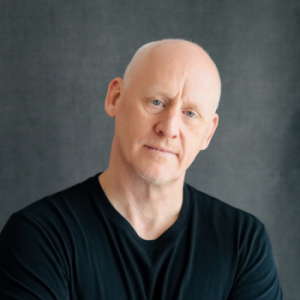
About Kevin Hartke
Mayor Kevin Hartke is passionate about all things Chandler and Arizona. He began his second term in January 2023. Kevin served as Vice Mayor twice, as well as on City Council for nine years. Kevin and his wife, Lynne, have been married for 42 years and have lived in Chandler since 1985. They have four children and four grandchildren. Kevin continues to serve as a Pastor at Trinity Christian Fellowship in Chandler where he has worked since 1985. He has a bachelor’s degree in Biochemistry and a master’s degree in Theology. Kevin is involved extensively in the state, region and Chandler community. As Mayor, he serves as Vice President on the Arizona League of Cities and Towns Board and on the Executive Board of Maricopa Association of Governments. He also serves as a board member of the Greater Phoenix Economic Council. In Chandler, Kevin volunteers with several organizations: For Our City Chandler, IHELP (local homelessness solution), American Cancer Society; Ex-officio board member with Chandler Chamber of Commerce and Chandler’s Sister Cities. Kevin is a literacy advocate reading to students in Chandler since 2007.
Episode Notes
Lesson 1: 05:33 Life is beautiful and full of wonder. Take time daily to appreciate it.
Lesson 2: 07:16 Relationships are difficult, but important.
Lesson 3: 09:36 Learn important lessons vicariously. Learn from others.
Lesson 4: 11:25 Surround yourself with good people who want to carry water for you.
Lesson 5: 14:26 Smile when others are so engaged in something you started that they now own it. Let them.
Lesson 6: 17:33 Grieve when you experience loss in your own way, in your own time.
Lesson 7: 20:36 Forgive.
Lesson 8: 22:53 Give people your full attention, be engaged.
Lesson 9: 23:43 Tell the truth, then you do not have to remember how to perpetuate a lie.
Lesson 10: 25:49 Find a way to make the world a better place every day.
Kevin Hartke – Appreciate, Forgive, and Transform: A Guide to Life and Leadership.
[00:00:08] Kevin Hartke: Hello and welcome to 10 lessons learned where we talk to leaders and luminaries from all over the world to dispense wisdom for career, business and life. In order to make the world wiser, lesson by lesson, my name is Diana White, and I am your host for this episode.
[00:00:26] Diana White: Our guest today is the City of Chandler Mayor, Kevin Hartke.
[00:00:29] Diana White: Mayor Kevin Hartke is passionate about all things Chandler and Arizona. He began his second term in January of 2023 Kevin served as Vice Mayor twice. As well as on City Council for nine years, Kevin and his wife Lynn have been married for 42 years and have lived in Chandler since 1985. They have four children and four grandchildren.
[00:00:53] Diana White: Kevin continues to serve as a pastor at Trinity Christian Fellowship in Chandler, where he has worked since 1985. He has a bachelor’s degree in biochemistry and a master’s degree in theology. Kevin is involved extensively in state, region, and Chandler community. As mayor, he serves as vice president on the board of Arizona League of Cities and Towns, and on the executive board of Maricopa Association of Governments. He also serves as a board member of the Greater Phoenix Economic Council. In Chandler, Kevin volunteers with several organizations. For Our City Chandler, IHELP, which is a local homelessness solution,
[00:01:35] Diana White: American Cancer Society, ex officio board member with the Chandler Chamber of Commerce and Chandler Sister Cities. Kevin is a literacy advocate reading to students in Chandler since 2007. Welcome, Mayor Hartke.
[00:01:51] Kevin Hartke: So good to be with you.
[00:01:52] Diana White: Oh, I have been waiting for this for a very long time. I’m super excited.
[00:01:57] Diana White: And now I’m going to hit you with my first hard question before we get to your lessons. What would you tell your 30-year-old self?
[00:02:04] Kevin Hartke: You know, I remember being 30 and always rushing around, it seems like I still rush around, but I’m doing it in a wiser fashion, one of my lessons that has, has spread into all sorts of disciplines, and it’s, it’s kind of like this, generally speaking, People are not out to get me.
[00:02:25] Kevin Hartke: They don’t even know I exist. I remember one time I was in a hurry and there was a car in front of me in the left lane they didn’t turn on the arrow and I was stewing and I started honking at them. then I thought, they don’t even know I’m back here. They’re just caught up in their own world and drama.
[00:02:48] Kevin Hartke: And so, my lesson is rather than get frustrated at them, give them a friendly honk and, let them know that they’re not paying attention. most people are dealing with their own issues that sometimes spill into my sphere without them trying to really do anything to me because they don’t know that I even exist.
[00:03:10] Kevin Hartke: another example is that sometimes someone will vent, at me or another person. And I’ve learned they’re not really venting at me, they’re frustrated over another situation, and I happen to be the one in front of them at that moment. I was driving to City Hall the other day and suddenly a car pulled up next to me, and I didn’t know what they wanted.
[00:03:35] Kevin Hartke: I rolled down my window and this person of international descent then started shouting at me, and tried to spit at me, but he didn’t even make it out of his own car. So, he spit in his car. To this day, I have no idea why he was mad at me, but I realized it probably had nothing to do with me.
[00:03:54] Kevin Hartke: He was probably trying to shoot around and maybe I was in my lane. it was one of those funny epiphanies that I learned years ago people generally are not out to get me. They’re in their own little world, working out their drama and life goes on. And when I learned that I applied that to lots of other applications.
[00:04:15] Diana White: Oh, that’s a beautiful lesson. And I think many people get the opportunity to get that lesson. It happens to them quite frequently. They just don’t choose to absorb the lesson. My first lesson was in retail many years ago in Manhattan. I had a customer who was pretty awful to me, really, really bad, yelled derogatory remarks.
[00:04:37] Diana White: It was horrible. I kept that the whole day. I think it happened mid-morning and man, it’s, you know, somebody would say, Hey Diana, pass the salt. Do you know what that customer did to me? the whole day. And then I remember towards the end of the day, my boss called me in who had become a huge mentor in my life. She sat me down and she goes, how was today? How was today? Did you not hear about that customer? Do you remember what he said to me? And she goes, yeah. What do you think he’s doing right now? And I said, I don’t know. She says, well, it’s been about seven hours. I can guarantee you.
[00:05:13] Diana White: He’s not thinking about you. He’s not thinking about you anymore. He’s eating dinner. He’s watching the local news with his wife. You got to let this go. And that was my first lesson. And I was like, you’re right. He probably isn’t thinking about me anymore. For him, it was just a moment in time, So I appreciate that.
[00:05:33] Lesson 1: Life is beautiful and full of wonder. Take time daily to appreciate it.
[00:05:33] Diana White: Well, let’s get to your first lesson, which I have to say, all lessons with my guests resonate with me, but our philosophies seem to be so entwined. I love these lessons, Mayor. First lesson, lesson number one, life is beautiful. Full of wonder, take time daily to appreciate it. Tell me about that.
[00:05:54] Kevin Hartke: I think sometimes we can be consumed with what’s in front of us that we don’t set back and, look at a sunrise or a moon rise or, or see a, a child playing in a park.
[00:06:08] Kevin Hartke: And it seems like our worlds can be so consuming that we lose track of the fact that life is amazing, and it is beautiful, and people’s stories are beautiful. And it helps me, it helps us, if I just take moments to appreciate, unanticipated beauty, our events. And this helped me realize, that Every day, I am on the first day of the rest of my life.
[00:06:38] Kevin Hartke: And how exciting is that? I’m not at the end of my career. I’m on the day one of the beginning of the rest of my life. I should approach each day, expecting to be surprised by joy and wonder and excitement.
[00:06:54] Diana White: Viewers and listeners, I know you consume a lot of content, a lot of podcasts, I don’t know how rare it is for people to get to interview the people that mean a lot to them in their lives, but Mayor Hartke has always been a source of inspiration and I have to tell you, he really means what he says.
[00:07:12] Diana White: He lives those words. I know that as a fact.
[00:07:16] Lesson 2: Relationships are difficult, but important.
[00:07:16] Diana White: wow, that is amazing. Lesson number two. this one got me big time. Relationships are difficult, but important. Do your part to make them work. Don’t leave any regret on the table. Oh, my goodness, that hit me like a ton of bricks, Mayor.
[00:07:35] Kevin Hartke: Yeah, and relationships are the stuff of life.
[00:07:39] Kevin Hartke: I mean, the people we work with, our family members, our neighbors, people we share commonality, and we are, generally speaking, relational people and created for relationships. sometimes they can get difficult. Hard words can be spoken. Misunderstandings can be perceived. But working through relationships are important.
[00:08:02] Kevin Hartke: I remember one time I had one of my best friends ask, they were at a very hard spot, and I literally emptied my bank account for them, and they were never able to pay me back. At that time, emptying my bank account as a young man is different than when you’ve accumulated more. I resented that for a while when I would see them doing things that I’m thinking, well, they’re spending money.
[00:08:26] Kevin Hartke: But we made a decision that our relationship was more important than the dollars. we called him up and said, you are our best friends, and your life is important to me. And I just want you to know that I’m releasing you from that obligation and what we’ve received from them. They owned a property later that they allowed my daughter and her new husband to stay at an inconceivably inexpensive, rent.
[00:08:56] Kevin Hartke: They have, helped us out innumerable times and I am so glad that we didn’t allow money to get in the way of this relationship.
[00:09:04] Diana White: I’m so glad you didn’t either. That’s an amazing story, and it’s so true what you say, that we are relational people, and communication is a big part of that, and trying to be vulnerable when you can is a big part of that.
[00:09:18] Diana White: there are plenty of times where I watch movies and I’m like, you should have just said this! I know that if you would have, we wouldn’t be here for two hours watching this movie, but this all could have been resolved if you just told the truth, I think you have a lesson about that a little later on, so I won’t spoil it.
[00:09:36] Lesson 3: Learn important lessons vicariously. Learn from others.
[00:09:36] Diana White: Lesson number three. Learn important lessons vicariously. You do not need to experience the heartache of bad decisions all of the time. Learn from others. Man, I saw that, and I was like, I’m stealing it. Tell me about this one. I love it.
[00:09:52] Kevin Hartke: This was a young lesson for me, but I have an older brother that was my role model.
[00:09:58] Kevin Hartke: I, we, I tried to follow him at everything, but after high school, he, had a bad patch in his life, got addicted to drugs, and at one point asked me to, help finance, his drug dealings and what a profit it would be for me. And I, I, I made a decision, and it was hard that I, I had to tell him no, which was hard to someone that you look up to.
[00:10:24] Kevin Hartke: I think because I saw the heartache of him and what he was going through, that was probably more than anything else that kept me away from the drug scene as a young, impressionable high school when all my friends were doing it.
[00:10:37] Kevin Hartke: I learned from him that he was making super bad decisions, and I saw the heartache in my parents as they tried everything that I wasn’t going to go that route. And even though for a while it severed relationships between he and I because I wouldn’t support him, I wouldn’t help him, we’re good now.
[00:10:58] Kevin Hartke: but I learned that, he was making bad decisions, and I didn’t want to go that route.
[00:11:03] Diana White: And sometimes, even though we want to help, they have to learn the lesson on their own to really absorb it and hold on to it, you know? I’m glad that it all resolved, and it worked out. It can be hard seeing somebody you love so fiercely going through their own kind of purgatory for a little bit, you know?
[00:11:25] Lesson 4: Surround yourself with good people who want to carry water for you.
[00:11:25] Diana White: Lesson number four, surround yourself with good people who want to carry the water for you. Let them. Ask for help frequently. More often than not, people around you are eager to be a part of something. Let them shine. This one was a hard one for me. not reading the lesson because it resonates with me and I do that now, but I had a hard time asking for help.
[00:11:51] Diana White: Felt that meant that people would see me as weak, if I asked for help. It wasn’t until I was well into my servant leadership teachings that I realized, no, that gives them purpose.
[00:12:03] Kevin Hartke: As a mayor, I realize that much of my success and the success of my city is being part of a team and hiring the best people possible. I think also as a nonprofit leader. people want to be part of something bigger
[00:12:22] Kevin Hartke: even in my work with homeless people, I have people that ask if they can help all the times. I remember one of my friends was a farmer prize-fighter from, Youngtown, Pennsylvania that was now homeless. And he, he liked me so much. He was 80 years old at this time that he wanted to be my bodyguard.
[00:12:42] Kevin Hartke: his body was pretty well broken, but he still had the heart of a fighter, and we became friends. I still don’t need a bodyguard. But I would always ask him. To help me, whether set things up because he was just wanted to be my friend, but also wanted to be helpful on all things.
[00:13:00] Kevin Hartke: So, I, I, I always try to find ways to get others involved and it’s not a sign of weakness to me. It’s, allowing people to be part of something bigger than them. Even this last weekend, I was in charge of cleanup at our annual Back to School Backpack Giveaway, and I found out I was the only one that signed up to be part of the cleanup, and this was a massive endeavour.
[00:13:24] Kevin Hartke: We had hundreds of volunteers. We gave out 10lessonslearned. com. Perhaps backpacks, so many things, shoes and haircuts and, and so I would just find something to do we took lessons from Disney and put tape down so that people were walking in and out on these narrow lines to get them out of the heat.
[00:13:43] Kevin Hartke: When I was in charge afterwards, I would identify something like, we need to move these outdoor canopies. It’s 110 degrees from this aspect of it over to here where they’re now in line for shoes. I would ask people and people would just go and remove all of this tape. what I thought was going to be a long day of cleanup turned out to be about an hour and a half because so many people wanted to be helpful who hadn’t signed up for it.
[00:14:08] Diana White: I would dare say it also has to do with the energy you put out. you are the kind of person, forget about the political part of being mayor, you are the kind of person that people are like, I just want to help. I just want to help, Kevin. I can contest to that for sure.
[00:14:26] Lesson 5: Smile when others are so engaged in something you started that they now own it. Let them.
[00:14:26] Diana White: So, lesson number five.
[00:14:27] Diana White: Smile when others are so engaged with something that you started that they now own it and let them. I wholeheartedly believe this. Tell me how you came to this lesson.
[00:14:41] Kevin Hartke: This is particularly in the nonprofit world or with my work as a mayor. I can think of a couple of things that, I introduced that are now tremendous hits.
[00:14:51] Kevin Hartke: There’s one bringing this homeless solution to Chandler Interfaith Homeless Emergency Lodging Program.
[00:14:58] Kevin Hartke: I put a lot of work to make this happen working with Leah Powell, one of our directors at the city. now I don’t think people even know that I started this or the same with this operation back to school.
[00:15:11] Kevin Hartke: There’s new leadership, new people involved. when they talk about it with energy and such enthusiasm it’s more important that it happened. I had a role. But what’s more important is a decade plus later, they’re still going better than before, I don’t find the need to let people know that I started those things.
[00:15:31] Kevin Hartke: I’m still involved in a minor role, just to participate and let someone else shine with their leadership and to support them. The fact that you start something it finds its own legs endures and will be alive and growing 10 years from now is more important to me than the fact that I had a role in getting it going.
[00:15:54] Diana White: I think that shows in just the city itself. because once you do something like that, I’ve been in those experiences where I’ve started something, somebody else took it over, became passionate about it. Maybe even took it to the next level, which is even greater, right? But it affects everybody else too, and then they start thinking of even better ideas for other projects.
[00:16:17] Diana White: And so, your motivation is shining throughout the whole city.
[00:16:22] Kevin Hartke: Yeah, and I would say I just don’t want to be that guy that has to remind people that I am relevant. my relevance has to do with what I’m doing today, and I will continue to be engaged, but my relevance isn’t what I’ve done, but it’s what I’m doing, and others are doing their own today.
[00:16:44] Kevin Hartke: So true mentoring means you don’t have to remind people of your relevance. you find ways to add value to people today.
[00:16:52] Diana White: So true. Number six. before I read number six, I want to let the viewers and listeners know that last fall I lost someone very important to me and it was devastating it uprooted my life for several months, which if you’re avid followers of 10 lessons, you know, I haven’t really recorded in a while and that was one of the reasons why.
[00:17:16] Diana White: when I read the lesson, sometimes I don’t read these lessons, until I meet with the guests because I want my reaction to be, real. But I had to because it’s Mayor Hartke. lesson six almost made me cry, but in a good way, in a validating way.
[00:17:33] Lesson 6: Grieve when you experience loss in your own way, in your own time.
[00:17:33] Diana White: Lesson number six. Grieve when you experience loss in your own way, in your own time. Grief can be the loss of a person, a physical ability, a pet, a relationship, or a position. First of all, thank you. Pastors always seem to know what message you need right on time, but thank you, Mayor. Talk about that one.
[00:17:58] Kevin Hartke: this comes from my pastor role in grief counselling, we have lost three children in miscarriages when we were young in our new marriage. I was so surprised in trying to understand the difference between my wife and I grieving and, and how we grieved differently. And just even a week ago, we lost a very, uh, beloved pet that was our hiking buddy and out of nowhere.
[00:18:28] Kevin Hartke: So, it was, uh, even with this, but I, what I’ve, I’ve learned through the years is that there is no linear path to grief. It’s in, it comes and goes and waves and. You just have to ride the waves. There is no, I should be feeling better by now. And I, you, we just have to process in our own way. Certainly, having a tribe around us is helpful, but I was also surprised, uh, when I was more sports activated, the, when I blew out my ACL and then I couldn’t do the things even with rehab that I could do before.
[00:19:06] Kevin Hartke: I remember sitting, uh, in my living room at a chair, the lights out, thinking, okay, I’m not going to be the soccer player I was. I can’t pivot with tennis or racquetball and then saying, it’s okay. Here’s what I can do. And, and reinventing the things that I used to love to do or certainly in relationships.
[00:19:26] Kevin Hartke: There’s even grief. Grief is the loss of anything. And, uh, sometimes we think it’s just the big things, like, uh, the loss of a person, but it’s, it’s acknowledging that we will grieve the loss of everything. But figuring it out in our own way, I, I just need time alone. I need to go on a hike. I need to sit in a dark room.
[00:19:50] Kevin Hartke: I need to pray and process. My wife is a verbal griever, and I’m an internal griever. So, we get there the same at times, and we talk through, but we just process differently. And both are equally valuable.
[00:20:06] Diana White: It definitely resonated with me. It was something I actually needed to hear because I feel like, especially with the loss of a loved one, it’s like a bone break, you know, it, it, it may heal in a certain way.
[00:20:20] Diana White: It’s never going to be the same again. And every once in a while, you know, usually when it’s going to rain, that ache comes back. Right. I feel like that’s what grief is. And so, my ache was back. And then I read that lesson, and I said, okay, everything is given to you when you need it. When you need it.
[00:20:36] Lesson 7: Forgive.
[00:20:36] Diana White: So, lesson number seven, forgive.
[00:20:41] Diana White: The action and process sets you free. It does not let them off the hook. It is a process that may take time, especially with betrayal, dishonesty, or et cetera. To forgive does not mean that you allow them in where they had some sort of access before. It means that you can be with them without an internal emotional scream or reaction.
[00:21:05] Diana White: I thought that was so well said because it is true. Um, I think probably more so with women, although I don’t know what goes on in a man’s brain. But there have been times where I, I know I haven’t really forgiven yet because being around that person is like nails on a chalkboard.
[00:21:25] Diana White: And that is not the way your interactions are supposed to be. And so please go into more detail about this one because I found this one fascinating.
[00:21:33] Kevin Hartke: I’ve found out that one of the best things I can do for me is to walk as much as possible to me and uncluttered life emotionally and forgiving others is for me.
[00:21:47] Kevin Hartke: It sets me free rather than ties me to the offense of what someone else has done. I could think of a few times in my life where I felt deep. Deep, deep betrayal. And those are harder than a lot of other things, but it’s, I found that forgiving others is also a process. It’s not just a decision or the verbs.
[00:22:13] Kevin Hartke: I forgive you. It, it’s walking through that, and I’ve been quite successful. in these, in that I can honestly wish and pray for and believe that others will be successful, that they would learn life lessons, that that they would not continue to be acting in bad ways. And so, And, uh, it’s, it’s just, it is one of the most redemptive things I can do for myself as well as others, as well as modelling in this world where people don’t understand the power of forgiveness.
[00:22:53] Lesson 8: Give people your full attention, be engaged.
[00:22:53] Diana White: Lesson number eight, give people your full attention. Be engaged. You’re a master at this. And so, let us know, first of all, how, how can we start that process of decluttering our minds so that we can get that person in front of us, our full attention?
[00:23:12] Kevin Hartke: It’s harder today because everyone is so connected to their screen, I, uh, when I’m at a restaurant, I, I like small engagements with my servers, I’ll ask them their name. I’ll ask them. How did they get into their job? I, I just love the fascination of people’s stories certainly with our children, with our grandchildren, with our people who are important, uh, just to look in people’s eyes. it’s so valuable in terms of establishing connections.
[00:23:43] Lesson 9: Tell the truth, then you do not have to remember how to perpetuate a lie.
[00:23:43] Diana White: Lesson number nine, tell the truth. Now I whole heartedly believe in this, and I think it’s something that my mom used to instil in me, right? Lesson number nine, tell the truth. Then you don’t have to remember how to perpetuate the lie. Tell us about that.
[00:24:01] Kevin Hartke: I think I learned this lesson when I was raising my own kids, right?
[00:24:05] Kevin Hartke: I remember asking my son if he had done something and he said, no, I didn’t do it. And then he, the lie just got so bigger. It was larger than life. You know, I finally stopped and said, do you even hear what you’re saying? But I think a lot of ways it’s, it’s so easier, it’s so easier to tell the truth and then you just don’t have to keep track of multiple truths.
[00:24:31] Kevin Hartke: If you want a small tease, if you want to use that and for whatever reason, I think sometimes we, we, uh, expand the truth because we want to try to impress people or with ourselves, with others, but it, uh, It’s just easier to be honest in the front and you just don’t have to keep track of what you have to, to try to, to perpetuate a story.
[00:24:57] Diana White: Yeah. I think I saw a cute little video many years ago of a little girl with, with all this chocolate around her face and, uh, mom’s filming her. And the mom says, uh, what happened to your face? the child is just like, oh, I, I tried to eat some grapes or something like that. And then the mom said, well, um, then how did you get all the chocolate on your face?
[00:25:23] Diana White: And you could see that the calculations going, right? You could see it. I tried to wash my face with chocolate.
[00:25:31] Diana White: It’s like, it’s getting worse and worse. But, uh, you know what? Sometimes it’s cute. You got to nip it in the bud though and let them know, hey, that’s not how you want to go through life because it’s more stressful.
[00:25:44] Diana White: I feel like it’s very stressful.
[00:25:47] Kevin Hartke: Yeah. Agreed.
[00:25:49] Lesson 10: Find a way to make the world a better place every day.
[00:25:49] Diana White: Lesson number 10, find a way to make the world a better place every day, pick up a piece of trash, pray for someone, encourage someone, bring others with you on your journey of success. Ah, that was beautiful. Now, is it okay that you don’t remember to do these things all the time?
[00:26:12] Diana White: If you are intentional, like, I can do it today. I can, I’m not in a rush. I can pick up this piece of trash that is right next to me. Um, tell me how we can live that, emulate that.
[00:26:24] Kevin Hartke: Sure. I, I, I think it’s, you know, the trash thing is, is obviously easy. Um, I don’t pick up every piece of trash, but if I’m on a walk, I try to treat this world like my house.
[00:26:38] Kevin Hartke: I try to treat the area around city like it’s, it’s where I live. And so why do I think that someone else should have to pick up that trash if I’m able to? It’s as simple as that, but it’s, it’s also, I don’t know. Just being aware of our world, it gives us a life mission, no matter what we’re doing. You can make the world a better place if you are 5 years old or 95 years old.
[00:27:05] Kevin Hartke: And it’s just, it might seem small, but why not? Why not, consider yourself a steward of the world, of the life of your town. of the people in your world.
[00:27:19] Diana White: You are a steward. Like, I don’t think we have a choice on this planet. We all have to understand we are stewards of this planet. I, I love that.
[00:27:29] Diana White: so, your lessons are done, and they were amazing, but I’m not done with you. I’ve got one more question for you. What have you had to unlearn?
[00:27:40] Kevin Hartke: You know, I think that probably we’re not born with a sense of perspective. I wear, I wear this little plastic bracelet and got the name of a young boy who committed suicide a few years ago at a, at a high school. He was a football player. And he, uh, somebody stole his phone, posted pictures, he felt shamed, his life went downhill, his parents were screaming to the world, I need help, I need help.
[00:28:14] Kevin Hartke: And at some point, uh, the young man took his life and it, it made me, I, I wear this because I realized my job is never done with mental health and mentoring kids. This is actually my second bracelet. I wore through the first one and it snapped off my list and I saw the dad and he was still wearing one.
[00:28:35] Kevin Hartke: So, I asked him if I could have the one on his wrist and he could get since he had access to others. But I just think that when we are younger, we think that mistakes that we make can be the end of all things. There’s, there’s no recovering. A broken relationship, uh, things that later on we realize by perspective, they’re not that big.
[00:29:00] Kevin Hartke: But I, I, I realize that perspective is probably one of the most important things that if we learn and bring to others, we can literally save lives. We can defuse toxic relationships or bad situations. You know, my earlier example of the guy trying to spit on me, I could have, I could easily have escalated that relationship by screaming at him, by honking my horn, by, if it’s not my nature, but I could see someone else giving him the finger in this case, but You know, I just realized perspective.
[00:29:37] Kevin Hartke: Oh, he’s having a bad day, you know, and I prayed for him, and I laughed at him for spitting at his own car. It’s just a sense of perspective that life is not usually what we see it to be. It’s, and we can be, we can be the stewards of a better life by just looking at things differently.
[00:29:59] Diana White: Powerful words. I want to thank my guest, Mayor Kevin Hartke, for sharing his lessons with us today.
[00:30:07] Diana White: They were amazing. You’ve been listening to 10 Lessons Learned. This episode is produced by Robert Hossary and Cody Comeau. Please tell us what you think of today’s lessons. You can email us at podcast@10lessonslearned.com. That’s podcast at one zero lessons learned.com. Go ahead and hit that like button, subscribe and turn on the notification bell so you don’t miss an episode.
[00:30:33] Diana White: Of the only show that makes the world wiser, lesson by lesson. Take care, everybody.
Thanks to our 10 Lessons team that make our show possible: Our Episode Editor Codie Comeau, Marketing and social media managed by Yi Wang, and our Producer Robert Hossary. Sponsored as always by Professional Development Forum. You can find the www.professionaldevelopmentforum.org.
You’ve heard from us we’d like to hear from you. Email us it’s podcast@10lessonslearned.com.
Remember, this is the podcast the only podcast. That’s makes the world wiser lesson by lesson.