About Curt Sassak
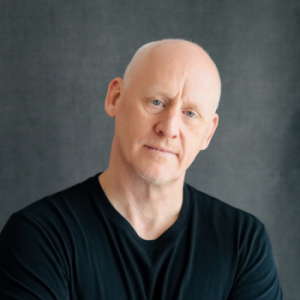
Curt Sassak is a career strategist who helps experienced leaders make smarter career decisions, communicate their value more effectively, and create momentum during periods of transition.
A former award-winning chef who lived and worked in seven countries, Curt brings an unconventional perspective to career growth. His philosophy is simple:
Most people treat their career like a series of transactions.
The most successful professionals treat it like an investment portfolio.
After 25 years as a chef he lost the passion for what he did. This was a curve ball, like, through him that he wasn’t expecting. Being the innovative thinker that he is, he tried a number of approaches to figure out what was next, such as excessive alcohol intake. (That didn’t work, BTW)
This led to a complete reinvention at 40. From that, Curt developed a practical framework for helping professionals identify career bottlenecks, avoid costly mistakes, and make decisions that create greater opportunities over time.
Drawing on his culinary background, Curt teaches that career success is much like a recipe. Positioning, networking, communication, interviewing, and strategy are ingredients that work together. When one ingredient breaks down, the entire outcome suffers.
Through this lens, Curt helps professionals uncover what is holding them back, translate their experience into future value, and create more opportunity in an increasingly competitive market.
Episode Notes
00:00 Curt Sassak – Intro
09:15 Lesson 1: The Jurassic Park Effect
11:38 Lesson 2: The Olive Garden Effect
13:21 Lesson 3: The Blockbuster Video Effect
17:13 Lesson 4: The Recipe Effect
24:43 Lesson 5: The Biggest Career Risk
Curt Sassak – Unlocking Career Success
Siebe Vanderzee: Hello, and welcome to our podcast, Lessons Learned to Advance Your Career. This is a special segment of our global podcast, 10 Lessons Learned. In this special episode, we dive into the wisdom of professionals who have navigated the highs, the lows, and the turning points in their careers. My name is Siebe Vanderzee, and I’m your host.
Our guest today is Curt Sassak, he is a successful career strategist who helps experienced leaders make smarter career decisions communicate their value more effectively and create momentum during periods of transition. Curt is a former award-winning chef who has lived and worked in seven countries.
After 25 years of functioning as a chef, [00:01:00] Curt kind of lost his passion and he tried a number of approaches to figure out what was next. It included also alcohol intake, and we’ll talk about that. This led to a complete reinvention of his life, roughly at the age of 40.
What happened? Let’s ask Curt. hello, Curt. Thank you for joining us. How are you?
Curt Sassak: Yeah, I’m well. losing my hair, but I’m fine, and thank you for
Siebe Vanderzee: What happened to you when you were about 40 years old?
Curt Sassak: you mean the reinvention or the alcohol or the whole thing? what was the crash, you mean?
Siebe Vanderzee: the change. You were a very successful award-winning chef for 25 years.
Curt Sassak: Mm-hmm.
Siebe Vanderzee: And then things changed.
Curt Sassak: I had this life planned since I was probably about 12, and everything was going according to plan. I was knocking out the goals, and everything was going in my favor it seemed.
I mean, I wasn’t spoiled, but everything was just going according to plan, and then it was like- I don’t want this anymore and I don’t know what I want and I don’t know why I feel this way. It’s like you got everything you [00:02:00] want on paper, but you’re not happy and you feel like a dick, because you don’t know why you feel that way, and you got everything you wanted, so what’s the fucking problem?
So, that’s how I felt. as somebody who’s always been driven, and my career was my identity, when you’re a high, when you’re a high achiever and you’re climbing the mountain, our self-worth is often, determined by our accomplishments.
Siebe Vanderzee: Mm-hmm.
Curt Sassak: Well, I had nothing more to climb for. I was like, “Shit, what’s next?” And so, this utter boredom. I didn’t want to kill myself or anything, but it’s just utter boredom. And so that’s, boredom is a really, really powerful catalyst for self-abuse, whatever your choice of self-abuse may be.
and then I was trying to figure out like, “Shit, why, why am I feeling this way? What’s next?” one of the approaches I tried was, excessive alcohol, which, y’all watching, you’re welcome. It doesn’t work. It actually creates its own set of problems I had to deal with.
with that said, everything was going according to plan, had everything I wanted on paper, [00:03:00] living all over the world, and then I don’t want it anymore looking back, what happened is my passion died and that career just ran its course.
Like, a marriage. Sometimes marriages don’t last, not because of any bad thing, they just don’t last. And The thing that’s was hard for me is, and this happens to a lot of people, and I see it when I’m coaching, the identity that got you to where you are outlives its usefulness at some point.
So, you basically have to find a new identity. Yeah. And that’s different than finding a new career. your ego and pride is often attached to that. That identity is who you are. Imagine telling somebody to stop being Christian or Republican or whatever.
Siebe Vanderzee: it happens to a lot of people, right?
they go through their career, they have their, education. They, apply for a job. They get promoted, and maybe there’s another company that hires them. They move up, and then they get to a point where they say, “Hmm, is this what my life is all [00:04:00] about?” maybe that’s not perfect or I’m confused,
But how does that experience that you had, created the ambition for you to help people in their career advancement? How did you become a career strategist?
Curt Sassak: COVID hit, and at the time I was running a wine and spirits company, which, your listeners might be scratching their head considering the past-
Siebe Vanderzee: That’s interesting,
Curt Sassak: Well, actually When I actually, I never completely quit drinking, but it’s, like, real minimal.
Siebe Vanderzee: Under control.
Curt Sassak: six times a year, right? So, after I overcame the alcohol problem, my first, job was running a wine and spirits promotional agency. So, I know y’all are scratching your head, and that’s actually what I enjoy that kind of a humor.
might maybe call me ironic. But anyways, So I was running the wine and spirits company. COVID hit. That was the first time my livelihood was ever affected by something outside of my control, and I thought, “Well, shit.” Wait a minute, I’m 49 at the time. [00:05:00] I’m educated. I’m smart. I’ve had success, like- I think I’m living life wrong.
not that I was, a criminal or anything, but, if I’m living life in such a way that I’m not even protected, that something can come along and throw a monkey wrench in everything, I think I’m doing things wrong. So, I started looking at ways to build additional income streams, be more self-sufficient,
So long story short, I tried some different things. I hired a business coach, and then I decided, okay, this is what I want to do. I spent, probably about $40,000 on coaches over the past four years, building skills and the toolbox my goal after COVID was, I want to be unfuckwithable.
So, I don’t care if it’s the economy or COVID or the job market, I thought to myself I am not going to be in the position again where something can come along and s- and, and [00:06:00] basically screw me.
Siebe Vanderzee: Yeah.
Curt Sassak: And so that’s how I ended up here.
Siebe Vanderzee: to help other people, it’s one thing to say, “Hey, I don’t want to do this, I don’t want to do that,” but there is a passion that you have, to say, “I have to apply my experience, my knowledge to help other people advance their career.”
is that something that you think will stay with you for the next, 20 years, that you say, “Yeah, I still want to be a coach. I still want to do that”? Or are you going to have another moment where you say, “You know what?
I’m done with this. I don’t want to be a coach anymore.” I’m just curious.
Curt Sassak: No, good question. So, I, part of my why is that when I went through that dark period, I was stagnant in life, in career about five years. So that’s five years I did not progress in life. Actually, I regressed.
Siebe Vanderzee: That’s serious.
Curt Sassak: That cost me about 300 grand in lost potential earnings. And I remember thinking like, “Wait a minute, why was this so difficult? Why was it so expensive? Why’d it take so long?” And I realized it actually doesn’t, I look at life transitions like [00:07:00] recipes.
You have ingredients, right? it could be your skills, your character traits, whatever the context is, but it’s like following a recipe.
Siebe Vanderzee: Mm-hmm.
Curt Sassak: All those ingredients work together. So, if you’re doing a career transition, the ingredients are like your, qualifications, your positioning, job search strategy, your communication skills,
Those ingredients depend on each other just like a recipe, and then you follow a process to give you desired end result.
Siebe Vanderzee: Yeah.
Curt Sassak: So, my why is I don’t want other people to go through something that’s actually much more easily solvable, because most people don’t know how to navigate a career transition-
Siebe Vanderzee: Yeah
Curt Sassak: especially in this job market. they need these skills. to answer your other question, no, this is not what I plan on doing for the next 20, 30 years. do I love it? Yeah. But my goal is to get on stages, my ultimate goal would be to start traveling the world and do in-person workshops around the world.
Siebe Vanderzee: Yeah.
Curt Sassak: it’s- This is just the first stage …
Siebe Vanderzee: Before we get to your [00:08:00] lessons, I’d like to ask you another question, Is there perhaps a lesson that you wish you would have learned when you were 20 or 25 years old? If you look back, is there something that you wish you would have known or learned when you were in your early 20s?
Curt Sassak: Lot of things.
I’m trying to pick, that’s like, what you asked me is like, we’re standing in front of a buffet, and all the food looks good. I just don’t know what I want to pick. I’ll just pick one random.
Master self-awareness
Siebe Vanderzee: Okay
Curt Sassak: self-awareness would have told me, “Ah, you don’t need that last drink.” Or self-awareness would have told me, ” Hey, man, you’re at the end of this career.” because I saw the signs. Whenever we go through crap in life, there’s always signs, and we lack self-awareness.
So, yeah, I would say have an uncanny ability, of self-awareness.
Siebe Vanderzee: Self-awareness. [00:09:00] I like it, and I think it’s very relevant, and I think some of that will come back when we talk about, the lessons that you gave me. let’s start with lesson number one, and the first three the listeners will find out, the effect element in there.
Lesson 1: The Jurassic Park Effect
Siebe Vanderzee: Lesson number one, the Jurassic Park effect. Stop making the same career move and expect a different ending. What are your thoughts on that?
Curt Sassak: what’s the saying, when somebody repeats the same actions expecting a different result? that’s the definition of insanity.
So, I call it the Jurassic Park effect you could apply this to anything. It could be career. It could be, you’re trying to diet, you’re not losing weight, and you’re doing the same thing But in terms of career, what I see over and over again is people are trying to make a career transition of some sort.
A pivot, they got laid off, they want to make a career change, start, whatever. their strategy isn’t working, so they keep doing more of it-
Siebe Vanderzee: Yeah …
Curt Sassak: hoping for different results. And the [00:10:00] name came from, last summer, the new Jurassic Park came out.
Siebe Vanderzee: Yeah.
Curt Sassak: Every goddamn time they release a Jurassic Park movie, I go see it.
And I leave the theater pissed off because I know what it was going to be about. I knew what the ending was going to be and I still went, because every time it’s the same thing. Man goes to some random-ass island. A man seeks dinosaur. Dinosaur chases man. Dinosaur eats man. And then there’s always some people who fly off and it’s always the sunset over the ocean, right?
I just want one where everybody dies. That’s what I want but putting that aside. So that’s the Jurassic Park effect. I keep going to see those damn movies knowing what’s going to happen and I’m hoping for a different result.
Siebe Vanderzee: Hoping or expecting a different ending, right? that’s part of it.
But yeah-
Curt Sassak: one quick note on that, especially with high performers and smart people who’ve, had success in their career, The way you grew in your career is you pushed through it. You figured things [00:11:00] out. You got rewarded for it.
But you were solving problems outside of yourself, but when you’re trying to solve something that’s inside, like you can’t see your blind spots, what’s your natural inclination? Push more.
Siebe Vanderzee: Yeah.
Curt Sassak: Push harder.
Siebe Vanderzee: Yeah.
Curt Sassak: But this ain’t the gym. This isn’t the last two reps on the bench press.
Siebe Vanderzee: what I hear from you is the ability to, train your brain, to get your mindset prepared, on how you should react to certain situations or,
Yeah, there is a lot, to that, but that’s a good point. I like to move on to lesson number two, because a lot of these are connected and again, it has an effect.
Lesson 2: The Olive Garden Effect
Siebe Vanderzee: Lesson number two, the Olive Garden effect. Success on paper doesn’t mean you have a successful career.
what are your thoughts?
Curt Sassak: Yeah, the Olive Garden effect. I have about, 20 or 22, effects, okay? this was the first one, and it described me at that point in time before I left my chef career, where I had everything on paper. [00:12:00]
I had it together, right? But inside, I was empty.
Siebe Vanderzee: Yeah.
Curt Sassak: So, the Olive Garden effect, you look Ritz Carlton on the outside, sharp, polished, like you got it together, but inside you feel Olive Garden, empty. And no amount of unlimited breadsticks is going to fill that void. And I can’t tell you how many times I come across this where, I get a client and they’re making several hundred thousand a year or more.
they look sharp, they got it together, but they’re unhappy.
Siebe Vanderzee: Yeah.
Curt Sassak: my father’s friend, we went to his house, years ago. Big, beautiful, mansion. Get in the house, There’s no furniture. They had; a couple chairs. They got, lawn chairs from Home Depot.
And I asked my dad, the hell is that?” He’s like, “Yeah, they don’t have any money. they just wanted a house.” That would be the Olive Garden effect of a house.
Siebe Vanderzee: Yeah.
Curt Sassak: Nothing inside.
Siebe Vanderzee: Well, I use that as a recruiter. of course, if you are a candidate, you need to have a resume, but the resume, no matter how good, it looks, that doesn’t get you the job [00:13:00] itself.
The person is important. Yes, your experience and, skills and perhaps education but the individual, the personality, you cannot describe that on a resume or a bio. but it is, something that, is very relevant and, I like that lesson.
it has a lot of meaning. and I can see in your explanation where that is coming from.
Curt Sassak: Yeah,
Siebe Vanderzee: Well, let’s take a look at
Lesson 3: The Blockbuster Video Effect
Siebe Vanderzee: lesson number three. the Blockbuster Video effect. Remember Blockbuster. What made you successful can become what keeps you stuck.
Curt Sassak: that ties to the identity, right? Why did Blockbuster, die? they clung to an identity that no longer worked. They didn’t change with the times. when the passion for my career was dying, I stayed in that career for about five years, miserable, because my career was my identity.
Not very easy to walk away from an identity. I was holding on to an identity that no longer served me and, I pulled a Blockbuster.
when you’ve climbed the ladder, and you’ve got all the things that society deems a success you’ve got the money, you’ve got the nice house, [00:14:00] the hot wife or husband, whatever.
you’ve got what you want, that can contribute to that identity because, it’s that identity that got you there. But the problem is the identity that got you there is the identity that’s going to keep you stuck. Because when you outgrow that identity, it’s kind of like, this is the best way I describe it.
When you reach this inflection point and the old identity is no longer serving you, you have this new identity that’s trying to come out, and it’s like you’ve got two identities in your head doing the heavyweight bout 2.0,
Siebe Vanderzee: Right.
Curt Sassak: And you can’t have two identities live, cohabitating. It doesn’t work.
It’s like a couple of drunk uncles fighting outside Taco Bell. So, When I kept myself trapped in that career- well, it wasn’t a career. I made it because my passion died. Once I finally let that identity go that wasn’t it’s like I lifted this weight off my chest.
Only then did I start seeing progress in every aspect of my life. [00:15:00] It’s kind of like, being chained down.
Siebe Vanderzee: there are people, that start their career in a certain role with a company or with the government, and 30 years later they’re still working for that same company, for the government.
they may have feelings about it, I don’t want to deal with that person, or our company, we’re going to have new opportunities. At the same time, that’s different for every individual, and especially in the era we live in right now, if you have worked for the same company for 30 years and now, you’re looking for a new job, the question will come up, is that person capable of transitioning from the company where they worked for 30 years to a new organization?
if you have had experiences in multiple positions and maybe different industries, in your case, a clear ex- example, yeah, that, broadens your scope and flexibility. But if I think about [00:16:00] people who have been consistently working in the same type of job environment, industry, maybe with the same company, I don’t see anything negative about that.
Curt Sassak: No, I mean, at the end of the day are you happy?
Siebe Vanderzee: Yeah,
Curt Sassak: And as I tell people, whatever you do, do it with intention. So even if you have to take a job at McDonald’s because you need to make some extra money to take care of your kids-
Siebe Vanderzee: Absolutely …
Curt Sassak: do it with intention, whatever it is you got to do.
Siebe Vanderzee: No, I like that a lot because sometimes I can see people that they say, “Well, wait a minute, I used to be, a manager or a director, and now I cannot…” Well, it’s important to do what is necessary, right?
And yes, you are qualified for a better job, but just to keep yourself afloat. And of course, if you are, responsible for a family, that’s extremely important as well. It’s not just you, it’s, your family.
Curt Sassak: Yeah.
Siebe Vanderzee: Yeah. We’re talking today with Curt Sassak, a successful career strategist who helps leaders make smarter [00:17:00] career decisions, sharing his lessons to advance your career. I hope you enjoy this special episode. Don’t forget to subscribe so that you never miss a lesson that could impact your career and perhaps your life.
Let’s move on.
Lesson 4: The Recipe Effect
Siebe Vanderzee: Lesson number four: think of a career transition like a recipe and understand how all of the ingredients work together. I love the description there,
Curt Sassak: At least, once or twice a week somebody asks me, like, “Wait, you were a chef?
Are you doing what?” because they don’t see the correlation. Mm-hmm. Chef, career strategist.
It’s not like you were a linebacker and now you’re a defensive coordinator for the NFL. but on the surface, yeah, it doesn’t appear. Related to what I said earlier, the reason so many people are not only struggling in this job market but in general is because they’re cooking the wrong recipe. So, for example, before if you were qualified and had a nice resume, you never had to worry about being out of work. I mean, I never had to, and I have never even heard [00:18:00] of anybody, I mean, if somebody couldn’t find work, usually you just saw them as an idiot.
wait a minute, man. what’s wrong with you, right? But it’s not the case now. Qualifications do not lead to opportunities as they used to. So, you got to think of any kind of transition like a recipe, right? it’s what chefs use to predict success.
It’s a repeatable process. And in a recipe, all the ingredients work together to give you a desired end result, and they depend on each other. If you don’t follow the recipe or if an ingredient is not optimized, you don’t get your desired end result. So, the old career recipe was two ingredients: be qualified, have a nice resume.
if you could do that, you’re always finding work. But the recipe’s changed, because the market’s- changed.
Siebe Vanderzee: Yeah.
Curt Sassak: everybody knows the market’s changed, but they don’t really understand what or how. So, it comes down to the way [00:19:00] people are being evaluated is different, which means anybody looking for their next career move has to do things differently.
the old recipe is to be qualified, have a resume. Now, yeah, you need those two things, but you also need an optimized LinkedIn profile. You need a job search strategy for 2026, not 2010. you need positioning, which is basically controlling how others perceive you. You need, interview skills.
That’s a big one because I’m seeing even people at the CEO level who have stellar resumes interview for the roles they’re qualified for and get ghosted.
Siebe Vanderzee: Yeah.
Curt Sassak: you need all those ingredients working together to help you with your career transition. But the problem is this.
One, most people are cooking the wrong recipe. Two, they don’t have any way of evaluating what ingredient is missing. if I’m a chef and a recipe’s not [00:20:00] working, I don’t throw the whole thing away. I look for the bottleneck. Is it in the process? Is it an ingredient?
Then I go and fix that one thing. What I teach my clients is how to identify which ingredient is lacking or what part of the process is lacking, and we fix that. Identify the bottleneck so your approach is more st- strategic.
GMT20260820-223401_Recording_gvo_1280x720: like And if you do that, you will have predictable success.
Siebe Vanderzee: Curt, do you see AI as an item on the menu, Is AI something that you teach people about that are looking for a career transition?
Curt Sassak: Yes, I’ve been introducing it a bit more. And in a nutshell, here’s where everybody’s getting AI wrong.
First of all, they’re blaming everything on AI and ATS. No. yes, that is a bit of a problem. Some companies don’t use it correctly, but when I hear people use ATS as this paper tiger, it’s kind of like I used to work in the wine industry and somebody got a headache, oh, it’s the sulphites. you know, [00:21:00] everybody blames the sulphite.
Anyways, Where people go wrong with AI is they use it to ask questions-
Siebe Vanderzee: Mm-hmm …
Curt Sassak: as opposed to using it as a mirror. Use it as a thinking partner. Okay? to elaborate very quickly-
100 years ago, we had the Industrial Revolution, which changed the world.
Siebe Vanderzee: Yeah.
Curt Sassak: Same thing’s happening now, but with AI it’s happening much faster. So, what does that mean for all of us? We have to learn to adapt faster, we have to learn how to think differently, we have to be able to learn faster. And one of the best things that I’ve learned from using AI, is learn how to ask better questions and learn how to ask questions from a different point of view.
Siebe Vanderzee: Mm-hmm.
Curt Sassak: because AI doesn’t replace a coach, but if you use it right, it could really help your development. I’ll give you one quick example I was watching a documentary on the mafia on Netflix.
And they talked about how creative the mafia was at generating revenue. I [00:22:00] thought, “Hmm.” So, I took out my phone, and I talked into ChatGPT, and I said, “Act as an expert in the mafia. Don’t teach me anything illegal. But knowing how creative the mafia was at generating revenue, give me some ideas-
as if you are a mafia consultant, how I can be more creative at generating revenue for my one-person business.” it’s about being creative and asking questions from a different point of view. if you want to learn sales, don’t say, “Act as a sales coach,” “Act as a behavioral psychologist and teach me sales,” “Act as a statistician and teach me sales.”
Siebe Vanderzee: Does it make sense for AI to make decisions whether a person gets hired or not? Or is AI used to help the process?
Curt Sassak: I say AI is like saffron or coriander or cardamom. Those are really strong, and if you’re not careful with how you use them, it can destroy the whole dish.
be careful. But in a nutshell- … for judgment calls, no, never AI. [00:23:00]
Siebe Vanderzee: Okay.
Curt Sassak: Think of it like seasoning, right? in a dish.
Siebe Vanderzee: Yeah.
Curt Sassak: If you use it right, the whole dish can taste better. If you don’t, you can destroy the whole dish.
Yeah.
Siebe Vanderzee: Yeah.
Curt Sassak: Yeah. And my point is, look, the job market is really tough But there are far too many people getting jobs and getting promotions and making career changes. Most of what I see in people’s struggles is self-inflicted. Now, I’m not going to fault somebody if they don’t know, because if you’re busy raising a family and building a career, and you didn’t get the memo that the job market changed and this is how you do things now, I can’t fault somebody for that.
But the fact remains, I’d say 8 out of 10 times, self-inflicted.
Siebe Vanderzee: Have the confidence that you have the ability to do the job and do it well based on your experience, based on your skill, based on your passion.
and even if it is very frustrating to go through that process many times, and again, you don’t hear [00:24:00] back, you do get an interview, you don’t get the job. my old boss was very clear on that point in recruitment, “Get over it.” And that’s not nice for many people to say that, because it’s serious if they don’t get the job they were applying for and hoped for.
at the same time, you have to move on. you cannot stay stuck, If they say, “Oh, nobody wants to hire me, and this is not going to work, and that’s not going to work.” That part is very important. And in the work that you do as a career strategist, I’m sure, that means encouraging people to believe in themselves, that they understand that they have value to offer and, even if they didn’t get the job, don’t give up.
Don’t give up. I like to move to, the next, lesson, if you don’t mind, Curt.
Lesson 5: The Biggest Career Risk
Siebe Vanderzee: lesson number five: the biggest career risk is often staying put, I’m curious about your thoughts on that one.
Curt Sassak: Yeah, a lot of people just maintain the status quo. That’s what I did for those five years, right?
I was miserable but I was comfortable because I knew the [00:25:00] industry, and I knew it was 25 years. So, I mean, what did it cost me? It cost me five years of my life that I don’t get back. it cost me approximately 300 grand in lost potential earnings,
A lot of people think staying put is a responsible thing, and that’s how we talk ourselves into it. “Well, I got to take care of a family, And look, I understand if there’s certain things you have to do that you can’t walk away. You know, like if you’re a single mother, for example, and you don’t like this job, but it gives you health benefits or whatever.
I mean, I get that. I wouldn’t use that as an excuse, but for a temporary thing. But, yeah, people Talk themselves into staying put, but they call it being responsible. or maybe they say, “I’m going to think on it.” so they think they’re being thoughtful or they’re being strategic.
Yeah. No, man, you’re bullshitting yourself.
Siebe Vanderzee: Yeah.
Good point … a-
Curt Sassak: see, here’s the problem with staying put. Most [00:26:00] people judge what tomorrow will be like based on how they feel today. So, for example, it’s like addiction. Well, burnout’s the same way. Both happen incrementally. You don’t see it as it’s getting worse.
And it’s not until the shit hits the fan, you’re like, “Oh, crap-
Siebe Vanderzee: Yeah …
Curt Sassak: I’m here.” Yeah. This is the same thing when they say, well, this could be anything, career, marriage,
Siebe Vanderzee: Absolutely.
Curt Sassak: So, they’re judging what tomorrow will look like by how they feel today, because today things might not be that bad.
Siebe Vanderzee: Yeah.
Curt Sassak: But incrementally it gets worse.
Siebe Vanderzee: It’s, helpful to have someone like you as a coach. I like to say every person could use a coach, but it is helpful, and it could be a family member, but also really skilled people like yourself who have gone through hardships, to be able to support and guide people.
I think it makes sense. it’s part of human nature, I want to throw another question at you, Curt, if you don’t mind. Sure. But, in everything you have gone through [00:27:00] in your life and your career, is there perhaps a lesson that you have unlearned, where you decided, “You know what? I no longer want to do it this way.
No longer, I don’t want to be stuck doing it this way. I thought it was the right way. I got to make a change.” Is there anything, you can think of, you say, ” I made a change. I decided to do things differently”?
Curt Sassak: overthinking.
I have ADHD, and when I was a chef, that was my superpower, because I thrive in chaos. I do better, like in a professional kitchen.
And so, when I made the transition working for, I’ve been working from home for, 12 years now? For several years, I just wasn’t as productive as I could’ve been. Partly, because of the ADHD, because I didn’t know I had it then. the thing I learned about overthinking is, high performers often do that because we don’t want to make mistakes or it’s an excuse or whatever.
But starting my business taught me as much about [00:28:00] myself as it did business. And one of those things- was overcoming overthinking. I still do it, but I’ve gotten better.
Siebe Vanderzee: I think it’s a great lesson because it can happen to all of us, and overthinking, indeed, it distracts from what you want to be or should be doing.
at the same time, your brain is occupied overthinking and what about this, what about that? And it’s easy to say, “Don’t worry about it.” but indeed, how can you, manage or train your brain to say, “Okay, I shouldn’t spend too much time on this or that”? That’s what I hear from people sometimes.
Curt Sassak: starting my business taught me this, because if I was a chef, all I had to worry about was the kitchen. if the hotel or restaurant wasn’t bringing revenue, all I had to do was worry about food. But when you start your own one-person business, you are the everything.
Siebe Vanderzee: Yeah.
Curt Sassak: I wasn’t bringing in the consistent revenue I wanted, so I was the bottleneck. I had to take a hard look of like, okay, shit, why isn’t this working? try this. No, that’s not working. Try this. I realized that my [00:29:00] overthinking was part of the problem. for anybody listening, when it comes to personal development, forget all the books.
Don’t watch any more YouTube videos. Start a damn business. It doesn’t have to be some… it could be a one-person business. You will learn as much about yourself as you do business, trust me, because when you are the business and you’re not generating revenue, you got to figure it out.
Siebe Vanderzee: Oh, yeah. No, absolutely. I’ve been there, done that, and I think it’s very helpful that you share this, Curt. And I want to thank you for joining us today- and for sharing your lessons learned for career advancement with our global audience, so it’s going to go around the world.
Curt Sassak: Thank you.
Siebe Vanderzee: I want to make a few closing remarks. first of all, you have been listening to our program, Lessons Learned to Advance Your Career. This episode is produced by Robert Hossary, and we are supported by the Professional Development Forum. I also want to give my special thanks to our team, Yi Wang, who manages our marketing and, social media, and [00:30:00] Codie Comeau and Birdem Oz, our episode editors.
Our guest today is Curt Sassak, a successful career strategist who helps leaders make smarter career decisions, sharing his lessons learned to advance your career, And to our audience, I hope you enjoyed this special episode. Don’t forget to subscribe so that you never miss a lesson that could impact your career and perhaps your life.
thank you for tuning in to 10 Lessons Learned and this special segment called Lessons Learned to Advance Your Career. Our goal, as always, is to make the world a little wiser, one lesson at a time. Thank you and stay safe.
Thanks to our 10 Lessons team that make our show possible: Our Episode Editor Codie Comeau, Marketing and social media managed by Yi Wang, and our Producer Robert Hossary. Sponsored as always by Professional Development Forum. You can find the www.professionaldevelopmentforum.org.
You’ve heard from us we’d like to hear from you. Email us it’s podcast@10lessonslearned.com.
Remember, this is the podcast the only podcast. That’s makes the world wiser lesson by lesson.