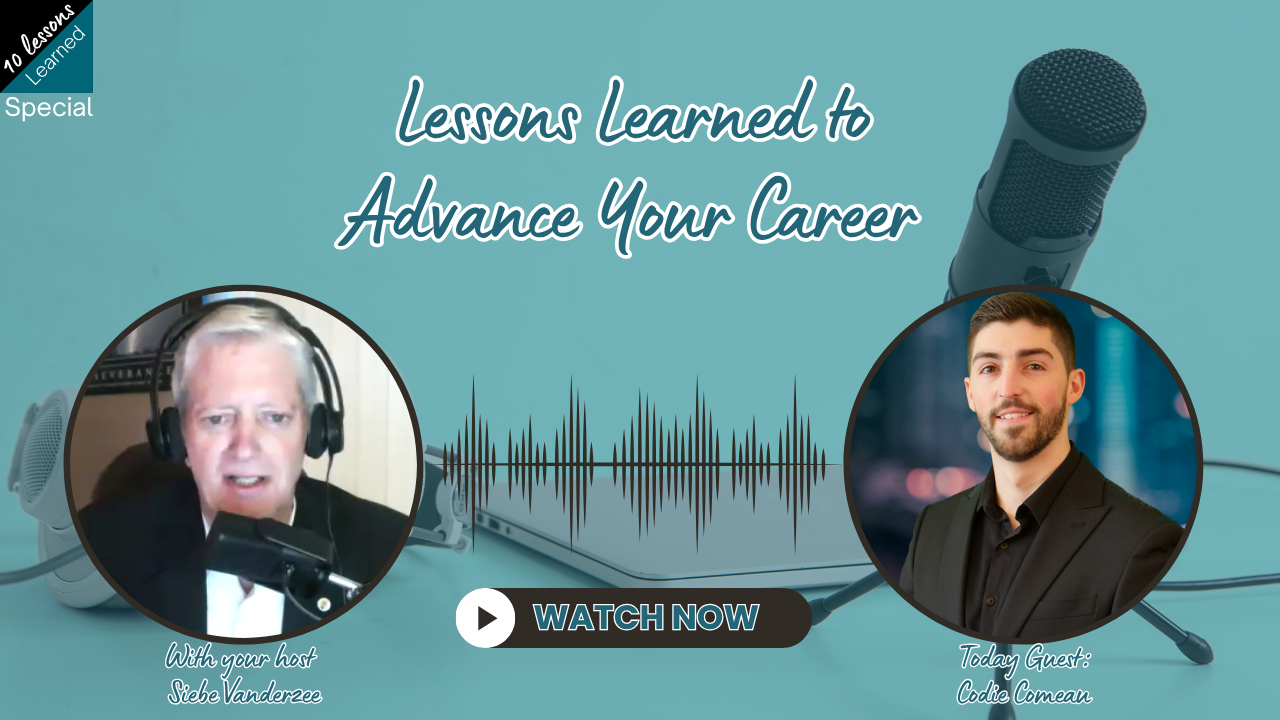
About Codie Comeau
Codie works in Sales at EF Education First as a Tour Consultant. He is a first-generation college graduated where he thrived, earning a Bachelor’s in Communication, Media & Design with a minor in Psychology. The journey did not stop there as he would later earn an Master’s in Business Administration with a focus on Innovation and New Venture Management.
Although young, Codie has plenty of experience over many different industries including Engineering & Manufacturing, Entertainment, Education and start-ups. He takes on many passion projects, his most notable was the Tennis program at Clarkson University. Under his leadership, the organization thrived growing in members and budget as well as gaining USTA membership.
Codie has a goal to be a global citizen and explore what the world has to offer. He believes that every new place he visits or new culture he experiences helps him to grow as a person and share new perspectives. Codie loves developing new skills and keeping a student mentality. He is excited to begin this new chapter in life and experience what lies ahead. If he’s not busy at work you can find him on the tennis court or golf course, where he still has plenty to learn.
Codie Comeau has joined the 10 lessons learned team as the episode producer
Episode Notes
- There is no one answer, extremely frustrating!
- You need experience… even before your first job
- Specialization is becoming more and more necessary
- Show your metrics
From College to Career: How to Navigate the Job Market with Codie Comeau
Siebe Vanderzee: Hello and welcome to our podcast, lessons Learned to Advance Your Career. This is a new segment of our global podcast, 10 Lessons Learned. In this new program, we dive into the wisdom of professionals who have navigated the highest, the lows, and the turning points in their careers.
My name is Siebe Van Der Zee, and I’m your host. I’m a corporate executive recruiter With more than 25 years of experience helping companies find the best possible talent and coaching people to lend their next, hopefully perfect job. Lessons learned to advance your career is based on hard earned insights. We offer practical, no nonsense advice to help you make smart moves in your professional journey.
Whether you’re just starting out looking for a promotion or aiming for the next big job opportunity, we [00:01:00] cover it all. The good, the bad, and the ugly. And as we all know, success in your career doesn’t typically happen by accident. It happens lesson by lesson.
Our guest today is Codie Comeau. Codie is a good friend and he’s also a co-editor on our podcast 10 Lessons Learned.
He currently serves as a tour consultant, with a global organization named EF Education, first in Cambridge, Massachusetts. Codie is also a creative video editor with proficiency in multimedia projects. He has an MBA from Clarkson University. So, he’s doing well, but of course there is a lot more to come in his career.
Codie and I have regular conversations about the process of finding a new job and dealing with some of the obstacles job seekers are dealing with, and that is exactly what he and I going to talk about today. Hello, Codie. Thank you for joining us. How are you doing?
Codie Comeau: Hey, Siebe. Glad to be [00:02:00] here. I’m doing, doing well.
How are you doing?
Siebe Vanderzee: Wonderful. It’s nice. Of course, we know each other and here I am interviewing you, so I appreciate the opportunity.
I appreciate having me here. It’s, it’s fun to be on this side of the camera for once. Excellent. before we get into the lessons that you provided, I thought I’d start with a typical interview question. Tell me, tell us our audience about yourself.
Codie Comeau: Oh boy. I, I mean, the biggest thing I’ll say, you know, grew up in Massachusetts, born and raised outside Boston. great place to grow up New England. I definitely think it shapes you as a person in that sense of, you know, where you grow up culturally and, and geographically.
But as you said, I went to Clarkson University, I did my undergrad and graduate studies there. So, I did my undergrad with a degree in communications media and design and minored in psychology. Went back and got my Master of Business Administration at, uh, Clarkson as well.
I ended up doing a concentration in innovation and new venture management. Did a lot of work when I was up there, big time into, [00:03:00] into tennis and, the Global Business Association, but ultimately, aside from that, more on the professional side, worked pretty much my entire life, whether it was summer jobs, internships, you know, I think I’ve held a job since I’ve been 14.
So definitely pretty, invested into, you know, the workplace and, and jumping around industries and seeing what was a good fit. And now, you know, it takes us right up until post grad and getting into the real world and finding your first, uh, dare I say, adult job in a way. Yeah. and that’s kind of where we’re at now.
Siebe Vanderzee: I’m just curious, Codie, what job did you have when you were 14 years old?
Codie Comeau: I was a camp counselor, so there was this great little, camp right in Leominster, Massachusetts. It’s called Rickers. It’s family owned. Uh, my family had been going there for years, and we were very close with the family there.
The day camp. Loved it. It was, uh, you know, don’t tell anybody outside of, you know, whoever’s watching, but that was probably my favorite job. It was just so fun.
Siebe Vanderzee: Well, I like it at the age of 14. And, of course as a tour consultant with EF there, there is [00:04:00] even, some similarity. But if you look at the future, I know you’re, you are, you’re doing well with your current company, but if you look at your future career objectives, what would be ideal for you in your future career?
And it could be short term, and it could be long term. Do you have an idea?
Codie Comeau: That’s such a great question because, when anybody asks what do you want to do, for your, for your career and stuff, and I laugh because I, I had a professor and I loved him.
He was about 65 when he was teaching me in college. And he would always say, you know, I still don’t know what I want to do when I grow up. And, you know, here he is tenured, having the whole thing. And I think that’s pretty true in, in a lot of ways is that, you know, I have an idea, but of course, you know, being young, I want to experience it. I mean, I would love to have my own company someday in what industry. That’s the part I couldn’t tell you, but I would love to have that ownership of something, something to build. I would love to, you know, further invest. See where that goes. Ultimately, one way or the other, the goal is financial freedom with anybody.
[00:05:00] Would love to be able to just have the ability to pursue my passions without, having that risk of, of needing to live paycheck to paycheck.
I would just love to have the, the freedom to travel, see the world But ultimately, you know, the, the big thing is I love building, I love community. I want to really create something, but I would love to have that freedom that comes with it.
Siebe Vanderzee: You know, it’s interesting, Codie, when I hear that, my ears my recruiter ears, they, they kind of spark up because I can hear the energy in what you’re saying, the passion that you have, even though it’s not clear where you’re going to end up and to set, I. Goals and have preferences. It’s so important for all of us.
And at the same time, yes, you have to be realistic. Some of my early goals, I wanted to win Wimbledon Tennis, even though I never won a tennis match. I don’t think that’s a realistic goal for me anymore. You know what I mean? But obviously if you’re early in your career and whatever. Drives that motivation Extremely helpful.
If I think of goals, [00:06:00] and I know it’s hard to define that and what you described covers a lot of course, but I. In your future situation, how important would be, for example I’ll name a few; money, the location where you’ll be living and working the stability and saying, Hey, you know, some people work for the same company for 20 years or, or more than 20 years.
And also, your ambition, like you said, maybe developing your own company and that. Requires a lot. Of course, it’s not with all due respect, just going to work and then leaving work, going back home. What of those, when it comes to money, location, stability, and ambition, which one would stand out at this moment in your life, in your career?
That’s a really good question. because when we’re talking about things like money, location, stability, and, you know, ambition, I think they all certainly are relevant one way or the other. I. And depending on where you are in your career and where your life, they are going to have a different part.
Codie Comeau: I mean, being, you know, as young as I am, I don’t [00:07:00] have necessarily the same responsibilities of, of family or, needing to cover, medical expense. Like, I don’t have a lot of the, the necessity of money. Obviously, it’s important no matter what, but it’s always there, right. Location. I’m young, I want to see the world.
I just happen to have a passion for travel. So, you know, I would love to try different areas to see it. So, I don’t really need to have my forever place quite yet. the one thing I can always say is I never want to be the one person who stays in their one town and never went anywhere else. I would love to get out and try different areas and see what it’s like.
Even if it’s for a year at a time, that’s fine, but the really big one that I think sticks out is going to have to be ambition, because right now, when you’re young, that is going to be your best friend because a lot of people will get into the, the, the rat race of things where they will go to a position, they get comfortable, they have money coming in, but they never think of the next step where they want to go, what’s going to go further?
And I’ve always been ambitious. You know, maybe that’s a little narcissistic to say, but I, I like to believe it. I’ve always looked for [00:08:00] what’s kind of the next step. How can I be, either the best at this or get better at this? How can it go to the next level? And so, I think that’s what a lot of young folks really need, because even coming into my position, you know, the biggest thing they, told us was, Hey, don’t be afraid to innovate. Like, if you think there’s a better way to do something, go and do it. Show us like be more efficient, right? So you have to really just be ambitious, you know, not just for yourself, but with anything, whether it’s, you know, your health and, and being active, whether it’s in your career and being able to want to advance, to start something, you have to dream big to achieve big, right? You can’t just have it just happen one day.
Siebe Vanderzee: I like it.
That’s what hiring people like to hear someone who wants to achieve something and set goals and move forward. Now, looking at your lessons one of the lessons is there is no one answer.
Lesson 1: There Is No One Answer
Siebe Vanderzee: Yeah. And then you add to it extremely frustrating.
What are your thoughts on that one?
Codie Comeau: Yeah, that is [00:09:00] maybe the, the, the largest overarching lesson that’ll kind of take place throughout the conversation because when you are hunting for a job, you know, there really is no one right answer. There are good habits and there are things that other people have done.
Absolutely. But no matter what you do, it’s going to be frustrating. It’s not going to be as easy as 1, 2, 3, right? And in this lesson. Specifically comes from the fact that when I first graduated and I’m looking for a job, I went to a very, very good university, by the way. Their job placement rate was like, oh yeah, 97%.
So that’s a really, really great university. However, you know, a lot of the positions that were available weren’t really in alignment with what I wanted. So, I thought still with the credibility of my university and the degree and the master’s degree, it would be a cakewalk to find a position.
I spent a lot of time applying, you know, hundreds and hundreds of applications. I had spoken to hundreds, maybe more, several dozens of alumni from my university who were in positions that I was interested in. And I tried to network. I tried to talk to them.
I tried to [00:10:00] say, Hey, how did you get from here to there? What do I need to do? And these things, and you do get good advice. After a while, it does get repetitive. I’m not going to lie, however. There’s really no one, one good way. because everyone’s story was different. Everyone had some sort of different way that they got there, you know, different times, different strategies.
And the whole thing is, is that you really just have to kind of get out there and see what works. And it can be very frustrating, And, and that’s where, you know, when I first got out of college, it was. Several months before I even landed a position, an interview, not even a position, several months.
And that’s, you know, we’re going to talk more about, you know, other lessons that tie into this, but at, at the whole, yeah. You know, I spent months applications every day, you know, applying and trying to network and, and drafting it and doing all these different changes for, you know, what really amounted to not much yield, which was really, really frustrating.
Siebe Vanderzee: I think you’re making a good point. It is frustrating and it is a positive word to say because it, it can be [00:11:00] horrendous for many people. And at the same time, I don’t think that in the current economy with challenges, that it really is so much different from what, whatever I went through 30 years ago, 40 years ago there’s always.
Something as a job seeker, you say, oh man, this is not working, et cetera. That’s not working. And we’re going to cover indeed some of those, those areas.
Lesson 2: You Need Experience Even Before Your First Job
Siebe Vanderzee: A another, lesson that fits with that is, uh, you wrote, uh, you need experience even before your first job. Now there is some humor in there.
You need experience even before your first job. But explain that because I think it’s very valuable what you’re saying.
Codie Comeau: Yeah, a hundred percent. You know, and, and maybe, for the younger folk who spend a lot of time on social media, maybe you’ll understand what I’m referring to here. When I say, you know, I’ve seen plenty of, of memes and TikTok and things like that where it says, you know, you’re going through a job application.
It’s like, oh, I’m looking for a job. Well, I. Great. What sort of experience do you have? I don’t have any. This is my first job. Oh, you can’t, you can’t come and work here. Aren’t you going to get [00:12:00] me experience if I go there? No, no, no. We, we don’t have experience. We have jobs like, and it’s a whole back and forth thing.
But the reality is and the sad reality is that you really do need some form of experience before you go and land your first job. You know, the promise is when you’re growing up, you’re going to go to school, you’re going to go to college, and you’re going to get a great job right out, and you’re going to, you know, advance just in, in your life and you’re going to move forward.
And the reality is, that’s not the case. I think that was a big part of, you know, the whole push for higher education, back in the day and I think obviously the, the, the hiring world and, and things like that have changed and what’s required and what’s needed and being able to stick out.
I mean, a majority of, you know, people are educated nowadays. Like it’s a lot of positions, especially in, you know, dare I say, white collar jobs. They require you to have some form of a degree, right? But that’s not enough when you’re in college. They give you opportunities for internships, [00:13:00] co-ops, things of that sort to go and get this experience.
And then oftentimes when you graduate that company that you did those internships and co-op trips will be the first one to offer you an opportunity. And now, much like myself, I know a lot of people, unfortunately, um, not taking the rabbit hole of talking about COVID, but during COVID, things changed.
That’s a factual statement. And unfortunately, during my Prime College years where you do go and do co-ops and you can go and do these things, it was the midst of COVID. You couldn’t go anywhere. You couldn’t travel; you couldn’t. So, everything you could do was maybe if you were lucky, virtual, but a lot of those workforces got smaller, and so a lot of places weren’t hiring.
I had to kind of scrap together what I could, but unfortunately, I missed out in that very big piece. And it’s not taken into consideration when you go to, to graduate like, Hey, I know you couldn’t do it. It’s more of the, you know, oh, you don’t have it and therefore it’s a, it’s a black and white, you know, this or that situation.
So, my whole roundabout lesson [00:14:00] here really is saying that. And we’re going to talk again more about, because all these lessons do blend into each other and they are, you know, one piece of a of a larger image, a larger puzzle. But they really do want experience. You know, you’re not even considered experienced.
And I put heavy quotes around that until two years of professional experience. Mm-hmm. Which is, absurd to me. because how can you expect somebody who, you know, maybe like is a first college generation student like myself, you know, who doesn’t have the connections, who doesn’t have these things to come out and to just go into the world where you are now competing with tons of folks.
Siebe Vanderzee: I mean, hey, let’s talk about, Boston. Boston has, what is it like close to 62 colleges in the greater Boston area and some of the most recognized in the, in the world, MIT, BU, Harvard, you know, a lot of these great ones. Sure. That’s a tough market. That is a tough market. And, uh, it’s definitely of value what you’re saying here because it’s the mindset, right? You get your degree, wonderful. You expect that job, whatever that job is to be [00:15:00] ready for you. And what you’re saying is, ah, not so fast. It can take a number, have a seat. We’ll, we’ll let you know if and when, et cetera.
I, I think again, even though today’s situation, especially since the COVID era, things have changed tremendously. Technology, AI will be talking about that as well. But I think in the process and for me looking back. Your degree has tremendous value. Let me assure you. And yes, a lot of students graduate and they’re all looking for their job.
So, there is heavy competition. I. If I look at corporate organizations different than maybe starting your own business, as you had suggested earlier, but in corporate uh, environments. If I look at people in a senior management executive level position, I. It’s hard perhaps to find someone who does not have a degree from a university, from a college.
And it’s not to say, there you go. That’s the answer. No, because you are not yet the CEO of a major [00:16:00] company. But it is definitely an element that is part of it. And I think the other element that is so important in this whole process, and I’ll keep bringing it up over and over, is the confidence in yourself as a job seeker.
It is extremely important to know your worth and to understand that you have something of value. Now, again, I don’t want to sound like an old man, but when I started my job, I couldn’t find a job, and then I started interviewing back in Europe in international banking. I was not interested, but I thought I’m going to get through the interview process and hopefully I learned something from that.
I. It was a great experience and guess what? They offered me a job in banking, which was totally not, not of my interest I want to say, but the things I learned in the first 2, 3, 4 years is something that I still carry with me. The financial aspects that I learned, [00:17:00] and sometimes when you start into a job and knowing that.
In that job, that organization is going to teach you, train you, educate you, and you get that in addition to your education. And again, it puts you at the next stage. And that’s. We’re talking about you, not about me here, but that is something that you should keep in mind as well. Your background, your education, and your current job, including some of the global, uh, elements of your job that will help shape your career in the future.
You decide where you’re going, but those things are not, I would say worthless. Your degree is definitely not worth worthless, but yes, you are in a competitive market right now and that makes it tough.
Lesson 3 Show Your Metrics
Siebe Vanderzee: Alright, uh, Codie, moving on your next lesson. Show your metrics. I’m curious, what are your thoughts on that?
Codie Comeau: Yeah, great question. So, showing your metrics, right, because this is where now, uh, we’re transitioning from the, you know, the struggle side of things to the good [00:18:00] habits sort of things, right?
Because that’s, I mean, hey listeners, this is why you’re here, right? This is what you want to hear, this is what you want to hear, like what you have to do. Because I know, you know, when I was graduating and coming in, I didn’t know what to do. So, this is the important stuff. So, if you haven’t tuned in yet, now’s the time.
So, relating to, you know. Showing your metrics. Right? Well, first and foremost, you got to know what you’re looking for, right? That’s where we were talking before and understanding, you know, the job market’s very broad. It’s hard to say, I’m just, show me a job here, right?
Because it’s going to give you a wide variety. You don’t know what’s legit, what’s not. There’s a lot to navigate there. So, you really do want to kind of have at least a general idea, maybe some titles or industries or something that you were interested in. If you have a general location that you’re interested in, that helps too.
You really want to narrow that field because when you do go to make your resume and to do these interviews, you really do need to tailor it, right? And so that’s where showing your metrics in this piece is going to be useful on your resume. It should not say, I was in charge of this. Or [00:19:00] I did this, what you need is you need some tangible, numerical reference points to say, I was adequate at this job.
So, an example could be, you know, I grew our client base from, 5% to 15% in six months. While in charge of marketing operations or something of that sort. So, you need something that you can have some tangible metrics with, with a timeline. So, they know, oh, this, you know, person is effective, they know what they’re doing.
Here’s a numbers game, right? So, if I was to talk about myself, right? In sales you deal a lot with, you know, you have your metrics, you have certain things that you have to achieve and, and stuff like that. Your statistics that you look at, your sales analytics and year over year and all these different data points, but.
One thing that you know I would always stick out is that when I look at what my year over year goal has been for, you know, each month I’ve been over a hundred percent of that. So, I’ve reached it and then some, and I’ve been averaging, [00:20:00] you know, 120 plus percent per month for the, you know, ump months. And so that’s a great metric to have listed on your, your resume.
Or if I was to say, you know, we talk a lot with, you know, paying travelers and stuff, I would say, you know, I’ve had, I grew my territory from this many to this many. We had this many more organizations, uh, we had this much more efficiency outreaches. Like, it really is just a, a numbers game. Know your numbers, right?
I mean, that’s a lesson that you can go and hear from. You know, if I was to plug another one, we have a great episode from Zach Miller. And, you know, he’s very knowledgeable and so talks about things to be good at. That’s on our normal podcast, but he says, know your numbers, right? So that’s a big, big piece.
Know your numbers, especially when you’re trying to show what you have achieved.
Siebe Vanderzee: It’s a very important point, Measurable results years ago it’s, I almost, almost want to say 20 years ago, I think it was this job site career builder, you know, we used to have Monster and Career Builder.
They did [00:21:00] research and they asked recruiters, not just hiring managers, but recruiters. How much time do you spend on reading someone’s resume? Do you know what the answer was?
Codie Comeau: I. Uh, it was something like 11 seconds or if that, like six seconds. No,
Siebe Vanderzee: it, it was seven seconds. Seven seconds. Yeah. And jokingly in our office, we said we thought it was three seconds.
Now it’s humanly impossible to read someone’s resume, even if it’s one page in seven seconds, let alone in three seconds. But the thing is, if I’m conducting a search for someone, let’s say, who is fluent in Japanese, and I look at your resume, Codie. I can see very quickly you’re not fluent in Japanese.
Now, you may be a brilliant candidate for the position, but the requirement is fluency in Japanese, so no, we go to the next candidate. The next resume, the measurable results I. Whether it’s dollar amounts, percentages, et cetera, et cetera that gives the [00:22:00] recruiter a very quick impression. Have you worked for an organization of a similar size of the company that is hiring right now?
Have you managed a number of employees? Numbers can be very helpful, and I always suggest in your, uh. Summary statement at the top of your resume, or if it’s on LinkedIn, to make that very clear because that is, I always use the term your billboard, and if you and I have a chance to go watch a, an interesting game, whether it’s soccer or American football.
We can expect there are billboards around the field.
And of course, doesn’t have to be sports related, That concept. At the top of your resume where the seven second rule, or in my case, the three second rule applies, that is your billboard, and I recommend to anyone to put your, your key achievements and measurable results at the top of your resume.
You you’re bringing up a great point. I appreciate [00:23:00] that. And I think also you brought it up, to tailor, of course now you can have a resume with your background and, and typically your background is not going to change. You don’t want to leave out information. You want to be, accurate when you submit that to someone at the same time, uh, you may address certain skills, experiences that you have that really fit with that position you’re applying for. Could be industry related, it could be geographically you have, uh, a growing international experience. Those elements can be very helpful because it jumps out.
Wow. I believe your company EF is, the head office is based in Switzerland. Am I correct?
Codie Comeau: Yep. Yep. Our, our international headquarters, the top office is in Zurich, Switzerland, and then our North American headquarters is in Cambridge. Yes. Yeah.
Siebe Vanderzee: And I remember many years ago in the Netherlands that I heard about EF in the Netherlands.
So, it’s, it is a global organization. You are part of it. And it’s in that sense; it’s part of your [00:24:00] value proposition. I, I use that term sometimes too much. But it is important that people realize, and again, I keep saying that the confidence, what you have done already in your career, in your life, with your education and with the job.
Yeah. You still have a long way to go, but this is. Wonderful. And I see that with so many people, the talent that people have and that’s something to, to really help build that confidence even though you’re still in line trying to get a job and it may not work. You know what I mean? That’s all part of it.
Lesson 4: Networking Is Key
Siebe Vanderzee: Networking. What are your thoughts on that? Uh, networking is key, even if it doesn’t lead to immediate outcome. Your thoughts please.
Codie Comeau: Yeah. Oh boy. Networking. You’ll hear this from anyone you ask. With it, your ears will start to bleed with how often you’ll hear networking and how important it is in the job hunt process.
And the reality is, is that I. They’re right. But the part they’re not going to tell you is that it’s not going to be as, as simple as, Hey, I talked to you. Let’s get a job. It’s, it’s not [00:25:00] going to be that it’s going to be talking to dozens, maybe hundreds of people. It’s going to be building your LinkedIn, following, it’s going to be making these connections, throughout everything.
And, and the reality is, is that it might not lead to anything. You know, I, I think back to just actually in, in a. Relatively recent, uh, experience. I was out in the famous North end in, in Boston, having a, a great dinner, visiting some friends. And while I was waiting for some of them to arrive, I’m sitting there at the bar and you know, a lady starts talking to me and turns out that she is the VP of a very, successful med tech company and we proceeded to talk sales because she was the VP of sales. And you know, that’s what I do for probably about two, three hours if I’m being, you know, honest. Wow. And it was a great conversation, and we, I learned a lot. They told me about what it’s like and things here and, you know, of course there’s the fluff of Oh, that’d be really interesting.
I’d love to do that, or you’d be great at this, and those sort of [00:26:00] interactions. But, after the conversation, you know, and, and, and connecting on LinkedIn and stuff, nothing ever came from it. And it’s not a bad thing, but the point was that we had a good conversation. I learned a lot and I felt a little bit more prepared as little as it was, into that industry.
Same thing, graduating from college. I said it earlier. I spent weeks and months dedicated to just connecting with people who were, um, in positions that I wanted to be in, right? Because I mean, the, the whole thing is, you know, look to the people who have done what you want to do and that’s going to be a good guiding path.
And so, I spoke with dozens of people who were in these major consulting firms, the Big Four and some smaller ones. I talked with folks who have started their own businesses. I’ve talked to people who worked in finance and accounting and a lot of these high-end jobs. And I said, how do I get there? How do I do this?
And most of the lessons that I have here today are from those conversations, but. never once have I had the conversation with any of them, and [00:27:00] it’s been a situation where I’ve said, yeah, here’s about me. You know, I’d love to learn about you. I love what you do. Any advice? You know what? Let me get you in contact with a recruiting manager, or let me, you know, let’s set up an interview.
Right? Nothing’s ever happened like that, even though I’ve had tons of people. Not to say it wouldn’t, but just to say, you know, that you can’t expect something to come from it. But now as a result, my network is huge. So further down the line, when I do meet some of these metrics and I do reach some of these points that they have expressed to me, now I know I do have that that connection to say, Hey, I know we talked about this and this is something that you brought up.
I was thinking of our conversation. Here’s where I’m at now. I’ve reached that point, and so I. It might not be an immediate payoff. And not that that’s the only reason you want to do it anyway, but of course, you know, there is the benefit of it. But you got to look down the line too. You, if nothing else, you’re going to get some good advice.
And yeah, it’ll probably sound repetitive after a while, I’ll be honest. But again, you’re still going to be able to make those connections and [00:28:00] it’s almost like an investment, right? You, you’re waiting for it to pay off, but you’re really investing your time and reaching out to these people.
Siebe Vanderzee: I hear in a way, maybe two levels because networking in the sense of, you’re interested in a, b, c company and you’re going to reach out to someone who you don’t know, but that person works for that company.
Okay? And you connect, that person may respond or not. That’s one level of networking. Other level of networking is people already in your network. Let’s say if I work, just as an example, if I work for Coca-Cola, you and I know each other, we’re friends. There is an opportunity at Coca-Cola that you found that could be of your interest.
Now you contact me. We are friends again. We already are in our network. And you say, Hey, I know that’s not what you’re doing, but I saw as part of Coca-Cola as an example, they have this opportunity. Do you have any suggestions of who I should [00:29:00] talk to? That is a different level of networking than saying, Hey I guess you work for this company.
This is who I am, and can you help me? My point is that I. The network and you, you already said your network continues to grow and obviously over, over time it’s going to grow and grow and grow. And it’s like, who was that person again? And Oh, I remember that was, wow. Many years ago. But it’s still part of your network.
Right. Perhaps as an example, I receive as a recruiter I, I’ve used the number, I don’t count them, but maybe 20 emails per day. Good people, good background from all over the country. They’re looking for a new job. I mean, there are resume services. They send them out to a recruiter like me. I get them.
I have nothing specifically, connected to what that person is looking for. Now, if someone connects to me and I either I know that person or that person is referred to me [00:30:00] by someone I know. I will definitely take the time to speak to that person, try to help that person. That’s just the way I am.
And I think many recruiters are the same way. So, your network is very, you want to make sure you use it to your advantage, and if you are applying for a certain position with a specific company. Check your network, if you may have people that are in that company, even if they don’t, are the hiring manager for that job, but they may have a connection.
They may know the hiring manager, and they can put in perhaps, you know, a positive word. In some cases, they may, let’s say, carry over your resume to that person who’s sitting a few desks away or something like that. But that is important to your network. The other thing and you mentioned that applying for a job is a full-time job and, and I kind of like it because I think you’re, you’re right at the same time.
That is extremely frustrating, of course and again, the [00:31:00] confidence as a job seeker, I cannot emphasize enough, and I know how tough it can be and how, how scary it can be for many people, families, et cetera. I’m never underestimate that. But at the same time, I go back to that other word, confidence.
You have value to offer. I wanted to say great value, Codie. because I know you, but you have value to offer and yes, it’s tough. And I use, again, my one saying, get over it. Keep moving, keep connecting because you will connect with the right opportunity. And yes, you want to make sure you can pay your bills and take care of whatever you have to take care of, but at the same time, with solid education, work experience.
Yes. Now another element is that. Jobs that you’re applying for, they may not be the ideal job where you want to end up. And you know, like I said earlier, when I started in banking, I [00:32:00] was not interested in banking, but I became more interested in banking. I switched jobs. It became different for me.
But that experience early in my career still has value. And I hope for you and other individuals that are, as I say, early in their career. That they can value what you’re going through right now, things will open up and you will become more clear on where you want to go. You mentioned, for example, starting your own business and if you would consider that, would that be in, in what industry?
In what area? Do you know? Do you have a thought about that or is it more I just want to be responsible for my activities?
Codie Comeau: Yeah, I mean that’s obviously, you know, that’s the big question, right? Is what do you want to do in, in what industry? And I have, not to say fleeting passions, but I, I get very interested in one thing for a period of time and then something else.
But the biggest thing is if you’re going to start a business, I. That is a severe commitment, right? It, it’s something you got to really dedicate to, [00:33:00] and I have no issue with that. The problem is, is finding something that I am excited about, something I’m looking forward to every single day that I have no problem waking up, being like, I cannot wait to go and do this and be excited about it.
Right? So, the answer is no. I don’t have one thing right now that I am genuinely that excited about, but I know between experience and knowhow and, and stuff like that, that it’s definitely in the realm of possibility. It’s just a question of, making sure that I go the way that I’m excited about something that I would be happy to be invested into.
Siebe Vanderzee: That makes a lot of sense. And, and I think for many people, me included. I didn’t know where I was going to end up and the type of job, and that’s for many people. Some people, bless their heart, they know exactly. They started, you know, education in finance. They became an accountant, they got promoted and, but their whole career is focused on finance and accounting.
Nothing wrong with that. And then there are people who. Move around different industries. Nothing wrong with [00:34:00] that. It has to fit with you as a candidate, and that is the only thing can I say, that matters. If you are satisfied with that job and with that track that you’re on, that’s all that matters. That’s for every candidate.
That’s very important. I have, before we close, I have another question I want to ask you. You are familiar with the, with the question. Is there a lesson perhaps that you have unlearned in your career advancement?
Codie Comeau: oh Lord, unlearned, after so many times of, of hearing that question and, and editing and stuff, you would think I would have a pretty good one for that, that I’ve, I’ve spent a lot of time thinking about, if I, if I really was to say unlearned, you know, when we think of learning and unlearning and things like that, um, I almost think of them somewhat synonymously because even though you, you do, I. I might have a lesson that you’ve learned and then you have to unlearn it. You’re still learning because you’ve learned to unlearn, which again, is paradoxical and not [00:35:00] necessarily relevant to, to the case I’m trying to make and as I stall for time here.
But, um, I would say, you know, really the, the, maybe the lesson rather than the un the lesson I’ve unlearned was to manage your expectation. And I don’t mean that in the negative sense when I say, you know, people say, oh, you got a lower, no, not at all. But you have to be a little bit of a pragmatist.
You have to be a little bit realistic, right? You’re not going to come out of college and you’re not going to be on the board of Coca-Cola. I. It’s not going to happen no matter. I mean, you could be, the, the, the most qualified candidate in the world, but at, 22 years old, you’re not going to get there.
And if you do call me. I am, I’m looking for a new position. No,
Siebe Vanderzee: I’m kidding.
Codie Comeau: I’m kidding. But. But also understand your own value, right? As, as you were saying before, it’s really, I am a data nut, data junkie. I’m all about looking at numbers and stats, but that can’t be the only thing you look at because you know,
It’s not just strict cold analytics at the end of the day, right? There’s still a human element to everything. You [00:36:00] have to know your value, confidence, biggest thing, whether it’s getting a job going on a date, you know, whatever it is. You got to be confident in who you are as a person, confident in yourself, confident in your abilities.
You know, I think the, the lesson that I would’ve unlearned is, you know, coming, I, I bought into the dream, right? As I said, I was, as a first generation college student, you know, education is very, very important in my family. And so, it was a lot of, you got to go to school, you got to get good grades, you got to go and go to college.
You got to get your four year degree. Great. If you want to get a master, great. Get your more advanced degrees. You’re going to get a great job and, and you’re going to go and tackle, you know, the world and. Not to say it’s not true, but it’s not as simplistic as that. You know, and while, while I am kind of going down this rabbit hole on this tangent here, I do want to bring up a point that you had mentioned before.
With networking, and when I say, you know, manage the expectations with that is when we look at, say the, the hiring hierarchy of what it’s like. You know, a lot of times when a position opens, they’re going to first look at the people [00:37:00] in-house, then they’re going to go to your referrals, they’re going to go then to the people who you know, maybe you’ve heard of and have a good reputation, but don’t necessarily, no. Then they’ll start going to your name recognitions, where it’s like, oh, you went to a Harvard or an MIT, or you worked for this company. You have this, recognition to you in that sense. And then are your general applicants. Right? So, at the bottom of the totem pole, they’re just going to be the people who just submit in.
You can’t expect, you know, just because you, you go in, you got to, you’re going to have to stick out. That’s the biggest thing. You got to stick out whether it’s, you know. Be calling them and saying, you know, Hey, I was just wondering where you’re at in the application process or getting advice from the hiring manager, the recruitment manager, being able to, you know, if you have somebody there and get you a referral or at least have some sort of recognition like you’re going to have to stick out, right?
You’re, your education is not going to be enough, right? Your experience is not going to be enough. It’s you as a person, your experience. And your education, What do you bring to the table in these three elements that are really [00:38:00] going to help yeah, move forward? Whereas it was just. Here’s your degree.
Go get a job, your office.
Siebe Vanderzee: No, you’re, you’re, you’re right. And, and I have a short form where, as far as hiring person can the person do the job? Does he or she have the qualification, the experience? Will that person love the job? Is there a passion for working for that organization and in that particular role?
And then the third one. Meant as a joke, can we tolerate working with you? Does it click? Because if you’re going to an interview and they really like you and you like them, chances are that they say, we’re going to hire Codie. And at the same time, if there is a candidate and somehow as an interviewer you detect maybe a lie or something that is not correct. Then the chances are you’re not going to hire that person. So, likability hard to define what that is for anyone. But that is [00:39:00] very important. And it comes of course, from you as the job seeker as well, your passion to say, wow, this would be a great opportunity for me because of this, because of that. That sometimes overtakes the resume.
I have to add, because I, I. I’ve yet said this for many, many years. I had at one point when I was applying for a job, I had my resume made up. I was in Europe. I had my resume made up in the United States. I went through the interview process. They offered me a job in London in banking. I. And at the end, two HR people came up to me and they said, we like your American style resume.
We have one question. How do you spell your first name? Codie? My first name was misspelled on my resume. I never noticed until after they offered me a job, I felt highly embarrassed of course, and I say that on purpose at the end of our conversation is you can think it through in great detail and how this, and why not that, et cetera, et cetera.
In the end, it comes down to you as an [00:40:00] individual and the people that are looking to hire for a certain position if you all can come together. Beautiful thought. That’s what is needed. And I would also suggest for anyone and of course you and I are talking about this, don’t overanalyze the data.
There are so many job seekers. There are only this many jobs. Yes, you are correct that is the marketplace. But as individuals, you and I and other people as individuals, that is that opportunity and you never know. Again, I can talk for hours. There are so many situations where perhaps unexpectedly they said, that’s the best person.
Why me? For whatever reason they have. So, I would keep that open and obviously keep your opportunities open. Keep a positive mindset and again, make sure you understand and it’s difficult to say it or to receive it like that. The confidence in yourself. What you have done [00:41:00] so far in your career and your education creates a value proposition.
That will definitely take you to the next level, and we’ll talk about that.
But Codie we’re friends. I want to thank you for joining us and for sharing your lessons for career advancement with our global audience. In closing, I want to make a few comments. You have been listening to our program, lessons Learned to Advance Your Career.
This episode is produced by Robert Hossary, and as always, we are supported by the Professional Development Forum. I also want to give my special thanks to our amazing team, he Wang, who manages our marketing and social media. Codie is a successful tour consultant with EF Education, first in Cambridge, Massachusetts, and a creative multimedia video editor, including for 10 lessons learned, of course, sharing his lessons for career advancement. To our audience, I hope you enjoyed this special episode. Don’t forget to subscribe so that you never miss a lesson that could impact your career and perhaps your life.
[00:42:00] Thank you for tuning in to 10 Lessons Learned and this special segment called Lessons Learned to Advance Your Career. Our goal, as always, is to make the world a little wiser. One lesson at the time. Thank you and stay safe.
Thanks to our 10 Lessons team that make our show possible: Our Episode Editor Codie Comeau, Marketing and social media managed by Yi Wang, and our Producer Robert Hossary. Sponsored as always by Professional Development Forum. You can find the www.professionaldevelopmentforum.org.
You’ve heard from us we’d like to hear from you. Email us it’s podcast@10lessonslearned.com.
Remember, this is the podcast the only podcast. That’s makes the world wiser lesson by lesson.