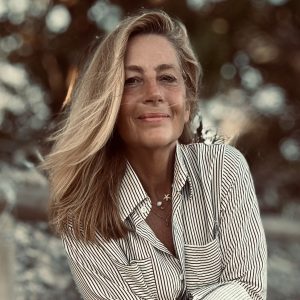
About Adriana Williamson
Adriana is a passionate immigrant who came to the United States over 28 years ago. Adriana was born and raised in Mexico. When Adriana arrived at this country, she had neither finished her high school education nor spoke English. At the age of 19, Adriana became a proud mother of a special needs child, who at the age of two, was diagnosed with severe autism.
With dedication, perseverance, discipline, faith, and resilience, Adriana obtained a bachelor’s degree in international business in 2006. In 2013, Adriana also obtained a master’s degree in information management systems at WP Carey at ASU.
Today, Adriana is a Director of Data & Analytics at Feeding America. Adriana has been leading high-performance teams which has become her passion. When leading and shaping people, Adriana applies empathy, compassion, and vulnerability. All these learned while navigating her own journey.
At the personal level, Adriana loves spending time with her family and friends. Adriana now has the blessing of having and raising three wonderful boys.
She also has a passion for lifting weights. She is also committed to the work of mentoring younger professionals. Adriana currently lives in Phoenix Arizona where she loves the sun that this estate offers.
Episode Notes
00:00 Intro
02:47 Lesson 1: Have determination
05:21 Lesson 2: Develop resilience and adaptation skills
13:24 Lesson 3: Never stop believing, dreaming and achieving
16:15 Lesson 4: Persistency and consistency signal
23:15 Lesson 5: Have empathy
26:03 Lesson 6: Develop emotional intelligence
31:34 Lesson 7: Empower others
33:27 Lesson 8: Take the time to give back
35:18 Lesson 9: Be humble, but stay hungry
37:18 Lesson 10: Practice gratitude every day
Adriana Williamson – Never stop believing, dreaming, and achieving
Diana White: Hello and welcome to 10 Lessons Learned, where we talk to leaders and luminaries from all over the world to dispense wisdom for career, business, and life in order to make the world wiser lesson by lesson. My name is Diana White, and I’m your host for this episode. Our guest today is Adriana Williamson.
Adriana is a passionate immigrant who came to the United States over 28 years ago. Adriana was born and raised in Mexico. When she arrived in this country, she had neither finished her high school education, nor spoke English. At the age of 19, she became the proud mother of a special needs child who at the age of two, was diagnosed with severe autism.
With dedication, perseverance, discipline, faith and resilience. Adriana [00:01:00] obtained a bachelor’s degree in international business in 2006. In 2013. She also obtained a master’s degree in information management systems at WP Carey at ASU.
Today. Adriana is a director of data and analytics at Feeding America. She has been leading high performance teams, which has become her passion when leading and shaping people. Adriana applies empathy, compassion, and vulnerability. All these learned while navigating her own journey.
Welcome, Adriana.
Adriana Williamson: Thank you, Diana. It’s, uh, really is, uh, really, I’m so happy and excited to be here, sharing, uh, the walk of life. so, it, it really is a pleasure. thank you for your, oh,
Diana White: it’s, it’s a pleasure to have you. When, you know, when we talked and I, I listened to your story. I said, this is, if this isn’t what it means [00:02:00] to be a resilient woman. I don’t know what, what does, so I wanted to have you on the show to talk about this and, and your philosophies on, how you navigate through life and how you work with people. But I got a sneak question for you. First up. What would you tell your 30-year-old self?
I know that was only like two days ago but talk to me.
Adriana Williamson: Yes, I would tell, myself that the best, the best is about to come. definitely when I look back when I was 30 and all the things that have happened since then. Definitely, the life, my life has been. full of blessings. So therefore, I’ll say the, the best is about to come.
Diana White: Oh, wonderful, wonderful.
Lesson 1: Have determination
Diana White: Let’s get right into your lessons and, and your lessons are short and sweet and simple, but the stories behind them are, are the juice. So, I love this lesson. Number one, have [00:03:00] determination.
Adriana Williamson: Thinking about some of the lessons I pick determination, because I really think that that’s what is the key of getting out of situations in life that we have, right?
That it is not the situation, but it’s what we make out of that situation. So, if you are determined that, you, you can have a better, result or a better life for you. That’s going to happen, not the current situation that you have. And I give you an example in my case, uh, as a, uh, in my childhood, I grew up in a very violent household.
Uh, and I knew, I knew that my future and my life deserved better. So, I really learned that I had a determination to take the steps as a little child to learn the life that I dream of. So that’s basically, that has proven to be so true, right? as a child, I couldn’t control [00:04:00] my moment at the point.
And, but when I became an adult, then I was no longer the victim of my childhood, but of the future I wanted to have as a, as an adult. So that’s why determination to me is the number one lesson where the journey begins.
Diana White: Well, I love that. I love that. I, you know, I, I recently watched a clip a woman who was talking about.
Having grown up in a violent household and having a lot of childhood trauma from that. Mm-hmm. And what I thought, what she said was so profound because what she said was nothing her parents can say. Will help to heal that child, that child is wounded and that wound won’t go away. And she said, it took me a long time to realize that that child now belongs to me.
It’s my job to raise that child now, and I can do it better than my parents did it. And so, I need to stop waiting for my parents to fix [00:05:00] something and just go fix it for my inner child myself. And my, my head exploded. My head exploded because that, that’s exactly right.
Adriana Williamson: That’s exactly right.
Yes. And we got to stop victimizing and blaming right?
At some point, like, as a, as, like I said, as a child, you have no control. but as an adult you do.
Lesson 2: Develop resilience and adaptation skills
Diana White: Lesson number two, develop resilience and adaptation skills.
Adriana Williamson: Well, you know, uh, if anything has happened in my life has been changed, right?
If you don’t adapt to the change, you always will be struggling in life. In my case, when I was 18 years old, for many reasons, I had the opportunity to come to the United States. But when I came to United States at 18, when I had already been raised in a, in a totally different culture, totally different country coming to this country and not, uh, understanding the [00:06:00] language, and I hadn’t even finished high school.
and, uh, adapting. To the culture was, I remember having nights of just crying in a corner in myself, missing what I left behind. And I know that sometimes a lot of people would not so survive that. And you got to go back because you really miss that so much. but res having resilience and adaptation is what shaped that beginning of this country.
There’s so many things I had to go through, adapting to the culture, learning the language, understanding how people, uh, and relationships are very different from where I come from. in Mexico, we’re so close to my neighbor, to the stranger. We don’t have that space, whereas I, here I have to learn that there is a space and, I had to respect that.
So that’s one of my biggest changes. And of course, uh, you know, since then, [00:07:00] um, the biggest one is when I became a, a, a mom at 19, without even having, uh, finished growing up myself in, in a new country, learning a new co, uh, a new language, I became a mom. My son at two years old, he was diagnosed with severe autism and that was a total shock.
Total shock. And I thought as he was diagnosed, I had two options. Cry and cry and cry and blame. Blame life and blame. I’m a person of faith. Blame God for that or accept that this is what I have. And adapt, adapt, and move forward. And that’s what I decided to do. I became resilient because the more I was able to face and adapt these new events in my life, I became stronger.
Diana White: And you became a role model [00:08:00] for your kids. it boggles my mind sometimes how every, everybody has to have a pity party. Every once in a while, it’s a prerequisite to the human existence. Things happened and you say, why me? You feel a little bad. But then at the end of the day when you go, okay, it is me.
It is me. What do I do next? What the resilience that you show other people around you, the people that really need to see and emulate it, it’s worth its weight in gold.
Adriana Williamson: Definitely. And believe me, I, I had that question in my head many times when, when I heard the diagnosis at first, well, first I didn’t understand what the diagnosis was.
Mm. You know, uh, to me was, uh, is it, is it a cold, is a flu? How do we, how do we get rid of it? Right? then it took education for me to understand that this is a lifelong, special circumstances for my son. And yes, I. I question my, what did I do wrong? [00:09:00] What could I had done better? Um, but once you grieve, that’s the part of grieving that we all should take it.
We all need it. Um, to your point is that where do I, this is where I am and this is who I am, and this is what I have. How do I move forward? I, I, I, more than ever, I want a better life. Um, and that’s exactly what moved me to my next, uh, revolution of Life.
Diana White: I love that and I, I love that you talked about the grief part and I, and I want to drive this home for our viewers and listeners, and by no means am I some sort of psychologist, right?
But I do believe that when things like this happen.
In order for you to see the blessing of what you really have, what, what, what the universe has given you. You have to grieve for the plan you made, right? For, for what you thought [00:10:00] life was going to be. The, there’s that expression. You make plans and God laughs, right? Oh, so you, I think that when we say grief, we don’t mean.
I’m grieving because I don’t want what I have. I’m grieving because I don’t like what I have. It’s, I’m grieving the loss of what I thought I wanted, and now I’m moving forward with what I have, and I know that’s going to be beautiful too.
Adriana Williamson: Yes, that’s beautiful.
As human beings, we go through a lot of losses. Being born is the number one loss because when you get out of your mom’s womb, you’re, you’re, that’s a loss. Yeah. You are losing a, a beautiful world in that world. You lose
Diana White: that free rent, those free nutrients. What? Yes. Absolutely.
Adriana Williamson: Yes. And it’s, it’s, it’s interesting that you say that because [00:11:00] I actually had a writing, I, I did this big writing, um, that I actually presented at Toastmasters, one of my, um, speaking lessons, and I talk about that lot.
You know, like house. I was excited, expecting my son and I had all this leave, a baby leave and uh, uh, uh, ready to, to take the flight of motherhood. And I had a destination in mind. I, thinking about the languages, my, my son was going to speak, I used to have arguments. He was going to start speaking Spanish, you know, or thinking about all the fun things we were going to do.
And I built this map in my head. Of that destination. But what happens is that when I landed in that destination, I realized that my map wouldn’t work there. Yeah. And the tools I put together were, I could not use those tools. Yeah. So, I landed in a completely lost land. So it is, it is interesting that [00:12:00] you mentioned that
Diana White: and, and I dare say that, you know, even, even if you are your precious.
Boy is nonverbal. He still has love, love language. There’s still language there. So, the language that he speaks, that was still a dream that came true. Yes. How much fun you were going to have. I know you have fun with your son. I know you do. You have a blast. Right? But it’s different. It’s in his way. It’s in his world.
Through his eyes. Yes. You didn’t lose the things that you. Wished for you just had to change your plan
Adriana Williamson: and that’s in key what you’re saying. I didn’t, I didn’t fight for trying to change him. Because you got to under, uh, I had to understand, and this goes to people who are in that situation, that trying to change the outside is, is almost impossible.
Hmm. But if you start changing yourself, and [00:13:00] I decided to adapt to my son. To my son’s life, to my son’s way of being, to my son’s way of communicating. And, uh, he’s now 27 and we, he is the, we have a great relationship, and I could not imagine him outside my life.
Diana White: Ah, it’s powerful stuff. And we’re not even at lesson number three. Everyone we’re, this is amazing.
Lesson 3: Never stop believing, dreaming and achieving
Diana White: Lesson number three. Never stop. Believing, dreaming and achieving.
Adriana Williamson: Never, never. I think this one so sticks, uh, to me a lot, especially coming to this country. And I found, uh, a lot of wonderful people, but I also found, barriers as a, as an immigrant, as a woman, as a single mom, as a single mom, uneducated, single mom, uh, Latina. And, and, in that situation, I had doors that closed and told me, no, you cannot, we cannot have you at, uh, at this point. You cannot do certain things [00:14:00] at this point, but I learned that by going and knocking to the next door and keep knocking those doors, keep knocking those doors.
Someday one of those were open, and that’s what it did for me. regardless of being in the, on the situation, I was a single mom and a special needs son and, and a lot of need. and by the way, my family never came with me, right? I was me, myself, and this country with my son. But, uh, you always find, first of all, you find people who will always give you the hand.
And once you that right door opens, the sky is the limit. And that’s exactly, that’s exactly how I am here today by those people who saw me, hear my story, saw my need, but also saw, saw my passion. Because you got to have that passion. Why are you, where are you pursuing what you’re pursuing?
That has to be there. That, that passion for change and a better future. And that’s what [00:15:00] I had at 21 years old when I finally got, uh, the doors open to go to community college in California. And that’s where I started learning English as a second language. And eventually, uh, I, I had and received plenty of, uh, scholarships to continue my education.
in 2004, I was very blessed receiving the presidential scholarship in one of the, uh, colleges in, in the Bay Area. Uh, I was Menlo College. They saw me, they saw my story, they saw my grades, they saw my journey, and I was able to graduate in 2006 with a bachelor’s degree. different path for different people.
Uh, but for me, I really, really believe that it was because I didn’t stop dreaming. I didn’t stop believing in me, in in what God have for me. and I, I always tell people never stop dreaming it. There is, even if 10 door closes, [00:16:00] the 11 door will open. You just have to continue.
Diana White: That’s right. And something tells me that you would’ve built your own door at some point if they didn’t listen and open up.
I love it.
Lesson 4: Persistency and consistency signal
Diana White: Lesson number four kind of ties into lesson number three. Yes. Yes. Persistency and consistency signal.
Adriana Williamson: yes. It, it really ties because, If, if you are consistent and persistent and you, and you know where you want to get and, and that, that’s something that I did have very clear. I wanted a better life for my son.
I wanted, uh, to give him all the opportunities, regardless of his diagnosis. And I also wanted a better life for me. I told you my first job, uh, one of my first jobs in California was in a kitchen. Of a retirement home, like [00:17:00] assistant home, uh, assisted living home, and I will get there. Uh, I had to find a babysitter for my son.
Luckily, my neighbor was available. My son was 18 months old if I would remember correctly. And I had to get to this place at five 30 in the morning. The first thing was set up for breakfast after breakfast. Do the dish washing and then the clean, clean the floors and then repeat for lunch by one that I, I left my, my shift, I couldn’t even walk to the bus station.
My feet hurt so much, so much. And I remember one occasion I would never forget; I was washing the dishes and through these machines and cleaning the floor and thinking I have a brain. I have a brain. I can do better than this. I can do better than this. Why? I mean, obviously, any job is, it has dignity.
You know, this job was absolutely, uh, I don’t regret doing [00:18:00] this, but it was my beginnings and all these people who are doing this, my, I have a lot of respect because you really work physically, your feet hurt. Cannot make one step. But that made me realize I have a brain, I want a better life, a better life for me, but also for my son.
Um, and that, that was before I, I was, I found this college who accepted me and all that. But it is part of that, persistent and consistency that I knew that it was a better life for me. That I didn’t give up on that dream, no matter what people would tell me, right? because when I think about what my family, um, or people who knew me and saw me as a single mom, immigrants, no English, no education, that the chances that you’re going to have for a better life decrease.
But, but, but I, I, I didn’t hear those words. [00:19:00] I’m going for it. And I, and I, and I went for it.
Diana White: You know, it’s so funny that you say that because it’s so reminiscent of my philosophy when I was younger, which I didn’t even know that I had. I, I grew up in the Bronx. And there were certain stereotypes put upon me and certain trajectories about my life that were kind of set in stone just based on, um, my skin color and my, you know, origins.
And I remember from a very early age. Looking around at different people doing different things, especially when I started working retail and I was exposed to so many different lifestyles, so many different people, careers, industries. And I would look and I would say, what did they doing and how did they get to do that?
And every single time I [00:20:00] did it, the mantra in my heart was, they’re human, just like I am. They were able to do these things, if they were able to do it, what do I need to know? What do I need to learn? What do I need to be to be able to do that too? And I never looked at it as, well, I shouldn’t even try because my fate is set in stone.
It was always just ask another question. Mm-hmm. Just ask another question and, and these questions got me. So far, I can’t even describe how my life has been. Some kind of Forrest Gump esque travel through life because I was just so curious and always wanted to continue to learn. I want to learn what you do.
I want to learn how you do it, who you are, what’s your passion for this? Um, and I’ve picked up so many [00:21:00] different quirks and trades and skills and ancillary information that makes me the person that I am, and I wouldn’t change it for the world.
Adriana Williamson: That’s, that’s beautiful. And well put, uh, Diana, I, I feel the same way.
I wouldn’t change it for anything, uh, on the world. And I think that back to the idea that, you know, you had, like, you knew, you, you, you were capable. You had that brain power and you, you just needed some, a hand like the power of the other. I always say, and this is based on a quote of a book Yeah. That I read.
we always need, we, we we’re never really rise alone. That’s something I really learned. Right. It’s not one of the lessons learned, but I think, uh, it should be one of the lessons learned that there is there always someone. Someone who we need their hand to teach us away. It’s just, uh, finding that someone, and, but you have to be careful on [00:22:00] that because sometimes you’re going to find that someone that is going to guide you to rise.
But you can also have find that someone who would make you. Questioning your, your, where do you want to go? Oh, yeah. And as an example, I can remember that when I was accepted at, um, Menlo College and they gave me the presidential scholarship that just covered, uh, part of the tuition, I, I had a people coming to me and say, but how are you going to cover the rest?
As a single mom, if you get sick, if your son gets sick, and how are you going to be able to afford, uh, your rent and the tuition and books? And, and yes, I thought about it. I could say no to the opportunity because I still had to cover a lot of out of pocket and I had to work for it. But I say, I just say one day at a time.
One day at a time and we’ll figure it out tomorrow. And, uh, and it worked. It [00:23:00] worked.
Diana White: I’m going to say viewers and listeners, I feel like in, in the, the powerful statements that she just made, Adriana gave us like five bonus lessons. So, hold on to those because those were gold.
Lesson 5: Have empathy
Diana White: Lesson number five. Have empathy.
Now, you and I, uh, we are so in aligned with this, but tell me your philosophy on this.
Adriana Williamson: Well, you know, as I, as I gotten, older, uh, and I, I always look back where I come from. Never. I never, I had never stopped looking back where I started and where I come from. But now, uh, on the position where I am now leading, leading people who have dreams regardless of age and time and position, and I, I read with the, with really with the empathy that I had to help them believe.
[00:24:00] That everything is possible, right? I could not lead my team without making them know that they’re doing amazing and that don’t be afraid and keep pushing and keep trying and things will get, we get better The future is, is bright. we got to really, uh, look, and feel for what others are going through.
Because we never know, like when I look back myself, uh, having go to work with a sick kid and no one will be able to watch him, and I had to find a stranger to watch my son, and then I had to go drive the bus, get to my job and clean those floors and be waiting on the way back dirty with food on my clothes and,
People, maybe there’s people who look at me and say, whoa, she looks dirty. Where is she? Where is she coming from? But behind that, that I was like a, a, a whole story. You know, I, I was tired, single mom doing my best. And, and when I look at people [00:25:00] now, I, I never assume, I never, I never assume even friends of people, even if it’s something is not right on them.
I always give the benefit of the doubt, you know, like there is, there is a reason why you are not giving hundred percent or there is a reason why you are, uh, uh, yelling or screaming or upset, and I want to understand that reason. I don’t want to react with the same response. but to me, I could not be the person who I am if I would not put empathy.
As, as front, as a leader, as a mom, as a friend, as a, as a daughter, as a sister, have all those things. Uh, I am blessed to be all those things. So, yes, uh, I always say, don’t forget where you’re coming from, and always think about that. There is a reason why people react in certain ways. We just had to start with empathy and [00:26:00] come forward with that.
Diana White: Valuable words, valuable words.
Lesson 6: Develop emotional intelligence
Diana White: Lesson number six ties into this as well. Develop emotional intelligence, I won’t say any more viewers and listeners. Adriana, take it away.
Adriana Williamson: No, this one I didn’t know what emotional intelligence was. Uh, to be honest with you, I never knew that term until probably back in 2017.
I started reading a lot of books. I’m a big follower of Brenda Browns. Mm-hmm. She, I love her. Uh, I started reading a lot about the power of vulnerability, and then I ran into this book called Emotional Intelligence. And I started reading it and, and I was start thinking, well, what’s the difference of emotional intelligence versus IQ?
Which one is the most I or intellectual intelligence, which one is more important? And I realized at the moment that if I wanted to continue my, my [00:27:00] road into become the leader I never had, or I didn’t have. I needed to really work on my emotional intelligence, but I had to start working with it myself.
You know, like, I had to start recognizing what, what triggers me? Where do I get upset? What do I get? Where do I respond back? What? So, I started working on those things and, there is a FA whole framework under emotional intelligence. And when I started learning the framework and first, getting to know myself, oh, I can tell you that now every, every time I am in a room.
I can read more than words starting, starting with what I’m feeling, but I, I can read more than words. I can, I can immediately know what someone is thinking or feeling or what’s coming next. Like, people don’t have to tell me these words. And remember that, uh, communication with words is about 10% of our [00:28:00] communication, right?
emotional intelligence takes a bigger part of it. A lot of times as you, go up on the ladder, on the leadership, a lot of times happens that that emotional intelligence disconnects, it disconnects it shrinks. But I have kept it very alive. Very alive because I really think that if you want to become a really good leader and mom and friend, and emotional intelligence as well as empathy.
They’re super connected and one of the reasons why I believe I’ve been very successful within my, within IT back in the business, not just because I started in finance and accounting as my first background before moving to IT, but because I am, I’m able to read people.
Understand emotional intelligence, know what the challenge is, feel the people, how people are really feeling, what their fears. Um, I think that’s been [00:29:00] my, my key for, being so happy, doing what I do
Diana White: think that’s so critical. I, I have been in situations where, I’ve used a, a combination of all three of your lessons that we just talked about, you know, uh, the empathy, the emotional intelligence, and not necessarily using my words, but being able to put myself in their situation and say, if I, if I were feeling these feelings, what would I, what would I need right now?
What, because that’s the only thing I can start with, right? Because I, I don’t really know the other person well enough, and I can’t tell you how many times. Bring a sense of calm just by being, and just by letting my energy seep out to let the other per other person know. I, I don’t know what’s going on, but I’m here. I’m here.
Adriana Williamson: Yes. That changes the tone. [00:30:00] I, I told the story as you were saying that I remember my previous company, they were putting me to interview people. That new teammate, new teammates, and, uh, I didn’t have to really interview them on the technical skills, but it was more about the culture f or, uh, things like that.
And, and I would, uh, people were always tense. Obviously when you go to, uh, interviews, especially in the IT field, people are harder to, to get in. Right. But I, but I learned like. Just by coming in and smile and ask, how’s your day going and where do you live? What kind of sports you like? Uh, what do you do for fun?
Like the first 10 minutes, like when I get to the, like, do you like to dance because I love dancing. You know, like things like when you find something in common for the first 10 minutes, the, the barriers come down.
Diana White: Yeah. Common ground.
Adriana Williamson: Common ground. And people become their best self. [00:31:00] I have had, I hired people that, uh, you wouldn’t believe Amazing, amazing people.
Amazing people. But on the first, on the first interaction, they would not have come across as amazing because that barrier. But I, I really say that I have the talent. Bringing those barriers down because I, I start with the human first and that’s another lesson that is not,
Diana White: you’re just giving them away for free. Adriana, you’re giving them away for free.
Adriana Williamson: It shouldn’t be the 20. Lessons learned.
Lesson 7: Empower others
Diana White: Lesson number seven, empower others. Yes,
Adriana Williamson: yes, yes. You cannot grow as a person, as a leader, without, first of all. Share your teachings but also empowering others. When I think of where I am in my life and anybody in my friends, uh, uh, I just saw a friend last night, that knows me for the last 20 years, [00:32:00] and she say, Adriana, if you, if you see yourself of where you are today and all the things you have, survive.
Live through, doesn’t matter what happens next, you will still survive and live through. And, and I apply the same philosophy with, with people that I see struggling, and I have the opportunity to pass a message if I say. the day will be better tomorrow. We really have to empower people, not just on making them believe that there is a, helping them believe that there is a better future, but also give, as a leader, I had to learn to delegate, and I love the Legate by the way. Cause this is the only opportunity I have for, people I lead to learn, to grow to, to get passionate about what they’re doing. Give them the opportunity to, to tell [00:33:00] me how do we going to get to whatever solution. That we need to get without me being the one as a leader. Uh, so I like to really teach people how to fish and, and I would not be able to do that without, uh, empowering, uh, empowering as a leader.
As a leader, that’s such an important skill to have and do. because as you empower others, you learn and you grow as well. Uh, you can grow to the next level.
Lesson 8: Take the time to give back
Diana White: I love it. Lesson number eight, take the time to give back. Give back or pay it forward.
Adriana Williamson: Mm-hmm. Yes. It takes time, obviously. Uh, you got to be at a good place, but.
I never forgotten who gave me their hands. And if I have the opportunity to give back to them, I’m always there. But, uh, the way I pay it back is by doing the same thing for those who at some point were [00:34:00] in either similar situation that I was, or in some kind of situation where they need. Hand and advice, financial health, I don’t know what it is.
Emotional, emotional, health support, whatever we have to be like trees. I don’t know if you ever heard that. Like apple, apple, orange trees.
Diana White: No. Tell me
Adriana Williamson: where have you, uh, where have you seen a tree eating their own fruits? Never. You always, people would always come and grab a fruit of your tree and eat it. And I’m not saying I’m going to give all my fruits to everybody. No, I need to keep some for me and my family and, and, And I learned that, uh, one point, uh, through church. A pastor said it, and I thought, wow, that’s
Diana White: powerful.
Adriana Williamson: That is if you really want to give, you really want to be that tree.
Let people take some fruits of your tree of, obviously you have to be careful. Obviously putting your boundaries, [00:35:00] you don’t want to give everything of you. But, uh, otherwise, what would, what would be a fruit tree purpose, other than having others eat this tree fruits, you know, so I am a big believer of giving back is how we also get back.
That’s a big one in my life.
Lesson 9: Be humble, but stay hungry
Diana White: I love it. Number nine, be humble, but stay hungry.
Adriana Williamson: Be humble. Stay hungry. There’s always going to be the opportunity on being in a room where you are the one who knows the most, but you all or will be, uh, times where you just had to wear the hat of learning. and even when I am in rooms, when I am the one who knows the most, I always come with my learning hat.
And that’s being humble. Because we’re never going to end learning, the learning never ends. Okay? So, I, I think one of, one of the [00:36:00] things that worked really well for me is make people feel that we are on the same level in terms of challenge. We’re all here to solve a problem regardless of who knows more.
But and I think that’s, that’s kind of bringing, become like humble brings you unity because then people see you as, okay, she’s not here to teach. Tell me what to do. But working with me to, to go through this challenge, uh, go find a solution to this problem. And, uh, when I was a consultant and, and that even as you work in organizations, as an employee, you become the consultant, especially in IT, you are the consultant of your organization or in your home, right?
I, I, I also want to teach my kids that we’re never going to stop learning. So always, always, always come to a room with your opinion and your facts and your, and [00:37:00] your experience. Of course, that’s very valuable, but always with an open-minded of learning because we always going to learn, always.
Um, so yeah, that’s, that’s stay humble but be hungry. That’s the other thing. Never, never stop learning. Never stop learning.
Lesson 10: Practice gratitude every day
Diana White: All right, lesson number 10, practice gratitude every day.
Adriana Williamson: Practice gratitude every day. Uh, that’s what still is in my list as soon as I wake up my first thing is thank you for what I have. Because it is important to recognize what we have instead of thinking what we don’t have. It gives you more, it gives you happiness to think everything, uh, to think about all the things and all the places and all the things you have in your life.
It, it, it, it helps you start with the right foot. And that’s what I do every day. And that really helps me, even in moments of [00:38:00] sadness or when things are not going well, because that’s the other thing, right? Life is not about every single day things going the way you want them, but if you start with gratitude and go to bed with gratitude, that really brings a lot of blessings in your life.
And that’s something that I, since I’ve been applying that and every day, and as I get older, I will say I do it every day, every day, every day. It just bring change for in you. And I think that closing that with, uh, being my lessons number 10 is exactly what I do every night at the end of the day as well.
So, I, that’s what I thought that it was a, a great lesson to close with.
Diana White: I think so as well. And yeah, I take that gratitude I think almost a little bit too far. Uh, long time ago, I had a pastor who he, he had his sermon, and he said something to the effect of, [00:39:00] when, bad things happen to us, we look to God.
Adriana Williamson: Mm-hmm.
Diana White: When good things happen to us. We may say, thank God, we may celebrate, you know, a little bit, but it, it, it becomes about us. Something good happened to us. We forget about the universe providing it for us. And he says, I want everybody to be a little bit more mindful of the everyday little things that he saves us from.
Oh, so when you drop your phone and the screen didn’t crack, that should be a moment to say thank you. Thank you, Lord. When you are walking down the street and you could have stepped into a pile of poop, poop. And you didn’t. That is the moment to say thank you Lord. And I, I practiced that. Adriana, every little thing.
I love working with wood. I, I, I love carpentry and so I’m constantly like doing things that I shouldn’t be doing and not wearing [00:40:00] gloves while doing it, and, you know. The time that I almost strike my thumb with the hammer, but I don’t, I’m like, thank you, Lord. Like, to me, and, and, and because I’ve practiced it for so long, the, the relief and the thanks is just as powerful as if something.
We were truly, truly bad had happened and it didn’t happen. And I, um, I, I wonder what would happen in the world if more people adopted that philosophy to give thanks, even for the tiniest, tiniest things.
Adriana Williamson: It, it that’s so true. And then, uh, anything like you mentioned, uh, I say be thankful and, but I say just say thank you.
And that’s part of say thank you to everyone. Thank you, thank you. Thank you for your, to your employees when they submit something. Thank you. Acknowledge that your kids when they do anything. [00:41:00] Thank you. Um, I think the power of Thank you. Plus, the power of the, of, of, of the gratitude brings amazing things.
It really does. People will remember you for that. People will, for sure. Yes.
Diana White: All right. I’ve got one last question for you. After all these amazing lessons, what have you had to unlearn?
Adriana Williamson: That’s, that’s a tough one. Oh, I would say, um, when I doubt myself.
Mm. I forget what I, what I did to get to where I am.
Diana White: Ooh, ooh.
Adriana Williamson: I want to unlearn that. Yes. because at, at this point, after, after everything that I have come through life, I should not have one second of doubt about myself or about what I’m capable of.
Diana White: Oh, I’m going to say that again. For the viewers and listeners, [00:42:00] they need to hear that out of the all the things that I’ve been through, and I’ve overcome, I should not have one doubt about myself and what I bring to the table and what I can do.
Adriana Williamson: Yes.
Diana White: Right? Write that down. If you don’t think about anything else, write that down. That is gold.
Adriana Williamson: Yes, definitely. I think we all go through that, right? In moments when things don’t go, uh, don’t go well, we doubt ourselves and that’s not fair. We shouldn’t do that to ourselves. So definitely that’s something that should be unlearn.
Diana White: Adriana, your, your commitment, your compassion, your love, your perseverance, your effervescence. I am in awe of you and everything you do. I really am. You, you inspire me like you wouldn’t believe, uh, even, even with your, your fitness journey and, and [00:43:00] your goals and viewers and listeners. I will tell you this, Adriana has schooled me on, you know, being of, of middle age, how I should really be approaching fitness in my fitness journey and taking care of my body, and it is not what everybody else has been saying. And she’s changed my thought process about what my body needs to carry me through the rest of the years I have in my life. And she’s just such a wealth of information and, and peace and, and I adore you.
That’s all I have to say.
Adriana Williamson: Thank you, Diana. It has been a pleasure really sharing these lessons and if we ever have another 10 lessons learned on the fitness way, just. You know where to find me.
Diana White: You heard it here first, where that is coming up. We’re going to do that for sure. Let me exit this out for everyone.
You have been listening to 10 Lessons Learned. This episode [00:44:00] is produced by Robert Hossary. Please tell us what you think of today’s lessons. You can email us at podcast@tenlessonslearned.com. Go ahead and hit that like button subscribe and turn on the notification bell so you don’t miss an episode of the only show that makes the world wiser Lesson by lesson.
Thank you everyone. Be safe out there.
Thanks to our 10 Lessons team that make our show possible: Our Episode Editor Codie Comeau, Marketing and social media managed by Yi Wang, and our Producer Robert Hossary. Sponsored as always by Professional Development Forum. You can find the www.professionaldevelopmentforum.org.
You’ve heard from us we’d like to hear from you. Email us it’s podcast@10lessonslearned.com.
Remember, this is the podcast the only podcast. That’s makes the world wiser lesson by lesson.